

Hey there! As a forged fittings supplier, I often get asked about the manufacturing costs of forged fittings. It's a topic that's crucial for both us suppliers and you, the buyers. So, let's dive right in and break down what goes into these costs.
Raw Materials
The first and most obvious cost factor is the raw materials. Forged fittings are typically made from metals like carbon steel, stainless steel, and alloy steel. The price of these metals can fluctuate significantly based on market conditions. For instance, if there's a high demand for stainless steel in the construction or automotive industries, the price of stainless steel will go up, and so will the cost of manufacturing stainless steel forged fittings.
Carbon steel is usually the most affordable option. It's strong, durable, and widely available. But if you need something more corrosion - resistant, like stainless steel, you'll have to pay a premium. Alloy steel, which combines different metals to get specific properties, can be even more expensive. The quality of the raw materials also matters. Higher - grade metals with better purity and fewer impurities will cost more but will result in higher - quality forged fittings.
Labor Costs
Labor is another big chunk of the manufacturing costs. Skilled workers are needed at every stage of the forging process. First, there are the workers who operate the forging equipment. They need to have a good understanding of how to heat the metal to the right temperature and apply the right amount of pressure to shape it correctly. Any mistakes at this stage can lead to defective products, which means wasted materials and time.
Then, there are the workers involved in finishing the forged fittings. This includes machining, grinding, and polishing to get the right dimensions and surface finish. Quality control inspectors are also part of the labor force. They check each fitting to make sure it meets the required standards. In regions where labor is more expensive, like Western Europe or North America, the labor costs for manufacturing forged fittings will be higher compared to countries with lower labor costs, such as some parts of Asia.
Energy Costs
Forging is an energy - intensive process. Heating the metal to high temperatures requires a lot of energy, whether it's through gas - fired furnaces or electric induction heaters. The cost of energy can vary depending on the location and the type of energy source used. For example, if a factory relies on electricity, and the local electricity rates are high, it will increase the overall manufacturing cost.
Moreover, the efficiency of the heating equipment also plays a role. Older, less - efficient furnaces will consume more energy to achieve the same results as newer, more energy - efficient models. So, investing in modern, energy - saving equipment can help reduce energy costs in the long run.
Equipment and Tooling
To manufacture forged fittings, a wide range of equipment and tooling is required. Forging presses, hammers, dies, and machining tools are just some of the essential items. These pieces of equipment are expensive to purchase and maintain. The initial investment in setting up a forging plant can be quite substantial.
Dies, in particular, are an important part of the forging process. They are used to shape the metal into the desired form. Dies need to be precisely designed and manufactured, and they can wear out over time. Replacing worn - out dies is an additional cost that needs to be factored into the manufacturing expenses.
Quality Control and Testing
Ensuring the quality of forged fittings is non - negotiable. Quality control and testing procedures are in place to make sure that the fittings are safe and reliable. This includes non - destructive testing methods like ultrasonic testing, magnetic particle testing, and radiographic testing to detect any internal flaws in the fittings.
There are also destructive testing methods, such as tensile testing and hardness testing, which involve breaking or damaging a sample fitting to measure its mechanical properties. All these testing procedures require specialized equipment and trained personnel, which add to the manufacturing costs.
Overhead Costs
Overhead costs are the indirect expenses associated with running a forging business. This includes rent for the factory space, insurance, administrative costs, and maintenance of the factory facilities. These costs may not be directly related to the production of each individual fitting, but they still need to be covered.
For example, if the factory is located in an area with high property taxes or expensive insurance premiums, it will increase the overall overhead costs. And these costs are then spread out over all the forged fittings produced, affecting the final price.
Types of Forged Fittings and Their Impact on Cost
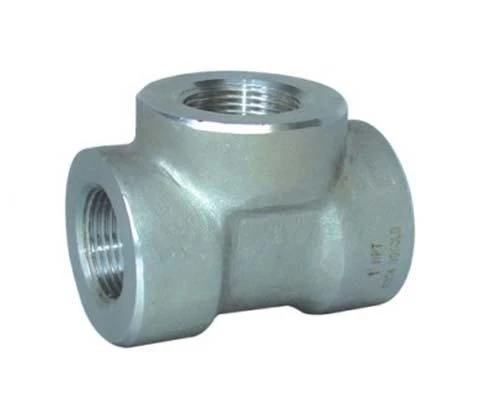
Different types of forged fittings have different manufacturing costs. Take the Socket Welded Equal Tee for example. Its shape is relatively complex compared to some other simple fittings. The forging process for a Socket Welded Equal Tee requires more precise die design and more careful shaping to ensure that all three branches are of equal size and have the right angles. This means more labor and potentially more time spent on the production, which increases the cost.
Socket Welded Olets also have their own unique manufacturing challenges. They need to be forged in a way that allows for a proper socket weld connection. The size and shape of the olet need to be very accurate to ensure a leak - free connection. This precision in manufacturing adds to the cost.
Bw Olets, or butt - weld olets, are often used in high - pressure applications. They require high - quality materials and very strict manufacturing standards. The forging and machining processes for Bw Olets need to be carefully controlled to ensure the integrity of the butt - weld joint. This means more quality control checks and potentially more expensive raw materials, which drive up the cost.
How to Manage Manufacturing Costs
As a supplier, we're always looking for ways to manage and reduce manufacturing costs without compromising on quality. One way is to optimize the production process. This could involve streamlining the workflow in the factory, reducing the time between different production steps, and improving the efficiency of the equipment.
Another approach is to source raw materials more effectively. We can build long - term relationships with reliable suppliers to get better prices on the metals. And by carefully monitoring the market trends, we can buy the raw materials at the right time when the prices are more favorable.
Investing in employee training is also important. Well - trained workers are more productive and make fewer mistakes, which can save a lot of money in terms of wasted materials and rework.

Conclusion
So, there you have it - a breakdown of the manufacturing costs of forged fittings. As you can see, there are many factors at play, from raw materials and labor to energy and overhead costs. And different types of forged fittings, like Socket Welded Equal Tee, Socket Welded Olets, and Bw Olets, have their own unique cost considerations.
If you're in the market for high - quality forged fittings and want to discuss the costs further, don't hesitate to reach out. We're here to provide you with the best products at a competitive price. Let's have a chat and see how we can meet your needs.
References
- "Metallurgy for Dummies" by John Ward
- "Manufacturing Engineering and Technology" by S. Kalpakjian and S. R. Schmid


