In the realm of piping systems, the choice of flange is a critical decision, especially when dealing with large - diameter pipes. As a seasoned Slip On Flange supplier, I've witnessed firsthand the various factors that influence this decision. In this blog, I'll delve into the question: Are Slip On Flanges suitable for large - diameter pipes?
Understanding Slip On Flanges
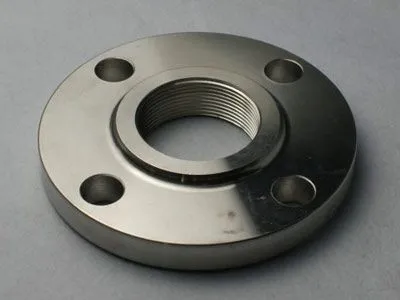
Slip On Flanges, as the name implies, are designed to slide over the end of a pipe. They are then welded both inside and outside to secure them in place. The design is relatively simple, with a flat face and a bore that is slightly larger than the outer diameter of the pipe it is intended to be used with. You can find more detailed information about Slip On Flanges on our website: Slip On Flange.
One of the primary advantages of Slip On Flanges is their ease of installation. Compared to other types of flanges, such as Weld Neck Flanges, Slip On Flanges require less precision during the fitting process. This is because the larger bore allows for some misalignment, which can be particularly beneficial when working with large - diameter pipes. The welding process is also less complex, as it mainly involves fillet welding on the inside and outside of the flange - pipe joint.
Suitability for Large - Diameter Pipes
Advantages
- Cost - effectiveness
For large - diameter pipes, cost is a significant consideration. Slip On Flanges are generally less expensive to manufacture than other types of flanges. The simpler design and the use of less material contribute to their lower cost. This cost - savings can be substantial when dealing with large - scale projects that require a large number of flanges. - Ease of alignment
As mentioned earlier, large - diameter pipes can be more difficult to align precisely. Slip On Flanges' ability to tolerate some misalignment makes them a practical choice. This can save time and labor during the installation process, especially when working with pipes that are several feet in diameter. - Compatibility with different pipe types
Slip On Flanges can be used with a variety of large - diameter pipes, including Large Size Spiral Welded Pipe and ERW Pipes. Their versatility in terms of pipe compatibility makes them a popular option in many industries, such as oil and gas, water treatment, and construction.
Disadvantages
- Lower pressure - rating
One of the main drawbacks of Slip On Flanges when used with large - diameter pipes is their relatively lower pressure - rating compared to other flanges like Weld Neck Flanges. The fillet welds used to attach Slip On Flanges are not as strong as the full - penetration welds used in Weld Neck Flanges. In high - pressure applications, this can be a significant limitation. - Susceptibility to fatigue
Large - diameter pipes are often subject to more significant stresses and vibrations. Slip On Flanges, due to their design, may be more susceptible to fatigue failure over time. The fillet welds can experience stress concentrations, which can lead to cracks and ultimately, flange failure.
Considerations for Large - Diameter Pipe Applications
- Pressure requirements
Before choosing Slip On Flanges for large - diameter pipes, it is crucial to assess the pressure requirements of the piping system. If the system operates at high pressures, alternative flanges with higher pressure - ratings may be more suitable. However, for low - to medium - pressure applications, Slip On Flanges can provide a cost - effective and practical solution. - Pipe movement and vibration
Large - diameter pipes may experience more movement and vibration, especially in dynamic systems. If the pipes are subject to significant movement, additional measures may need to be taken to ensure the integrity of the Slip On Flange joints. This could include using vibration - dampening materials or providing additional support for the pipes. - Corrosion resistance
In many large - diameter pipe applications, corrosion is a major concern. Slip On Flanges can be made from a variety of materials, including stainless steel and carbon steel, to provide different levels of corrosion resistance. The choice of material should be based on the specific environmental conditions and the type of fluid or gas being transported in the pipes.
Case Studies
Let's look at a few real - world examples to illustrate the suitability of Slip On Flanges for large - diameter pipes.
In a water treatment plant, large - diameter pipes are used to transport water from the source to the treatment facilities. The pressure in these pipes is relatively low, and the pipes are not subject to significant vibrations. Slip On Flanges were chosen for their cost - effectiveness and ease of installation. Over the years, the flange joints have performed well, with no major issues reported.
On the other hand, in an oil refinery, high - pressure steam is transported through large - diameter pipes. Initially, Slip On Flanges were used, but due to the high - pressure environment, some of the flange joints experienced leaks over time. The refinery eventually replaced the Slip On Flanges with Weld Neck Flanges to ensure the safety and reliability of the piping system.
Conclusion
In conclusion, Slip On Flanges can be a suitable choice for large - diameter pipes in certain applications. Their cost - effectiveness, ease of alignment, and compatibility with different pipe types make them an attractive option for low - to medium - pressure systems. However, their lower pressure - rating and susceptibility to fatigue need to be carefully considered, especially in high - pressure and dynamic applications.


As a Slip On Flange supplier, I understand the importance of providing the right solution for each customer's specific needs. If you are considering using Slip On Flanges for your large - diameter pipe project, I encourage you to contact me to discuss your requirements in detail. We can work together to determine the most suitable flange option for your application, taking into account factors such as pressure, pipe movement, and corrosion resistance.
References
- ASME B16.5 - Pipe Flanges and Flanged Fittings
- API 6A - Specification for Wellhead and Christmas Tree Equipment
- ISO 7005 - Metallic Flanges for Piping