


Flanges
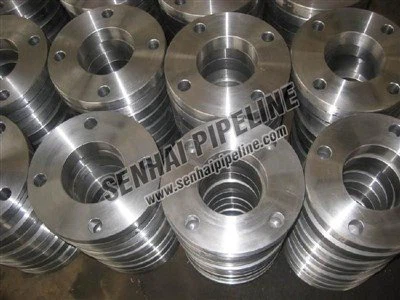
Your Professional Flanges Supplier
Hebei Senhai Pipeline Co., Ltd. is one professional manufacturer of ERW, SAW and SMLS steel pipes, as per standards of API5L, API 5CT, ASTM, EN, BS, DIN, GOST, GB, etc. Senhai Pipeline is located in Cangzhou City, which is the famous "Hometown of Pipes and Fittings" in China, about 120km away from Tianjin Seaport and Airport, and 180km from capital Beijing. Senhai especially produces welded steel pipes of large diameter and thick wall thickness in ERW, LSAW and SSAW. Anti-corrosion layers can also be done in our factory.




Sales Market
Senhai's products are popular in many countries and districts like Southeast Asia, Mid-East, Europe, America, Australia, South America, Africa, etc. "Customer's satisfaction, highly-qualified products and outstanding services" are treasured by Senhai as the business principle.
Our Certifications
Materials include A106 Gr.B, A53 Gr.B, API 5L PSL1 PSL2 X42~X70 L245 L290 L360, Q235A, Q235B, Q235C, Q345B~F, 10#, 20#, 45# steel, A105, WPB, etc., all of which meet the standards of ASTM, API, BS, DIN, JIS, EN, GOST, GB, etc. following standards including ISO9002,ASTM A234 GR WPB ASME/ANSI B16.9,DIN2605-1/2 2615 2617, JISB2311 2312, EN10253-1/2/3, GOST 17375 17376 17378 17379 GOST 30753, etc.
Production Equipment
The major production equipment owned by Senhai cover the hot-rolling puncher, interactive double core bar cold drawing machine, automatically rotary head rolling machine, tube straightening machine, annealing furnace without water cooling system and auxiliary equipment of surface scouring and coating.
Our Factory
Occupying total area of 33,000 square meters, Senhai possesses workshops of four hot rolling production lines, two cold drawing production lines, four welded pipe production lines and office building. The major production equipment owned by Senhai cover the hot-rolling puncher, interactive double core bar cold drawing machine, automatically rotary head rolling machine, tube straightening machine, annealing furnace without water cooling system and auxiliary equipment of surface scouring and coating.
Specification
|
1- Manufacturer of Product: |
Senhai Pipeline |
|
2- Flange Dimension: |
According to ASME B16.5 standard, it can be between 1/2 inch and 60 inches (AzinForge also produces non-standard flanges according to customer requests). |
|
3- Class: |
In the sense of pressure determination, it is the allowable temperature that can be tolerated for the use of a flange. |
|
4- Bore Diameter: |
If there is a hole on the flange, it is engraved on it. |
|
5- Dimensional specifications: |
For example, the ASME B16.5 standard has different dimensions, sizes and technical specifications that are used according to the customer’s needs. |
|
6- Material specifications: |
Indicates the type of raw materials used. For example, code A105, which is one of the grades of carbon steel. |
|
7- Heat Codes: |
This code is engraved in the flange to determine the material specifications and tolerable temperature. Also, this code is displayed in alphanumeric form. |
|
8- Product code: |
It is optionally engraved by the manufacturing companies to inquire about the flange. |
Material
Material required for flanges and flanged fittings commonly are:
carbon steel
This type of steel is used for many flanges. Also, carbon steel is one of the main materials used in various industries such as: construction, automobile manufacturing, tools and machinery production due to its strong mechanical properties and suitable welding capability.
alloy steel
Alloy steel is used in flanges that are used under high temperature conditions or special pressures. Especially, this type of steel is strengthened by adding alloy elements such as chromium, nickel and molybdenum.
stainless steel
Flanges that are placed in environments with high humidity (water and oxygen) may be made of stainless steel. Therefore, this type of steel has high resistance to rust and corrosion.
nickel alloys
Nickel alloysmay be used in flanges that are exposed to very high temperatures or contact with certain chemicals. Also, these alloys have high resistance to corrosion and high temperature.
aluminum
Aluminum is used in some light flanges with less mechanical resistance. Also, aluminum has features such as: light weight, high thermal conductivity and corrosion resistance. Therefore, aluminum is one of the popular materials for use in various industries such as: automotive, construction, aerospace and many others.
polyethylene
Polyethylene is a type of polymer that is used as a plastic material. Also, this material is widely used due to its properties such as flexibility, resistance to breaking, insulation and chemical resistance. For this reason, this material is widely used in packaging, automotive, electronics and other industries.
In NPS, is designation for nominal flange or flange fittings size. NPS related to nominal diameter, DN in international standards, relations as below:
|
NPS |
DN |
|
1/2 |
15 |
|
3/4 |
20 |
|
1 |
25 |
|
1 1/4 |
32 |
|
1 1/2 |
40 |
|
2 |
50 |
|
2 1/2 |
65 |
|
3 |
80 |
|
4 |
100 |
Advantages of Flanges
Easy assembly and Disassembly
Flanges allow for quick and easy connection and disconnection of pipes and equipment. This is particularly useful for maintenance and repairs.
Versatility
Flanges come in various types and sizes, accommodating a wide range of applications, including water supply, gas distribution, and industrial processes.
Sealing capability
Flanges can provide a reliable seal, preventing leaks in a piping system. Gaskets are often used in conjunction with flanges to enhance sealing.
Strength and Stability
Flanged connections can handle high-pressure and high-temperature conditions, making them suitable for demanding environments.
Alignment
Flanges help ensure proper alignment of connected pipes and equipment, reducing the risk of stress and failure in the system.
Maintenance
With flanged connections, it’s easier to replace components without needing to disturb the entire system, which streamlines maintenance processes.
Cost-effective
Using flanges can reduce installation time and costs, especially in complex systems where frequent access is needed.
Standardization
Many flanges conform to industry standards (e.g., ansi, asme), which simplifies design and compatibility across different systems and components.
Oil & gas sector
For the pipeline and refinery construction, pipe flanges are utilized extensively. These make it easier to connect pipes, valves, and other components, with a variety of versions available for both onshore and offshore applications.
Chemical industry
In this industry, transportation of corrosive and hazardous fluids is common. Thus, pipe flanges are required to secure the connection between pipes and equipment. The ability to select corrosion-resistant materials ensures the system’s integrity.
Water treatment plants
Pile flanges are commonly utilized to construct pipelines that transport treated water in this industry. These are versatile and can be customized to meet the individual needs of water treatment operations.
Petrochemical plants
These facilities handling various chemicals and gases benefit from the adaptability and strength of pipe flanges. The secure connections provided by flanges contribute to these industrial processes’ overall safety and efficiency.

Power generation
Weld neck flanges are extensively used in power plants to convey high-temperature and pressure fluids. These provide a strong connection, ensuring the integrity of piping systems in power generation plants.
Food & beverage industry
In this industry, the stainless steel pipe flanges are extensively used for corrosion-resistant and sanitary connections. Nickel alloys are also common when necessary. These are critical for the integrity of pipelines that convey diverse food products.
Pharmaceutical industry
Transportation of delicate chemical compounds is frequently involved in pharmaceutical industry manufacturing processes. Pipe flanges, particularly those made of pharmaceutical-grade materials, maintain the pipe system’s integrity and cleanliness.
Construction & building services
Flanges are utilised in construction projects and building services to make reliable plumbing and HVAC systems. Flanges simplify commercial and residential buildings’ installation, maintenance, and repairs.
Types of Flanges
Slip-on flanges: The slip-on flange is the most common flange in which unified alloys stocks a full line of ansi class 150, 300, 600,1500 & 2500 up to 24" Nps. We stock stainless grades f304/304l, 316/316l, f317/317l, f321, f347 and duplex grade 2205 ( in which they are “slipped over” The end(s) of pipe or the end(s) of a fitting, and welded in position. On the pipe or fitting, they are set so the inserted end of the pipe or fitting is set back to the wall plus 1/8” Allowing for a fillet weld to be made inside the flange, and back (outside) of the flange is also welded with a fillet weld.
Slip-on flange also exists as a reduction where a larger slip-on flange blank is cut out to accommodate a smaller connection size. The slip-on reducing flange is used when reducing the line size in areas where there are space limitations.
Weld neck flanges: Weld neck flanges are visually different from other flange types by their long tapered hub and smooth transition of thickness up to where the butt weld joins to a pipe or a fitting. A full penetration weld is utilized to connect it to the pipe or fitting. The tapered hub provides reinforcement, and the added length helps for resistance to dishing during the welding process. Weld neck flanges are typically used in severe service conditions, whether loading conditions are substantially constant or fluctuate between wide limits.
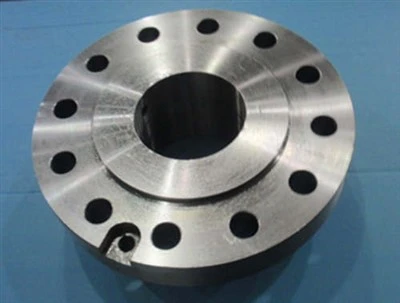
Lap joint flange: A lap joint flange is used in conjunction with a stub end where the flange is slipped over the stub end fitting which is then connected to either to pipe or another fitting by welding or other mechanical means.
The flange itself is not fixed and is left loose for proper alignment with the connection it is matching to. The benefits of this assembly is if there is frequent or rapid disassembly and assembly during maintenance of the piping system. The ability to spin and position the flange compensates for any misalignment of the bolt holes during reassembly.
Backing flange: A backing flange does not have a raised face, and typically is used with backing rings which are a cheaper version of a stub end with similar installation benefits of the lap joint / stub end pairing.
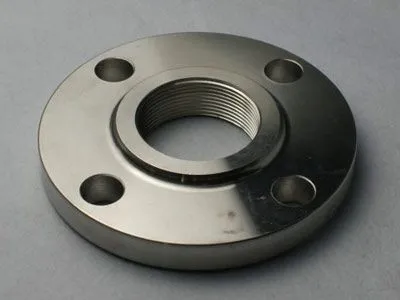
Threaded (screwed) flange: Threaded flanges are bored out initially to match a specific pipe inside diameter. The reverse side of the flange is then machined with the desired tapered sized pipe thread. Threaded flanges are primarily used to make flanged joints in the smaller bore pipe size ranges.
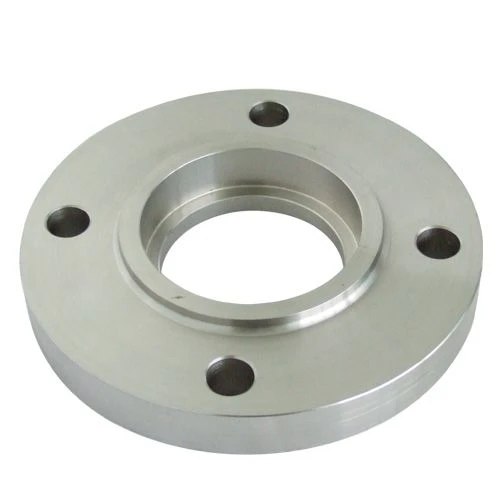
Socket weld flanges: Socket weld flange looks like a slip-on flange, however the key difference is the socket weld flange is machined out to match a specific pipe size socket to take the pipe o.d. Once the pipe is set in place, the back side of the flange and pipe is fillet welded to finalize the connection. Socket weld flanges are primarily used to make flanged joints in the smaller bore pipe size ranges.
Blind flanges: Blind flanges are made to the sizing specification as all flanges, but there is no center hole or place to connect piping components. The flange is typically used to close or block the end of a piping system.
Our Certificate


FAQ