BW Fittings

Your Professional BW Fittings Supplier


Hebei Senhai Pipeline Co., Ltd. is one professional manufacturer of ERW, SAW and SMLS steel pipes, as per standards of API5L, API 5CT, ASTM, EN, BS, DIN, GOST, GB, etc. Senhai Pipeline is located in Cangzhou City, which is the famous "Hometown of Pipes and Fittings" in China, about 120km away from Tianjin Seaport and Airport, and 180km from capital Beijing. Senhai especially produces welded steel pipes of large diameter and thick wall thickness in ERW, LSAW and SSAW. Anti-corrosion layers can also be done in our factory.



Why Choose Us


Sales Market
Senhai's products are popular in many countries and districts like Southeast Asia, Mid-East, Europe, America, Australia, South America, Africa, etc. "Customer's satisfaction, highly-qualified products and outstanding services" are treasured by Senhai as the business principle.


Our Certifications
Materials include A106 Gr.B, A53 Gr.B, API 5L PSL1 PSL2 X42~X70 L245 L290 L360, Q235A, Q235B, Q235C, Q345B~F, 10#, 20#, 45# steel, A105, WPB, etc., all of which meet the standards of ASTM, API, BS, DIN, JIS, EN, GOST, GB, etc. following standards including ISO9002,ASTM A234 GR WPB ASME/ANSI B16.9,DIN2605-1/2 2615 2617, JISB2311 2312, EN10253-1/2/3, GOST 17375 17376 17378 17379 GOST 30753, etc.


Production Equipment
The major production equipment owned by Senhai cover the hot-rolling puncher, interactive double core bar cold drawing machine, automatically rotary head rolling machine, tube straightening machine, annealing furnace without water cooling system and auxiliary equipment of surface scouring and coating.


Our Factory
Occupying total area of 33,000 square meters, Senhai possesses workshops of four hot rolling production lines, two cold drawing production lines, four welded pipe production lines and office building. The major production equipment owned by Senhai cover the hot-rolling puncher, interactive double core bar cold drawing machine, automatically rotary head rolling machine, tube straightening machine, annealing furnace without water cooling system and auxiliary equipment of surface scouring and coating.


Specification


Specifications

ASTM/ASME A234 WPB / A860 – MSS-SP-75 WPHY 42 / 46 / 52 / 56 / 60 / 65 / 70

Low Temperature Steel

A420 WPL3 / A420 WPL6

Dimensions

ASME/ANSI B16.9, ASME B16.28, MSS-SP-43

Size

½”NB to 48″NB in Sch 10s, 40s, 80s, 160s, XXS

Grades

WPBW, WPHY 42, WPHY 46, WPHY 52, WPH 60, WPHY 65 & WPHY 70

Type

Seamless / Welded / Fabricated

Thickness

Sch 5s, Sch 10s, Sch 40s, Sch 80s, Sch 160s, Sch XXS


Size


BW fittings dimensions refer to pipe size standards ANSI B36.10 and B36.19.
● Diameter range: 1″, 2″, 3″, 4″, 6″, 8″ and maximum 72″.
● Thickness range: Schedule 10, Schedule 40, Schedule 80, XS, XXS and SCH 160.
In the case of involving mounting dimensions of butt welded fittings, this will include the diameter in the NPS and the thickness in the schedule.


Advantages of BW Fittings
 

Strong and Reliable connections

The welded design of butt weld fittings ensures a permanent, leak-proof connection, reducing maintenance and repair costs over time.

Seamless flow

Butt weld fittings have a smooth, continuous interior that minimizes turbulence and pressure drop, improving flow efficiency.

Corrosion resistance

Made from durable materials like stainless steel and alloys, butt weld fittings resist corrosion, even in harsh environments.

Versatility

Available in various sizes, shapes, and materials, these fittings can be customized to meet the specific needs of different industries.

Cost efficiency

While the initial installation cost may be higher due to welding, the long-term durability and reduced maintenance make butt weld fittings a cost-effective solution.

Aesthetic and Space-Saving design

The welded joints provide a clean, compact look, making them ideal for applications where aesthetics and space are important.


Key Application Areas of a BW Fittings

Oil and Gas
Used in pipelines for transporting crude oil, natural gas, and refined products under high pressure and temperature.

Chemical processing

Ideal for systems handling corrosive or hazardous chemicals due to their seamless, durable design.

Power generation

Employed in cooling systems, steam pipelines, and high-pressure applications in power plants.


Water treatment

Used in systems transporting water, wastewater, or other liquids in municipal and industrial setups.


Food and Beverage

Often used in stainless steel pipelines to maintain hygiene and ensure contamination-free transport of liquids or gases.


Types of BW Fittings
 

1. Elbows
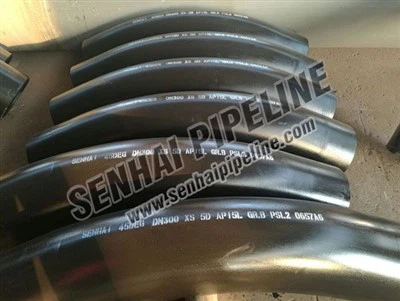
* 45° and 90° Elbows: Used to change the direction of the pipeline.
* long radius (lr) and Short radius (sr) elbows: LR elbows provide a smoother flow and are ideal for reduced pressure drop, while SR elbows are used in compact spaces.


2. Tees
* Equal tees: Split the flow into two equal directions.
* Reducing tees: Change the pipe size while splitting the flow.

Carbon Steel Fittings


Carbon Steel Fittings

3. Reducers
* Concentric reducers: Maintain the centerline of the pipe while reducing the diameter.
* Eccentric reducers: Offset the centerline to prevent pooling in horizontal pipelines.


4. Caps
* Used to seal the end of a pipe, protecting it from damage or contamination.


5. Stub ends
* Used with lap joint flanges for systems that require frequent disassembly for inspection or maintenance.


Our Certificate
 
 
productcate-1-1
productcate-1-1
productcate-1-1
productcate-1-1
productcate-1-1
productcate-1-1
productcate-1-1
productcate-1-1
productcate-1-1
productcate-1-1
productcate-1-1
productcate-1-1
productcate-1-1
productcate-1-1
productcate-1-1
productcate-1-1
productcate-1-1
productcate-1-1
productcate-1-1
productcate-1-1


FAQ


Q: What are SHS RHS made from?

A: SHS RHS are made from materials such as carbon steel, stainless steel, or alloy steel.
Stainless steel SHS RHS are often used in the food and sanitation industries.
Nickel alloy SHS RHS are often used in the petrochemical and process industries.

Q: What are the benefits of SHS RHS?

A: SHS RHS are strong and durable.
They are leak-proof.
They are resilient in harsh environments.
They have smooth inner surfaces.
They minimize pressure drops.
They are cost effective for larger sizes.

Q: How are SHS RHS made?

A: Seamless SHS RHS are made by cutting, heating, and shaping seamless pipes.
Welded SHS RHS have one or more welds, depending on the fitting's dimension and the manufacturing process.

Q: What are the guidelines for SHS RHS?

A: The ASME B16.9 standard provides guidelines for BW fitting dimensions, tolerances, materials, testing, and marking.

Q: What are SHS RHS?

A: Butt weld is to connect pipes and fittings ends by butt welding process. Also known by welded pipe fittings (buttweld fittings). It has ends in beveled or plain, dimensions normally from 3/4'' to 24''.

Q: What is the difference between BW and SW elbow welds?

A: In short, socket welding forms a fillet weld, while butt welding forms a butt weld. From the strength of the weld joint, stress and other analysis, butt welding performs better than socket welding. If it requires to weld in a high pressure or severe environment, it is recommend to use proper welding method.

Q: What is the difference between socket weld fittings and buttweld fittings?

A: A socket weld fitting fits over the outside of the pipe it is being welded to whereas a butt weld is the welding of two of the same sized diameters joined end to end. A socket weld fitting fits over the outside of the pipe it is being welded to. No beveling is needed as the socket weld forms a fillet weld.

Q: What is bw in elbow?

A: Butt weld elbow is a steel elbow formed by hot pressing or forging. Its connection form is to directly weld the elbow and steel pipe. Butt welded elbows are mainly used for elbow with higher pressure and temperature than other connection types (socket welded elbow or threaded pipe elbow).

Q: What are butt-weld pipe fittings?

A: Butt-weld pipe fittings are pipe fittings connected to the pipeline system by welding, with high strength and good sealing performance.

Q: What are the main types of butt-weld pipe fittings?

A: The main types include elbows, tees, reducers, caps, etc.

Q: What are the materials usually used for butt-weld pipe fittings?

A: Common materials include carbon steel, stainless steel, alloy steel, etc. The specific choice depends on the use environment and requirements of the pipeline system.

Q: How to determine the wall thickness of welded pipe fittings?

A: The wall thickness is usually determined according to factors such as the pressure level, fluid properties and temperature of the pipeline system to ensure the strength and sealing performance of the pipe fittings.

Q: What are the manufacturing processes for butt-weld pipe fittings?

A: The manufacturing processes include forging, casting, hot extrusion, welding, etc. The specific choice depends on the type and size of the pipe fittings.

Q: How to choose suitable butt-weld pipe fittings?

A: When choosing, factors such as the pressure level, fluid properties, temperature, material compatibility of the pipeline system, and the type and size of the pipe fittings should be considered.

Q: What inspections are required before installation of butt-welded pipe fittings?

A: Before installation, the pipe fittings should be inspected visually, dimensioned, verified in material, and subjected to necessary nondestructive testing to ensure the quality and performance of the pipe fittings.

Q: What should be paid attention to when welding butt-welded pipe fittings?

A: The welding process specifications should be followed during welding to ensure the quality and strength of the welded joints. At the same time, attention should be paid to controlling welding deformation and preventing welding defects.

Q: What inspections are required after welding butt-welded pipe fittings?

A: After welding, weld visual inspection, nondestructive testing (such as X-ray testing, ultrasonic testing, etc.) and pressure testing should be performed to ensure the quality and sealing performance of the welded joints.

Q: What problems may occur during the use of butt-welded pipe fittings?

A: Possible problems include corrosion, wear, leakage, cracks, etc. These problems may be caused by improper material selection, manufacturing process defects, improper installation, or harsh use environment.

Q: How to extend the service life of butt-welded pipe fittings?

A: The service life of butt-welded pipe fittings can be extended by selecting suitable materials, optimizing manufacturing processes, correct installation and use, and regular maintenance and inspection.

Q: What are the advantages of butt-welded pipe fittings compared to threaded pipe fittings?

A: Butt-welded pipe fittings have higher strength and better sealing performance, and can withstand higher pressures and temperatures. At the same time, butt-welded pipe fittings are more firmly connected and less prone to leakage.

We're professional bw fittings manufacturers and suppliers in China, specialized in providing high quality customized service. We warmly welcome you to buy discount bw fittings made in China here from our factory. BW REDUCERS, STEEL TEE, BENDS ASME B16 49

Home

Phone

E-mail

Inquiry