


Pipe Fittings
Your Professional Pipe Fittings Supplier
Hebei Senhai Pipeline Co., Ltd. is one professional manufacturer of ERW, SAW and SMLS steel pipes, as per standards of API5L, API 5CT, ASTM, EN, BS, DIN, GOST, GB, etc. Senhai Pipeline is located in Cangzhou City, which is the famous "Hometown of Pipes and Fittings" in China, about 120km away from Tianjin Seaport and Airport, and 180km from capital Beijing. Senhai especially produces welded steel pipes of large diameter and thick wall thickness in ERW, LSAW and SSAW. Anti-corrosion layers can also be done in our factory.




Sales Market
Senhai's products are popular in many countries and districts like Southeast Asia, Mid-East, Europe, America, Australia, South America, Africa, etc. "Customer's satisfaction, highly-qualified products and outstanding services" are treasured by Senhai as the business principle.
Our Certifications
Materials include A106 Gr.B, A53 Gr.B, API 5L PSL1 PSL2 X42~X70 L245 L290 L360, Q235A, Q235B, Q235C, Q345B~F, 10#, 20#, 45# steel, A105, WPB, etc., all of which meet the standards of ASTM, API, BS, DIN, JIS, EN, GOST, GB, etc. following standards including ISO9002,ASTM A234 GR WPB ASME/ANSI B16.9,DIN2605-1/2 2615 2617, JISB2311 2312, EN10253-1/2/3, GOST 17375 17376 17378 17379 GOST 30753, etc.
Production Equipment
The major production equipment owned by Senhai cover the hot-rolling puncher, interactive double core bar cold drawing machine, automatically rotary head rolling machine, tube straightening machine, annealing furnace without water cooling system and auxiliary equipment of surface scouring and coating.
Our Factory
Occupying total area of 33,000 square meters, Senhai possesses workshops of four hot rolling production lines, two cold drawing production lines, four welded pipe production lines and office building. The major production equipment owned by Senhai cover the hot-rolling puncher, interactive double core bar cold drawing machine, automatically rotary head rolling machine, tube straightening machine, annealing furnace without water cooling system and auxiliary equipment of surface scouring and coating.
Various materials having different standards are used to make various types of pipe fittings like elbows, adapters, tees, flanges, etc. Some popular fabricated materials and specifications for pipe fittings are as follows:
Nickel and Nickel Alloys
ASTM B-366, ASME SB-366, Nickel 200 & 201 (WPN & WPNL), Inconel 600 (WPNCI), Incoloy 800(WPNIC), Incoloy 825 (WPNICMC), Monel 400 (WPNC), Alloy 20 (WP 20 CB), Hastelloy, C-276, C-4, C-22 etc.

Stainless Steel
ASTM A-403 and ASME SA-403, 304, 304L, 304H, 304N, 304LN, 316, 316N, 316LN, 309, 310, 317L, 321, 321H, 347 etc.
Chrome-molybdenum
ASTM A-234 & ASME SA-234,WP-5, WP-11, WP-9, WP-91, WP-22 etc.
Aluminum
ASTM B-361, 5083, 66061, 5086
Titanium
ASTM B-363 & ASME SB-363, WPT7, WPT12, WPT2

Specifications of Size
To determine the usage of a pipe fitting, size is a very important criteria. Here, the main considerations are inside diameter and outside diameter where the inside diameter (ID) has the fitting size matched to the inside diameter of connecting line. The outside diameter (OD) has the fitting size matched to the outside diameter of connecting line. Besides these, sizes also refer to-
● English / Fractional sizes: Measurement done in inches
● Metric sizes: Units in mm/cm
Pressure and Temperature Ratings
Temperature and Pressure are the two important factors determining the safe and effective working of any industrial pipe fitting. The range of temperature and pressure depends on the final application, the material being used etc. There are various standards that are laid down in reference to the temperature and pressure parameters. These are as follows:
Standard Temperature and Pressure (STP)
This is commonly used to define standard conditions for temperature and pressure. These are important for the measurements and documentation of chemical and physical processes.
Normal Temperature and Pressure (NTP)
This is defined as air at 20 degree C (293.15 K, 68 degree F) and 1 atm ( 101.325 kN/m2, 101.325 kPa, 14.7 psia, 0 psig, 29.92 in Hg, 760 torr). Density is at 1.204 kg/m3 (0.075 pounds per cubic foot).
Standard Ambient Temperature and Pressure (SATP)
Thisrefers to temperature at 25 deg C (298.15 K) and pressure of 101 kPa.
International Standard Atmosphere (ISA)
Defined to 101.325 kPa, 15 deg C and 0% humidity.
Advantages of Pipe Fittings
Comfortable, efficient and reliable connections
The main function of pipe fittings is to provide connection, control and regulation in the fluid transport system. Their compact design, easy to install, can quickly complete the connection between the pipeline, greatly improving the construction efficiency. At the same time, the pipe fittings have good sealing performance to ensure that there is no leakage in the fluid transport process, to ensure the safety and stability of production operations.
Strong adaptability, wide range of applications
Pipe fittings are available in a wide range of types and specifications to suit different working environments and media requirements. Whether it is gas, liquid or solid particles, can be achieved by selecting the appropriate fittings to transport. In addition, the fittings can also be used in a variety of fields, such as construction, water conservancy, chemical industry, petroleum, etc., with a wide range of applications.
Various materials, corrosion resistance
Pipe fittings can be made of various materials, such as metal, plastic, rubber and so on. Different materials have different characteristics of the fittings, can be selected according to the specific requirements for use. For example, metal fittings have high strength and rigidity, while plastic fittings have good corrosion resistance and light weight. Diversified material selection makes the fittings can adapt to a variety of corrosive environments to prolong the service life.
Save space and reduce cost
Some special fittings design, such as elbows, tees, crosses, etc., can be achieved in a limited space within the pipeline control, branching and other functions, saving valuable space resources. At the same time, through reasonable selection and design, it can optimise the fluid delivery system, reduce energy consumption, improve the operating efficiency of the system, and thus reduce the operating costs of enterprises.
Key Application Areas of a Pipe Fittings
Construction
Pipe fittings are an indispensable part of building water supply and drainage, heating, ventilation and other systems. These fittings must be corrosion resistant, pressure resistant and well sealed to ensure the normal operation and safety of the system.
Petrochemical industry
Valves are mainly used in the petrochemical industry to transport oil, natural gas, chemicals and other substances. As these substances are corrosive, the valves must have good corrosion resistance and high pressure resistance.
Metallurgical field
In the metallurgical industry, the pipe fittings are mainly used to transport iron, slag and other substances at high temperature and high pressure. Fittings are required to have high temperature resistance, wear resistance and other characteristics to adapt to the harsh working environment.
Pharmaceutical field
In the pharmaceutical industry, the pipe fittings are mainly used for transporting medicines and raw materials. These fittings require good cleanliness and corrosion resistance to ensure the quality and safety of drugs.
Municipal construction
Fittings play an important role in municipal construction, such as urban water supply, drainage systems, gas pipelines, etc., which require a large number of fittings to connect and support the pipeline.
Electric power communication
In the electric power and communication industry, fittings are used to connect cables, fibre optic cables and other lines to ensure stable transmission of power and signals.
Agricultural irrigation
In the agricultural irrigation system, pipe fittings are used to connect irrigation pipes to transport water to farmland to improve irrigation efficiency and crop yield.
Marine engineering
In the deep sea environment, fittings must have excellent resistance to seawater corrosion to ensure the normal operation of marine equipment. For example, submarines, offshore platforms, desalination plants, etc. Require high performance fittings.
Aerospace
In the aerospace industry, fittings must have high strength, high reliability and low weight to adapt to the extreme working environment and requirements.
Types of Pipe Fittings
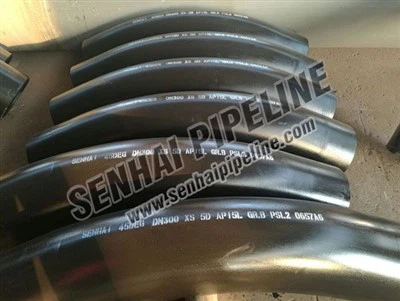
Elbow pipe fittings
If the need of the hour is to change the direction of the pipe, then elbow pipe fittings are used. These are available in different angle measurements like 90⁰, 45⁰, 22.5⁰.
In addition to this, if the attachment pipe is of the same diameter then normal elbow threaded pipe fittings are used else reducer elbow is used. The usage ensures that the pipe reaches any place in the unit without any hassles.
Reducer pipe fittings
Another type of fitting that plays a crucial role in several places is the reducer threaded pipe fittings. These are conical, concentric in shape, and are used to either reduce or increase the flow of liquid. Another type in this category is the parallel edged reducer that offers a smooth flow of the fluid without accumulating air inside it.
Tee type pipe fittings
If the system demands to offer one outlet and two inlet or two outlets and one inlet, then these Tee type threaded pipe fittings are used. Its 90⁰ design ensures proper and smooth flow of the liquid. These form an integral part of the piping industry.
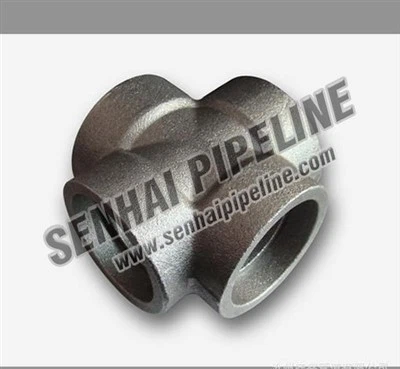
Cross-type pipe fittings
Another interesting pipe fitting is the cross-type. With 4 openings in 4 different directions, it can connect 4 different pipes and ensure smooth distribution of fluid. Most popularly being used in the sprinkler system, this cross fitting generates stress on the pipe because of the change in temperature.
Coupling
If there is a leaking pipe or a broken one, the coupling can be used to address the issue. With the same diameter on both sides, couplings are available in two different types- slip and compression coupling. In industries and common places, these couplings are used to fix some of the lengthy damaged pipes.
Adaptor pipe fittings
Adaptor threaded pipe fittings are yet another important attachment required in the plumbing industry. It is used in case of pipes that do not have plain or special ends. Mostly used in PVC or copper pipes, the adaptors are available in different forms- male adaptor, female adaptor, male hose adaptor, tube to hose adaptor, AN male adaptor.
Plug & Cap
Though both are differently named yet do the same- close any piping system. However, the difference lies in the thread pattern. While in a plug, the threads are present on the outer surface, in cap threads are on the inner surface. Therefore, the choice of material should be done accordingly.
Our Certificate


FAQ