Hey there! As a supplier for a Union, I've got a good grasp on what makes up a typical 'Union'. Let's dive right in and break down its structure.
First off, a Union is a crucial part in the world of pipe - fitting. It's designed to connect two pipes together in a way that allows for easy disconnection when needed. This is super handy for maintenance, repairs, or when you need to reconfigure a piping system.
The Main Components
Body
The body of a Union is like the backbone. It's the central part that holds everything together. Usually made from materials like stainless steel, carbon steel, or brass, the body is strong and durable. It has a hollow center that allows the fluid or gas to pass through the pipes. The shape of the body can vary, but most commonly, it's cylindrical. This shape provides a smooth flow path and is easy to manufacture.
Nut
The nut is another key piece. It's used to secure the Union to the pipes. You'll typically find two nuts in a standard Union. These nuts are threaded on the inside to match the threads on the ends of the pipes and the body of the Union. When you tighten the nuts, they create a tight seal between the pipes and the Union. This seal is essential to prevent leaks. The material of the nut is often the same as the body to ensure compatibility and strength.
Ferrule
The ferrule is a small but mighty component. It's a ring - shaped piece that sits between the nut and the pipe. When the nut is tightened, the ferrule gets compressed. This compression creates a tight, leak - proof seal. Ferrules can be made from different materials, depending on the application. For example, in high - pressure applications, you might use a metal ferrule, while in some low - pressure or non - critical applications, a plastic ferrule could do the job.
How They Work Together
When you're installing a Union, you first slide the nuts onto the ends of the pipes. Then, you place the ferrules over the pipe ends. Next, you align the body of the Union with the pipe ends. Finally, you start tightening the nuts. As you do so, the nuts pull the ferrules against the body of the Union, creating a seal. The more you tighten the nuts, the stronger the seal becomes. But be careful not to over - tighten, as this can damage the components.


Different Types of Unions
Threaded Unions
Threaded unions are the most common type. They rely on threads on the nuts, pipes, and body to create a connection. They're easy to install and can be used in a wide range of applications. You can find them in residential plumbing systems, as well as in industrial settings. For example, in a home, you might use a threaded Union to connect a faucet to the water supply pipes.
Welded Unions
Welded unions are used when a permanent connection is required. Instead of using nuts and ferrules, the pipes are welded directly to the body of the Union. This creates a very strong and leak - proof connection. However, it also means that the connection is not easily removable. Welded unions are often used in high - pressure or high - temperature applications, such as in power plants or chemical processing facilities.
Applications of Unions
Unions are used in a variety of industries. In the oil and gas industry, they're used to connect pipes in pipelines, refineries, and storage facilities. The ability to easily disconnect and reconnect pipes is crucial for maintenance and inspection. In the food and beverage industry, unions are used in sanitary piping systems. They allow for easy cleaning and disassembly to meet strict hygiene standards.
My Experience as a Union Supplier
As a supplier, I've seen firsthand the importance of providing high - quality Unions. I work closely with manufacturers to ensure that the materials used are of the best quality. I also offer a wide range of products to meet different customer needs. For example, I supply Swage Nipples, which are used to connect pipes of different sizes. These are often used in conjunction with Unions to create a complete piping system.
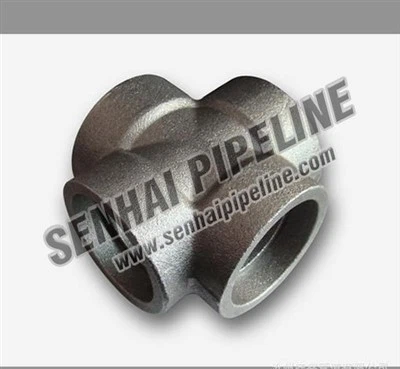
I also offer Carbon Steel Forged Cross. These are used when you need to connect four pipes at a single point. They're very strong and can withstand high pressures. And of course, Forged Couplings are another popular product. They're used to connect two pipes of the same size and are often used in combination with Unions.
Why Quality Matters
When it comes to Unions, quality is non - negotiable. A low - quality Union can lead to leaks, which can be costly in terms of lost fluids or gases, as well as potential damage to the surrounding environment. High - quality Unions are made from durable materials and are manufactured to strict standards. This ensures that they'll last a long time and perform reliably.
Conclusion
In conclusion, a typical Union is made up of a body, nuts, and ferrules. These components work together to create a strong, leak - proof connection between pipes. There are different types of Unions, each with its own advantages and applications. As a supplier, I'm committed to providing high - quality products to meet the diverse needs of my customers.
If you're in the market for Unions or any related pipe - fitting products, I'd love to talk to you. Whether you're working on a small residential project or a large industrial installation, I can help you find the right products for your needs. Let's have a chat and see how we can work together to get your piping system up and running smoothly.
References
- "Pipe Fitting Handbook"
- Industry standards and guidelines for pipe - fitting components.