Hey there! As a supplier of Forged Couplings, I often get asked about how these nifty little things transmit power. Well, let's dive right in and take a closer look at this topic.
First off, what are forged couplings? Forged couplings are mechanical devices used to connect two shafts together at their ends for the purpose of transmitting power. They're made through a forging process, which involves shaping metal using localized compressive forces. This results in a strong and durable coupling that can handle high levels of torque and stress.
So, how do they actually transmit power? There are a few key ways that forged couplings get the job done.
1. Mechanical Interlock
One of the most common ways forged couplings transmit power is through mechanical interlock. This is where the coupling has a design that allows it to physically engage with the shafts it's connecting. For example, some couplings have teeth or splines that fit into corresponding grooves on the shafts. When the shafts rotate, the teeth or splines mesh together, transferring the rotational force from one shaft to the other.
This type of power transmission is very efficient because it provides a direct connection between the shafts. It also allows for a high degree of torque transfer, making it suitable for applications where a lot of power needs to be transmitted. However, it's important to note that mechanical interlock couplings require precise alignment of the shafts to work properly. If the shafts are misaligned, it can cause excessive wear on the coupling and the shafts, and may even lead to failure.

2. Frictional Force
Another way forged couplings transmit power is through frictional force. In this case, the coupling creates a tight fit around the shafts, and the friction between the coupling and the shafts allows the power to be transferred. This can be achieved through a variety of methods, such as using a clamping mechanism or a tapered bore design.
Frictional force couplings are relatively easy to install and can tolerate some degree of misalignment. They're also less expensive than mechanical interlock couplings in some cases. However, they may not be as efficient at transmitting power, especially in high-torque applications. The frictional force can also be affected by factors such as temperature, lubrication, and surface finish, so it's important to ensure that these conditions are properly maintained.
3. Elastic Deformation
Some forged couplings use elastic deformation to transmit power. These couplings are made from materials that can deform elastically under load, such as rubber or spring steel. When the shafts rotate, the coupling deforms slightly, absorbing the energy and transferring it to the other shaft.
Elastic deformation couplings are great for applications where there is a need to dampen vibrations or shock loads. They can also help to compensate for small amounts of misalignment between the shafts. However, they may have a limited torque capacity compared to other types of couplings, and the elastic properties of the material can change over time, especially under high temperatures or heavy use.
Now, let's talk a bit about the importance of choosing the right forged coupling for your application. The type of coupling you choose will depend on several factors, including the amount of power you need to transmit, the speed of the shafts, the degree of misalignment between the shafts, and the environmental conditions.
For example, if you're working with a high-torque application, you'll probably want to go with a mechanical interlock coupling. On the other hand, if you need to dampen vibrations or have some degree of misalignment, an elastic deformation coupling might be a better choice. And if cost is a major concern and you don't need a high level of torque transmission, a frictional force coupling could be the way to go.
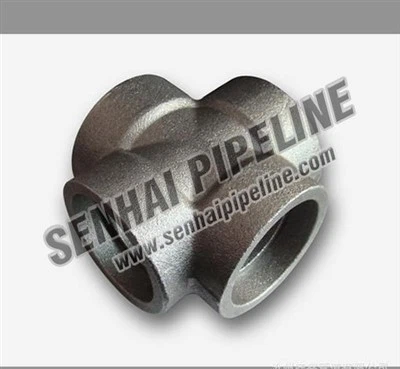
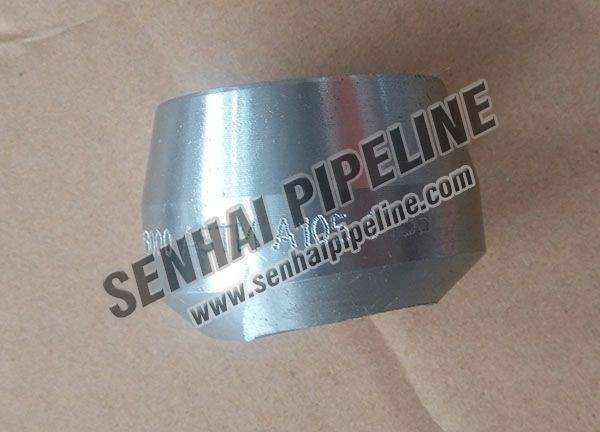
At our company, we offer a wide range of Forged Couplings to suit different applications. Whether you're in the industrial, automotive, or any other sector, we've got you covered. We also supply other forged fittings like Socket Welded Olets and Carbon Steel Forged Cross, which are essential components in many piping systems.
If you're in the market for forged couplings or any of our other products, don't hesitate to reach out. We're always happy to help you find the right solution for your needs and answer any questions you might have. Whether you're a small business or a large corporation, we can provide you with high-quality products at competitive prices.
In conclusion, forged couplings are an important part of many mechanical systems, and understanding how they transmit power is crucial for choosing the right one for your application. Whether it's through mechanical interlock, frictional force, or elastic deformation, these couplings play a vital role in keeping your machinery running smoothly. So, if you're looking for reliable forged couplings and other forged fittings, give us a shout. We're here to make your power transmission needs a breeze.
References
- Machinery's Handbook: A comprehensive reference book for mechanical engineering, which provides detailed information on various types of couplings and their power transmission mechanisms.
- ASME Standards: The American Society of Mechanical Engineers has developed standards for the design and manufacture of forged couplings and other mechanical components, which ensure their safety and performance.