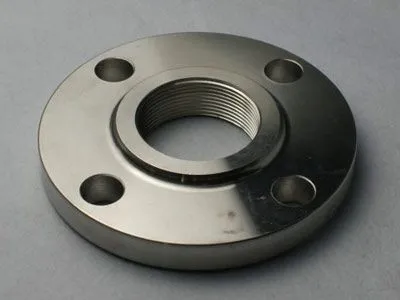
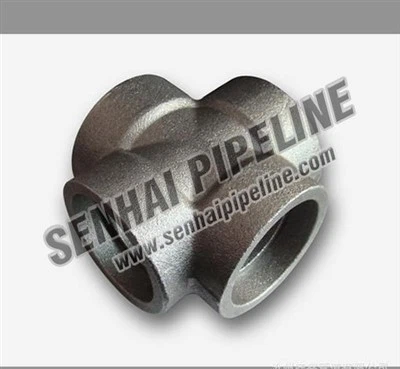
Hey there! I'm a supplier of forged fittings, and I know how crucial it is for these components to have good impact resistance. In the industrial world, forged fittings are used in all sorts of piping systems, and they need to be tough enough to handle the knocks and jolts they'll inevitably face. So, let's dive into how we can improve the impact resistance of forged fittings.
Material Selection
First off, the material you choose for your forged fittings makes a huge difference. Different materials have different properties when it comes to withstanding impact. For instance, stainless steel is a popular choice because it's not only corrosion - resistant but also has decent impact strength. It can handle sudden forces without cracking easily.
Carbon steel is another option. It's strong and cost - effective, but its impact resistance can vary depending on the carbon content. Low - carbon steel is more ductile, which means it can deform a bit under impact rather than shattering. High - carbon steel, on the other hand, is harder but more brittle, so it might crack more easily under high - impact situations.
Alloy steels are also worth considering. They're made by adding other elements like chromium, nickel, and molybdenum to the base steel. These additions can enhance the material's toughness and impact resistance. For example, a nickel - alloyed steel can have better impact properties at low temperatures, which is great if your forged fittings will be used in cold environments.
Forging Process
The way we forge the fittings is super important too. During the forging process, we can control the grain structure of the material. A fine - grained structure generally leads to better impact resistance. When the grains are small, they can distribute the impact energy more evenly throughout the material.
We use different forging methods, like open - die forging and closed - die forging. Open - die forging gives us more flexibility in shaping the fittings, and it can help refine the grain structure. Closed - die forging, on the other hand, is more precise and can produce complex shapes. But no matter which method we choose, proper heat treatment during forging is key.
Heat treatment can change the material's properties significantly. Annealing, for example, can relieve internal stresses in the forged fitting and make it more ductile. Quenching and tempering are also common heat - treatment processes. Quenching rapidly cools the fitting, which hardens the material, and then tempering is done to reduce the brittleness and improve the impact resistance.
Design Considerations
The design of the forged fitting can have a big impact on its ability to resist impacts. For example, the shape of the fitting matters. A fitting with smooth curves and no sharp corners is less likely to have stress concentrations. Stress concentrations are areas where the stress is much higher than in the surrounding material, and they can lead to cracking under impact.
Let's take a look at some specific types of forged fittings. Socket Welded Equal Tee is a common one. When designing this type of tee, we need to make sure that the walls are thick enough to handle the forces. If the walls are too thin, the tee might deform or crack easily under impact.
Socket Welded Olets are another example. These fittings are used to create branch connections in piping systems. A well - designed olet will have a proper transition from the main pipe to the branch, which helps distribute the impact energy evenly.
Swage Nipples are used to connect pipes of different sizes. Their design should ensure a smooth reduction in diameter to avoid stress concentrations. If the reduction is too abrupt, it can cause high stress in the nipple, making it more vulnerable to impact damage.


Surface Treatment
Surface treatment can also play a role in improving the impact resistance of forged fittings. One common surface treatment is shot peening. In shot peening, small metal balls are shot at the surface of the fitting. This creates a compressive stress layer on the surface, which can help prevent cracks from starting.
Coatings can also be applied to the fittings. A hard - wearing coating can act as a barrier, protecting the fitting from physical damage during impacts. For example, a ceramic coating can increase the surface hardness of the fitting, making it more resistant to abrasion and impact.
Quality Control
Quality control is essential at every step of the process. We need to test the forged fittings to make sure they meet the required impact - resistance standards. Non - destructive testing methods, like ultrasonic testing and magnetic particle testing, can be used to detect any internal flaws or cracks in the fittings.
We also conduct impact tests, such as the Charpy V - notch test. In this test, a specimen of the forged fitting is struck with a pendulum, and the energy absorbed during the impact is measured. This gives us an idea of how well the fitting can resist impact.
By having strict quality - control measures in place, we can ensure that only high - quality, impact - resistant forged fittings are sent out to our customers.
Conclusion
Improving the impact resistance of forged fittings is a multi - faceted process. It involves careful material selection, a well - controlled forging process, smart design considerations, appropriate surface treatments, and rigorous quality control. As a supplier, I'm always looking for ways to make our forged fittings even better.
If you're in the market for high - quality, impact - resistant forged fittings, I'd love to have a chat with you. Whether you need Socket Welded Equal Tee, Socket Welded Olets, Swage Nipples, or any other type of forged fitting, we've got you covered. Reach out to us to discuss your requirements and let's work together to find the best solutions for your piping systems.
References
- ASME Boiler and Pressure Vessel Code
- ASTM Standards for Forged Fittings
- "Metallurgy for Dummies" by Jeff Gibbs