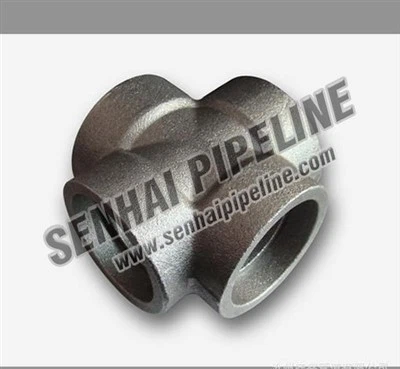
A pipe fittings cross, also known as a four - way fitting, is a crucial component in a pneumatic system. As a reliable supplier of pipe fittings cross, I have witnessed firsthand the diverse and essential functions that this fitting serves within pneumatic setups. In this blog, we will explore the various functions of a pipe fittings cross in a pneumatic system.
1. Flow Distribution
One of the primary functions of a pipe fittings cross in a pneumatic system is to distribute the flow of compressed air. In a pneumatic system, compressed air is the working fluid that powers various components such as actuators, valves, and cylinders. A pipe fittings cross allows the compressed air to be split into multiple directions.
For example, in a complex pneumatic control system where multiple actuators need to be operated simultaneously, a pipe fittings cross can divide the incoming compressed air stream into four separate paths. This ensures that each actuator receives an adequate supply of compressed air to function properly. Without a pipe fittings cross, it would be extremely challenging to distribute the compressed air evenly to multiple components, leading to inconsistent performance of the system.
2. System Expansion
Pneumatic systems often need to be expanded over time to accommodate new equipment or to increase the system's capacity. A pipe fittings cross plays a vital role in this expansion process. It provides a convenient point for adding new branches to the existing pneumatic network.
Suppose a manufacturing plant initially has a simple pneumatic system powering a few machines. As the plant grows and new machines are added, a pipe fittings cross can be installed at a strategic location in the existing pipeline. This allows for the easy connection of additional pipes to supply compressed air to the new equipment. This flexibility in system expansion is one of the key advantages of using pipe fittings crosses in pneumatic systems.
3. Pressure Equalization
Maintaining consistent pressure throughout a pneumatic system is crucial for its efficient operation. A pipe fittings cross helps in pressure equalization. When compressed air flows through a pipeline, pressure drops can occur due to factors such as friction, changes in pipe diameter, and the presence of valves and other components.


A pipe fittings cross can act as a junction where the pressure can be balanced. The cross - shaped design allows the compressed air to mix and redistribute, reducing the pressure differences between different branches of the system. This ensures that all components in the pneumatic system receive air at a relatively uniform pressure, improving the overall performance and reliability of the system.
4. Component Connection
In a pneumatic system, there are various components such as valves, filters, regulators, and actuators that need to be connected to the pipeline. A pipe fittings cross provides a convenient way to connect these components. It has four ports, which can be used to connect different pipes or components.
For instance, one port of the pipe fittings cross can be connected to the main compressed air supply line, while the other three ports can be connected to different valves or actuators. This simplifies the installation process and reduces the number of additional fittings required. Moreover, it allows for a more organized and compact layout of the pneumatic system, which is especially important in space - constrained environments.
5. Directional Control
In some pneumatic systems, the direction of the compressed air flow needs to be controlled precisely. A pipe fittings cross can be used in combination with other control valves to achieve this. By installing control valves at the ports of the pipe fittings cross, the flow of compressed air can be directed to specific branches of the system.
For example, in a pneumatic robotic arm, the movement of the arm is controlled by the flow of compressed air to different actuators. A pipe fittings cross, along with appropriate control valves, can be used to direct the compressed air to the actuators in the correct sequence, enabling the robotic arm to perform complex movements.
6. System Isolation
In certain situations, it may be necessary to isolate a particular section of a pneumatic system for maintenance or repair purposes. A pipe fittings cross can facilitate this isolation. By installing shut - off valves at the ports of the cross, a specific branch of the system can be easily isolated from the rest of the network.
This allows maintenance personnel to work on a particular component or section of the pipeline without affecting the operation of the entire pneumatic system. It also helps in reducing downtime and minimizing the impact on production processes.
Related Products
As a supplier, we also offer a range of related products that complement the pipe fittings cross in a pneumatic system. Carbon Steel Fittings are known for their durability and strength, making them suitable for high - pressure pneumatic applications. Carbon Steel Tee can be used in combination with the pipe fittings cross to further expand the system and control the flow of compressed air. Hot Induction Bends are useful for changing the direction of the pipeline in a smooth and efficient manner, ensuring optimal flow of compressed air.
Conclusion
In conclusion, a pipe fittings cross is an indispensable component in a pneumatic system. Its functions range from flow distribution and system expansion to pressure equalization, component connection, directional control, and system isolation. The versatility and reliability of pipe fittings crosses make them a popular choice for various pneumatic applications.
If you are in need of high - quality pipe fittings cross or any of our related products for your pneumatic system, we invite you to contact us for a detailed discussion about your requirements. Our team of experts is ready to assist you in finding the best solutions for your specific needs.
References
- ASME B31.3 Process Piping Code
- Pneumatic Systems Handbook by John C. Parr
- Pipe Fittings Design and Engineering Guide by Pipe Fittings Institute