Torque specification for flange bolts is a critical aspect in various industrial applications. As a leading flanges supplier, I understand the importance of getting this right to ensure the safety, reliability, and efficiency of piping systems. In this blog post, I will delve into what torque specification for flange bolts means, why it is crucial, and how to determine the appropriate torque values for different types of flanges.
Understanding Torque in Flange Bolting
Torque is the rotational force applied to a bolt to tighten it. When we talk about the torque specification for flange bolts, we are referring to the specific amount of rotational force that should be applied to the bolts to achieve the proper clamping force between the flanges. This clamping force is essential for creating a leak - tight seal between the flanges, preventing the escape of fluids or gases from the piping system.
The torque applied to a bolt causes it to stretch, creating a tension that holds the two flanges together. If the torque is too low, the clamping force will be insufficient, leading to potential leaks. On the other hand, if the torque is too high, it can cause the bolt to break, damage the flange, or even lead to premature failure of the entire piping system.
Why Torque Specification is Crucial
Leak Prevention
The primary function of a flange connection is to provide a leak - tight seal. Proper torqueing of the bolts ensures that the gasket between the flanges is compressed evenly, creating a reliable barrier against leakage. In industries such as oil and gas, chemical processing, and power generation, even a small leak can have serious consequences, including environmental pollution, safety hazards, and financial losses.
Structural Integrity
Correct torque values help maintain the structural integrity of the flange connection. Over - tightening can cause excessive stress on the bolts and the flanges, leading to cracking or deformation. Under - tightening, on the other hand, can result in the flanges separating under pressure, which can also compromise the integrity of the entire piping system.
Long - Term Performance
A well - torqued flange connection will perform better over the long term. It reduces the likelihood of bolt loosening due to vibration or thermal cycling, which can occur in many industrial environments. This means fewer maintenance requirements and longer service life for the piping system.
Factors Affecting Torque Specification
Bolt Size and Grade
The size and grade of the bolts used in a flange connection are important factors in determining the torque specification. Larger bolts generally require more torque to achieve the same clamping force as smaller bolts. Similarly, higher - grade bolts, which have higher tensile strength, may require different torque values compared to lower - grade bolts.
Flange Type
Different types of flanges have different torque requirements. For example, a Long Welding Neck Flange may have different torque specifications compared to a slip - on flange. The design and thickness of the flange, as well as the type of gasket used, can all influence the required torque.


Gasket Material
The material of the gasket between the flanges also affects the torque specification. Soft gaskets, such as rubber or compressed fiber gaskets, may require less torque to compress compared to harder gaskets, such as metal - jacketed or spiral - wound gaskets.
Operating Conditions
The operating conditions of the piping system, including pressure, temperature, and vibration, can also impact the torque specification. Higher - pressure systems generally require higher clamping forces, and thus higher torque values, to prevent leakage. Similarly, systems operating at high temperatures may require different torque values to account for thermal expansion and contraction.
Determining the Torque Specification
Manufacturer's Recommendations
The first step in determining the torque specification for flange bolts is to refer to the manufacturer's recommendations. Flange and bolt manufacturers often provide torque charts that list the recommended torque values for different bolt sizes, grades, and flange types. These charts are based on extensive testing and engineering calculations and should be followed as closely as possible.
Industry Standards
In addition to manufacturer's recommendations, there are also industry standards that provide guidelines for torque specification. For example, the American Society of Mechanical Engineers (ASME) B16.5 standard provides torque values for various flange connections. These standards are widely recognized and followed in the industry and can be a valuable resource for determining the appropriate torque.
Engineering Calculations
In some cases, especially for non - standard or critical applications, engineering calculations may be required to determine the torque specification. These calculations take into account factors such as the bolt material properties, the flange geometry, the gasket properties, and the operating conditions of the piping system. Professional engineers with expertise in flange design and bolting can perform these calculations to ensure accurate torque values.
Torqueing Procedures
Sequence
The sequence in which the bolts are tightened is also important. A proper tightening sequence helps ensure that the gasket is compressed evenly across the flange face. A common tightening sequence is the star pattern, where bolts are tightened in a sequence that alternates around the flange.
Tools
Using the right tools is crucial for achieving the correct torque. Torque wrenches are the most commonly used tools for tightening flange bolts. There are different types of torque wrenches, including click - type, beam - type, and digital torque wrenches. Each type has its own advantages and disadvantages, and the choice of tool depends on the specific application and the required accuracy.
Re - torqueing
After the initial tightening, it is often recommended to re - torque the bolts after a certain period of time or after the system has been pressurized. This helps account for any settling or relaxation of the gasket and ensures that the clamping force remains within the required range.
Specific Examples of Flange Torque Specifications
Let's take a look at some specific examples of flange torque specifications for different types of flanges.
Orifice Flange Facing
Orifice flanges are used in piping systems to measure the flow rate of fluids. The torque specification for orifice flange bolts depends on factors such as the bolt size, grade, and the pressure rating of the flange. For a typical 2 - inch, Class 150 orifice flange with 1/2 - inch diameter bolts of Grade 2, the recommended torque value may be around 25 - 30 foot - pounds. However, it is important to refer to the manufacturer's recommendations for the exact torque values.
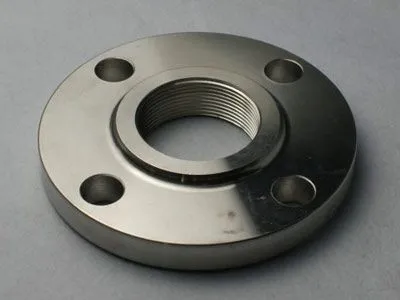
Carbon Steel Threaded Flange
Carbon steel threaded flanges are commonly used in low - pressure applications. The torque specification for these flanges also depends on the bolt size and grade. For a 3 - inch, Class 125 carbon steel threaded flange with 5/8 - inch diameter bolts of Grade 5, the recommended torque value may be in the range of 40 - 50 foot - pounds.
Conclusion
In conclusion, understanding the torque specification for flange bolts is essential for ensuring the proper functioning of piping systems. As a flanges supplier, I am committed to providing high - quality flanges and accurate information about torque specifications to our customers. By following the manufacturer's recommendations, industry standards, and proper torqueing procedures, you can ensure a leak - tight and reliable flange connection.
If you are in the market for flanges or need more information about torque specifications, I encourage you to reach out to me. I am happy to assist you in selecting the right flanges for your application and providing guidance on the proper torque values. Let's work together to ensure the success of your piping projects.
References
- ASME B16.5 Standard - Pipe Flanges and Flanged Fittings
- Manufacturer's Catalogs for Flanges and Bolts
- Engineering Textbooks on Piping Design and Bolting