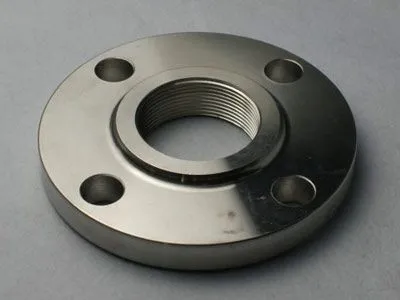
In the highly specialized and safety - critical field of aerospace applications, every component used must meet the most stringent standards and requirements. As a supplier of forged plugs, I am often asked the question: Can forged plugs be used in aerospace applications? This blog post aims to explore this question in detail, considering various aspects such as material properties, manufacturing processes, and industry standards.
Material Properties of Forged Plugs
Forged plugs are typically made from high - quality metals such as stainless steel, carbon steel, and alloy steel. These materials offer a range of desirable properties that are crucial for aerospace applications. For instance, stainless steel is known for its excellent corrosion resistance, which is essential in aerospace environments where components may be exposed to harsh chemicals, moisture, and varying temperatures. Alloy steels, on the other hand, can provide high strength - to - weight ratios, a key factor in aerospace design where reducing weight while maintaining structural integrity is of utmost importance.
In aerospace, components are often subjected to extreme mechanical stresses, including vibration, shock, and high - pressure differentials. Forged plugs made from appropriate materials can withstand these stresses effectively. The forging process itself enhances the mechanical properties of the material by aligning the grain structure, which results in improved toughness, ductility, and fatigue resistance compared to cast or machined parts. This makes forged plugs a potential candidate for use in aerospace systems that require reliable and durable components.
Manufacturing Processes and Quality Control
The manufacturing process of forged plugs is a critical factor in determining their suitability for aerospace applications. Forging involves shaping metal by applying compressive forces, which can be done through open - die forging or closed - die forging. In open - die forging, the metal is shaped between flat or simple - shaped dies, while closed - die forging uses dies with a more complex shape that fully encloses the metal during the forging process.
Closed - die forging is often preferred for aerospace applications as it allows for more precise control of the part's dimensions and shape. This process can produce forged plugs with tight tolerances, which are necessary for proper fit and function in aerospace systems. Additionally, the forging process can eliminate internal defects such as porosity and inclusions, which can weaken the material and lead to component failure.
Quality control is another crucial aspect of manufacturing forged plugs for aerospace use. Every step of the manufacturing process, from raw material inspection to final product testing, must be carefully monitored and documented. Non - destructive testing methods such as ultrasonic testing, magnetic particle testing, and X - ray inspection are commonly used to detect any internal flaws in the forged plugs. Dimensional inspection is also performed using precision measuring tools to ensure that the plugs meet the specified design requirements.
Industry Standards and Regulations
The aerospace industry is heavily regulated, and all components used in aerospace applications must comply with strict standards and regulations. Forged plugs intended for aerospace use must meet standards such as those set by the National Aerospace and Defense Contractors Accreditation Program (NADCAP), the Federal Aviation Administration (FAA), and the European Union Aviation Safety Agency (EASA).
These standards cover various aspects of the component, including material quality, manufacturing processes, and testing procedures. For example, NADCAP accreditation is a widely recognized certification that indicates a supplier's compliance with aerospace industry - specific quality management systems. To obtain NADCAP accreditation, a supplier must undergo a rigorous audit process to demonstrate its ability to meet the highest standards of quality and safety.
Applications in Aerospace
Forged plugs can find several applications in aerospace systems. In hydraulic and pneumatic systems, forged plugs can be used to seal off ports and prevent fluid or gas leakage. These systems are critical for the operation of aircraft control surfaces, landing gear, and other essential components. The high - pressure and high - temperature environments in these systems require components that can withstand extreme conditions, and forged plugs made from appropriate materials can meet these requirements.
In fuel systems, forged plugs can also be used to seal fuel lines and connections. The fuel system in an aircraft is subject to strict safety regulations, and any component used in this system must be highly reliable and resistant to corrosion and leakage. Forged plugs can provide a secure and long - lasting seal, ensuring the safe operation of the fuel system.
Limitations and Challenges
While forged plugs have many potential applications in aerospace, there are also some limitations and challenges that need to be considered. One of the main challenges is the cost of manufacturing forged plugs to meet aerospace standards. The strict quality control requirements, the use of high - quality materials, and the precision manufacturing processes all contribute to higher production costs. This can make forged plugs more expensive compared to other types of components, which may be a limiting factor for some aerospace applications.
Another challenge is the need for continuous innovation and improvement. The aerospace industry is constantly evolving, with new materials and technologies being developed to improve aircraft performance and safety. As a supplier of forged plugs, it is essential to stay up - to - date with these advancements and be able to adapt the manufacturing process and product design accordingly.
Related Forged Fittings
In addition to forged plugs, other forged fittings such as Forged Couplings, Bw Olets, and Swage Nipples also play important roles in aerospace applications. Forged couplings are used to connect two pipes or tubes together, providing a secure and leak - free joint. Bw olets are used to create branch connections in pipes, allowing for the distribution of fluids or gases. Swage nipples are used to connect pipes of different sizes, providing a smooth transition between the two diameters.
These related forged fittings, like forged plugs, must also meet the same high standards and requirements for aerospace use. They are often used in conjunction with forged plugs in various aerospace systems, and their compatibility and performance are crucial for the overall functionality and safety of the system.


Conclusion and Call to Action
In conclusion, forged plugs can indeed be used in aerospace applications, thanks to their excellent material properties, precise manufacturing processes, and ability to meet strict industry standards. However, there are also challenges such as cost and the need for continuous innovation that need to be addressed.
As a supplier of forged plugs, I am committed to providing high - quality products that meet the unique needs of the aerospace industry. Our forged plugs are manufactured using the latest technologies and under strict quality control measures to ensure their reliability and performance.
If you are in the aerospace industry and are looking for a reliable supplier of forged plugs or other forged fittings, I encourage you to contact us for further information and to discuss your specific requirements. We are ready to work with you to provide the best solutions for your aerospace applications.
References
- Aerospace Industry Standards Handbook, published by the Aerospace Industries Association.
- Forging Technology and Applications, a technical reference book on forging processes and their applications.
- FAA Regulations and Guidelines for Aerospace Components, available from the Federal Aviation Administration.