When it comes to industrial pipe fittings, the forged lateral tee plays a crucial role in various piping systems. As a prominent supplier of forged lateral tees and other related forged fittings, I am often asked about the weight of a forged lateral tee. In this blog post, I will delve into the factors that influence the weight of a forged lateral tee, its significance, and address some frequently asked questions.
Understanding the Forged Lateral Tee
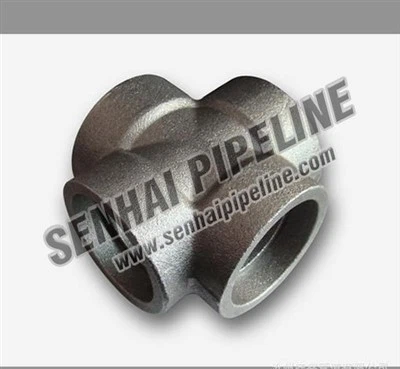
Before we jump into the weight aspect, let's briefly understand what a forged lateral tee is. A forged lateral tee is a type of pipe fitting that has a T-shaped structure. It is used to connect three pipes at a 90-degree angle, allowing the flow of fluid or gas to be split or combined. This fitting is made through a forging process, which involves shaping metal under high pressure and temperature. The forging process ensures a high strength and durability of the fitting, making it suitable for high-pressure and high-temperature applications in industries such as oil and gas, chemical, and power generation.
Factors Influencing the Weight of a Forged Lateral Tee
The weight of a forged lateral tee is not a fixed value; it varies depending on several factors.
1. Size and Dimensions
The most obvious factor is the size of the forged lateral tee. This includes the nominal pipe size (NPS) of the run and the branch. The larger the NPS, the greater the volume of metal required to manufacture the fitting, and thus, the heavier it will be. For example, a forged lateral tee with a 2-inch run and a 1-inch branch will weigh less than one with a 4-inch run and a 2-inch branch.
2. Material
The material used to make the forged lateral tee also significantly affects its weight. Different metals have different densities. For instance, carbon steel is a commonly used material for forged lateral tees. It has a relatively high density, so a carbon steel forged lateral tee will be heavier compared to one made from a lighter material like aluminum. Stainless steel is another popular choice, and its weight will fall between carbon steel and aluminum, depending on the specific grade of stainless steel.


3. Wall Thickness
Wall thickness is another critical factor. A forged lateral tee with a thicker wall will weigh more than one with a thinner wall. The wall thickness is determined by the pressure requirements of the piping system. In high-pressure applications, a thicker wall is necessary to ensure the integrity of the fitting, which in turn increases its weight.
Calculating the Weight of a Forged Lateral Tee
Calculating the exact weight of a forged lateral tee can be complex as it involves considering the factors mentioned above. However, there are some general formulas and methods that can be used for an approximate calculation.
One common approach is to use the weight calculation formula for pipes. Since a forged lateral tee is essentially a combination of pipes, the formula can be adapted. The formula for calculating the weight of a pipe per unit length is:
[ W = \pi \times (D - T) \times T \times \rho \times L ]
where:
- (W) is the weight of the pipe (kg)
- (D) is the outer diameter of the pipe (mm)
- (T) is the wall thickness of the pipe (mm)
- (\rho) is the density of the material ((kg/m³))
- (L) is the length of the pipe (m)
For a forged lateral tee, you need to calculate the weight of the run and the branch separately and then sum them up. However, this is a simplified calculation and does not account for the complex shape and the additional material used at the intersection of the tee.
To get a more accurate weight, it is recommended to refer to the manufacturer's specifications or use specialized software that can calculate the weight based on the detailed dimensions and material properties of the forged lateral tee.
Significance of Knowing the Weight
Knowing the weight of a forged lateral tee is important for several reasons.
1. Installation and Handling
The weight of the fitting affects its installation and handling. A heavier forged lateral tee may require more manpower or specialized equipment for installation. It also needs to be properly supported to prevent excessive stress on the piping system.
2. Shipping and Logistics
In shipping and logistics, the weight of the forged lateral tee determines the shipping cost. Heavier fittings will incur higher shipping charges, so it is essential to know the weight accurately for cost estimation and planning.
3. Structural Design
In structural design, the weight of the forged lateral tee needs to be considered to ensure the overall stability of the piping system. The additional weight of the fitting can affect the load distribution and stress on the supporting structures.
Related Forged Fittings
Aside from forged lateral tees, we also supply other forged fittings that are commonly used in piping systems. Some of these include Forged Plugs, Swage Nipples, and Union. These fittings also vary in weight depending on their size, material, and wall thickness.
Frequently Asked Questions
Q: Can the weight of a forged lateral tee be customized?
A: Yes, the weight of a forged lateral tee can be customized to some extent. By adjusting the size, wall thickness, or material, you can change the weight of the fitting according to your specific requirements.
Q: How can I get the exact weight of a forged lateral tee?
A: The exact weight can be obtained from the manufacturer's specifications. If you don't have access to the specifications, you can provide the detailed dimensions and material of the fitting to a professional and they can calculate it for you.
Q: Does the weight affect the performance of the forged lateral tee?
A: Generally, the weight itself does not directly affect the performance of the forged lateral tee. However, a heavier fitting may indicate a thicker wall, which can enhance the pressure resistance and durability of the fitting.
Conclusion
In conclusion, the weight of a forged lateral tee is influenced by factors such as size, material, and wall thickness. Knowing the weight is important for installation, shipping, and structural design purposes. As a supplier of forged lateral tees and other forged fittings, we are committed to providing high-quality products that meet your specific needs. If you are interested in purchasing forged lateral tees or any other related forged fittings, please feel free to contact us for further discussions and procurement negotiations.
References
- Pipe Fitting Handbook
- ASME B16.11 Standard for Forged Fittings