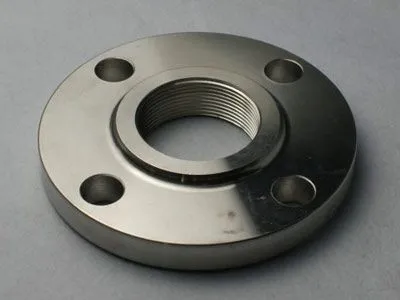
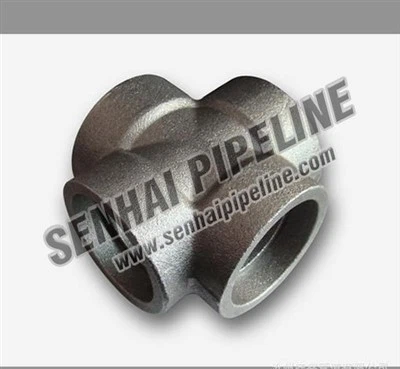
Hey there! I'm a supplier of forged fittings, and today I wanna chat about the flow characteristics of these awesome products. Forged fittings are super important in various industries, like oil and gas, chemical, and power generation. They play a crucial role in ensuring the smooth and efficient flow of fluids within a piping system.
Let's start by understanding what forged fittings are. These are components that are made through a forging process, which involves shaping metal by applying compressive forces. This process gives the fittings high strength and durability, making them suitable for high-pressure and high-temperature applications.
One of the key flow characteristics of forged fittings is their ability to minimize flow resistance. When fluid flows through a piping system, it encounters resistance due to the shape and surface roughness of the fittings. Forged fittings are designed with smooth internal surfaces and well-rounded edges, which help to reduce this resistance. As a result, the fluid can flow more freely, reducing energy consumption and improving the overall efficiency of the system.
For example, take a look at Forged Plugs. These are used to close the end of a pipe, and their smooth design ensures that there is minimal disruption to the flow of fluid. The forged material also provides a tight seal, preventing any leakage and maintaining the integrity of the system.
Another important flow characteristic is the ability to handle different flow rates. Forged fittings are available in a wide range of sizes and configurations, which allows them to accommodate various flow rates. Whether you have a low-flow or high-flow application, there is a forged fitting that can meet your needs.
Let's talk about Bw Olets. These are used to create a branch connection in a piping system, and they are designed to handle high flow rates without causing excessive pressure drop. The forged construction ensures that the olets can withstand the forces generated by the fluid flow, providing a reliable and long-lasting connection.
In addition to minimizing flow resistance and handling different flow rates, forged fittings also have excellent flow distribution capabilities. In a piping system, it is important to ensure that the fluid is evenly distributed to all parts of the system. Forged fittings are designed with specific geometries that help to achieve this.
For instance, Forged Lateral Tee is a type of fitting that is used to create a branch connection at a right angle to the main pipe. The design of the lateral tee allows the fluid to flow smoothly into the branch pipe, ensuring that the flow is evenly distributed between the main pipe and the branch.
Now, let's discuss some factors that can affect the flow characteristics of forged fittings. One of the main factors is the material of the fitting. Different materials have different properties, such as density, viscosity, and corrosion resistance, which can affect the flow of fluid. For example, stainless steel is a popular material for forged fittings because it has good corrosion resistance and a smooth surface finish, which helps to reduce flow resistance.
The size and shape of the fitting also play a crucial role in determining its flow characteristics. A larger fitting will generally have a lower flow resistance than a smaller one, but it may also be more expensive and take up more space. The shape of the fitting, such as the angle of the bend or the size of the opening, can also affect the flow of fluid.


Another factor to consider is the installation of the fitting. Proper installation is essential to ensure that the fitting functions correctly and maintains its flow characteristics. The fitting should be installed in accordance with the manufacturer's instructions, and all connections should be tightened properly to prevent any leakage.
In conclusion, the flow characteristics of forged fittings are crucial for the efficient and reliable operation of a piping system. These fittings are designed to minimize flow resistance, handle different flow rates, and provide excellent flow distribution. By choosing the right forged fittings for your application and ensuring proper installation, you can ensure that your piping system operates at its best.
If you're in the market for forged fittings, I'd love to chat with you. I have a wide range of products available, and I can help you find the right fittings for your specific needs. Whether you're working on a small project or a large industrial application, I'm here to assist you. So, don't hesitate to reach out and let's start a conversation about your forged fitting requirements.
References
- "Piping Handbook" by Cameron Engineering and Associates
- "Pipe Fittings Handbook" by Peter Spitzer