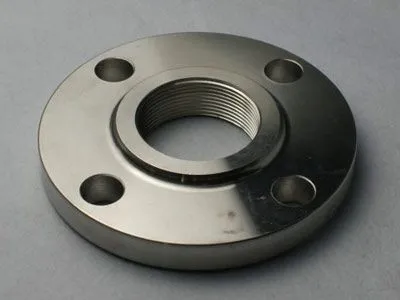
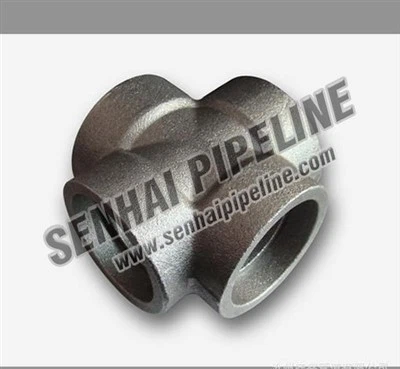
In the dynamic realm of automotive engineering, the choice of components can significantly impact a vehicle's performance, safety, and longevity. One such crucial component is the coupling, which plays a pivotal role in transmitting power and torque between different parts of the vehicle. As a trusted supplier of forged couplings, I often encounter the question: Can forged couplings be used in automotive applications? In this blog post, I will delve into this topic, exploring the characteristics of forged couplings, their potential benefits and challenges in automotive settings, and how they compare to other types of couplings.
Understanding Forged Couplings
Forged couplings are manufactured through a process called forging, which involves shaping metal by applying compressive forces. This process typically uses a hammer or a press to deform the metal into the desired shape. The result is a coupling that has a dense, uniform grain structure, which enhances its strength, durability, and resistance to wear and fatigue.
One of the key advantages of forged couplings is their high strength-to-weight ratio. Forged couplings can withstand high levels of stress and torque while remaining relatively lightweight. This makes them an attractive option for automotive applications, where reducing weight is often a priority to improve fuel efficiency and overall performance.
Another benefit of forged couplings is their excellent dimensional accuracy. The forging process allows for tight tolerances, ensuring that the coupling fits precisely into the automotive system. This precision is essential for maintaining proper alignment and reducing the risk of vibration and premature wear.
Potential Applications in the Automotive Industry
Forged couplings can be used in various automotive applications, including:
- Transmission Systems: In a vehicle's transmission, couplings are used to connect the engine to the gearbox and transfer power efficiently. Forged couplings can handle the high torque and rotational speeds associated with transmission systems, providing reliable performance under demanding conditions.
- Drivetrain Components: Forged couplings can also be found in the drivetrain, where they connect the driveshaft to the differential and wheels. These couplings must be able to withstand the forces generated during acceleration, deceleration, and cornering, making the strength and durability of forged couplings a valuable asset.
- Suspension Systems: In some cases, forged couplings are used in suspension systems to connect different components, such as control arms and sway bars. The ability of forged couplings to resist fatigue and corrosion is particularly important in these applications, as the suspension system is constantly exposed to harsh environmental conditions.
Advantages of Using Forged Couplings in Automotive Applications
There are several reasons why forged couplings are a popular choice for automotive applications:
- Enhanced Performance: The high strength and durability of forged couplings allow them to operate under extreme conditions without compromising performance. This can lead to improved vehicle handling, acceleration, and overall driving experience.
- Increased Safety: Forged couplings are less likely to fail under stress, reducing the risk of accidents and breakdowns. Their reliability is especially crucial in automotive applications, where safety is of utmost importance.
- Longer Service Life: Due to their resistance to wear and fatigue, forged couplings have a longer service life compared to other types of couplings. This can result in lower maintenance costs and less downtime for the vehicle.
- Customization Options: Forging allows for the production of couplings with complex shapes and sizes, making it possible to customize them to meet the specific requirements of different automotive applications.
Challenges and Considerations
While forged couplings offer many advantages, there are also some challenges and considerations to keep in mind:
- Cost: The forging process can be more expensive than other manufacturing methods, such as casting or machining. This can result in higher upfront costs for forged couplings. However, the long-term benefits, such as increased durability and reduced maintenance, often outweigh the initial investment.
- Lead Time: Forging requires specialized equipment and expertise, which can lead to longer lead times compared to other types of couplings. It is important to plan ahead and work closely with your supplier to ensure timely delivery.
- Material Selection: The choice of material for forged couplings is critical, as it can affect their performance and durability. Common materials used in automotive applications include steel, aluminum, and titanium. Each material has its own unique properties, and the selection should be based on the specific requirements of the application.
Comparison with Other Types of Couplings
When considering the use of forged couplings in automotive applications, it is important to compare them with other types of couplings, such as cast couplings and machined couplings:
- Cast Couplings: Cast couplings are made by pouring molten metal into a mold. While casting is a relatively inexpensive process, cast couplings may have a lower strength and density compared to forged couplings. They are also more prone to porosity and other defects, which can affect their performance and durability.
- Machined Couplings: Machined couplings are produced by cutting and shaping metal using machining tools. Machining allows for high precision and the ability to create complex shapes. However, machined couplings can be more expensive and time-consuming to produce compared to forged couplings.
Our Offerings as a Forged Couplings Supplier
As a leading supplier of forged couplings, we offer a wide range of products to meet the diverse needs of the automotive industry. Our couplings are manufactured using state-of-the-art forging techniques and high-quality materials, ensuring superior performance and reliability.
In addition to our standard product offerings, we also provide custom forging services. Our experienced engineering team can work with you to design and manufacture couplings that are tailored to your specific requirements. Whether you need a coupling with a unique shape, size, or material, we have the expertise and capabilities to deliver a solution that meets your expectations.
We also offer a variety of related products, such as Forged Lateral Tee, Bw Olets, and Hexagonal Caps, which can be used in conjunction with our forged couplings to create a complete automotive system.
Conclusion
In conclusion, forged couplings can be an excellent choice for automotive applications due to their high strength, durability, and precision. While there are some challenges and considerations, such as cost and lead time, the long-term benefits often make them a worthwhile investment.


If you are in the automotive industry and are looking for a reliable supplier of forged couplings, we encourage you to contact us. Our team of experts is ready to assist you in selecting the right coupling for your application and providing you with the support and service you need to ensure a successful project. Whether you have a specific requirement or need general advice on coupling selection, we are here to help. Let's start a conversation about how our forged couplings can enhance the performance and reliability of your automotive systems.
References
- Automotive Engineering Handbook, Society of Automotive Engineers (SAE)
- Forging Technology and Applications, ASM International
- Handbook of Coupling Selection, Installation, and Maintenance, John Wiley & Sons