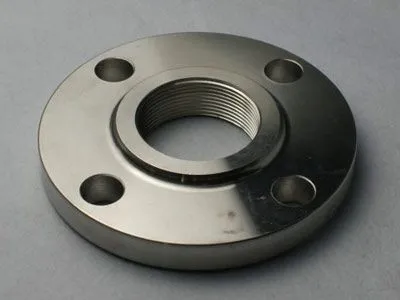
Hey there! As a flange supplier, I often get asked about which types of gaskets are suitable for different flanges. It's a crucial question because using the right gasket with the right flange can prevent leaks, ensure safety, and extend the lifespan of your piping systems. So, let's dive into it and explore the various combinations.
1. Welding Neck Flange and Its Compatible Gaskets
First up, the Welding Neck Flange. These flanges are known for their high strength and are commonly used in high-pressure and high-temperature applications. They have a long tapered hub that provides excellent stress distribution, making them ideal for critical systems.
Ring Type Joint (RTJ) Gaskets
For welding neck flanges in high-pressure environments, Ring Type Joint (RTJ) gaskets are a top choice. These gaskets are made of metal and have a unique ring shape. They fit into grooves machined on the flange faces. When the bolts are tightened, the RTJ gasket deforms and creates a tight seal. This type of gasket can withstand extremely high pressures and temperatures, making it perfect for applications in the oil and gas industry, refineries, and chemical plants.
Spiral Wound Gaskets
Another great option for welding neck flanges is the spiral wound gasket. These gaskets are constructed by winding a metal strip and a filler material (like graphite or PTFE) together in a spiral pattern. The metal provides strength, while the filler material ensures a good seal. Spiral wound gaskets are versatile and can be used in a wide range of temperatures and pressures. They are commonly used in pipelines, heat exchangers, and pumps.
2. Lap Joint Flange and Appropriate Gaskets
Now, let's talk about Lap Joint Flanges. These flanges are easy to install and are often used in systems where frequent disassembly is required. They consist of a flat or raised face flange and a loose backing flange.
Flat Gaskets
Flat gaskets are a popular choice for lap joint flanges. They are simple in design and can be made from a variety of materials, such as rubber, cork, or compressed fiber. Flat gaskets are cost-effective and can provide a good seal in low-pressure applications. They are commonly used in plumbing systems, HVAC systems, and some industrial applications where the pressure is relatively low.
Corrugated Gaskets
Corrugated gaskets are also suitable for lap joint flanges. These gaskets have a corrugated surface, which provides additional flexibility and helps to compensate for any unevenness in the flange faces. They can be made from metal or non-metal materials and are often used in applications where there is some vibration or movement. Corrugated gaskets are commonly used in automotive engines, pumps, and some small-scale industrial equipment.
3. Orifice Flange and Suitable Gaskets
Next, we have the Orifice Flange Facing. Orifice flanges are used to measure the flow rate of fluids in a pipeline. They have a special design with a precision-machined orifice plate between the flanges.


Kammprofile Gaskets
Kammprofile gaskets are a great choice for orifice flanges. These gaskets consist of a metal core with concentric grooves on both sides, which are then covered with a soft sealing material (like graphite or PTFE). The metal core provides strength, while the soft sealing material ensures a tight seal. Kammprofile gaskets can withstand high pressures and temperatures and are also resistant to chemical corrosion. They are commonly used in orifice plates, valves, and other flow measurement devices.
Metal Jacketed Gaskets
Metal jacketed gaskets are another option for orifice flanges. These gaskets have a metal outer jacket that encloses a soft filler material. The metal jacket provides protection against mechanical damage and chemical corrosion, while the filler material provides the sealing function. Metal jacketed gaskets can be used in a wide range of applications, including those with high pressures and temperatures. They are commonly used in pipelines, boilers, and some industrial reactors.
4. Other Factors to Consider
When choosing the right gasket for a flange, there are several other factors to consider besides the type of flange.
Fluid Compatibility
The type of fluid that will be flowing through the pipeline is an important factor. Some fluids, such as acids, alkalis, and solvents, can be corrosive and may require gaskets made from materials that are resistant to chemical attack. For example, PTFE gaskets are highly resistant to most chemicals and are often used in applications where chemical compatibility is a concern.
Temperature and Pressure
The operating temperature and pressure of the system also play a crucial role in gasket selection. High-temperature applications may require gaskets made from materials that can withstand extreme heat, such as ceramic or metal gaskets. Similarly, high-pressure applications may require gaskets with high strength and good sealing properties, such as RTJ gaskets or spiral wound gaskets.
Flange Surface Finish
The surface finish of the flange can also affect the sealing performance of the gasket. A smooth and flat flange surface is ideal for achieving a good seal. If the flange surface is rough or damaged, it may be necessary to use a gasket with a softer sealing material or to repair the flange surface before installing the gasket.
Conclusion
In conclusion, choosing the right gasket for different flanges is essential for ensuring the safety and efficiency of your piping systems. Whether you're dealing with welding neck flanges, lap joint flanges, or orifice flanges, there are a variety of gaskets available to meet your specific needs. By considering factors such as fluid compatibility, temperature, pressure, and flange surface finish, you can make an informed decision and select the gasket that will provide the best seal for your application.
If you're in the market for flanges or need help choosing the right gaskets, feel free to reach out. We're here to assist you with all your flange and gasket needs. Let's have a chat and find the perfect solutions for your projects.
References
- "Handbook of Gaskets and Sealing" by John H. Bickford
- "Flange Design and Engineering" by Robert E. Brown
- Industry standards and guidelines from ASME, API, and other relevant organizations