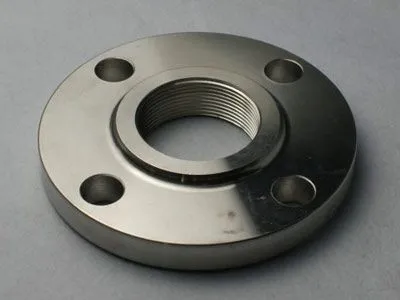
Slip On Flanges are a popular choice in various industries due to their ease of installation and cost - effectiveness. As a Slip On Flange supplier, I often get asked about the types of gaskets that are used with them. In this blog, we'll explore the different types of gaskets suitable for Slip On Flanges, understand their properties, and learn about their applications.
Understanding Slip On Flanges
Before delving into the gaskets, let's briefly understand what Slip On Flanges are. A Slip On Flange is a type of flange that slides over the pipe and is then welded in place. It has a slightly larger diameter than the pipe, allowing for easy alignment and installation. These flanges are commonly used in low - pressure applications where quick installation and cost - efficiency are important.
Types of Gaskets for Slip On Flanges
1. Non - Asbestos Compressed Fiber Gaskets
Non - asbestos compressed fiber gaskets are one of the most commonly used gaskets with Slip On Flanges. These gaskets are made from a blend of synthetic fibers, fillers, and binders. They offer good resistance to a wide range of chemicals, oils, and solvents.
Properties:
- They have a relatively low cost, making them an economical choice for many applications.
- They can withstand moderate temperatures and pressures.
- They are easy to cut and shape, which simplifies the installation process.
Applications:
- These gaskets are suitable for general - purpose applications in industries such as water treatment, food processing, and HVAC systems. In water treatment plants, they are used to seal connections between pipes and Slip On Flanges in low - pressure water lines.
2. Rubber Gaskets
Rubber gaskets are another popular option for Slip On Flanges. They are made from various types of rubber, such as neoprene, EPDM, and nitrile.
Properties:
- Rubber gaskets have excellent sealing properties due to their high elasticity. They can conform to irregular surfaces, ensuring a tight seal.
- They offer good resistance to water, steam, and some chemicals, depending on the type of rubber used.
- They are flexible and can absorb vibrations, which helps in reducing noise and preventing leaks caused by pipe movement.
Applications:
- In the automotive industry, rubber gaskets are used with Slip On Flanges in engine cooling systems. In the plumbing industry, they are used to seal connections in residential and commercial water pipes.
3. Spiral Wound Gaskets
Spiral wound gaskets are a high - performance option for Slip On Flanges. They are constructed by winding a metal strip and a filler material (usually graphite or PTFE) in a spiral pattern.
Properties:
- They can withstand high temperatures and pressures, making them suitable for demanding applications.
- They have good resilience, which allows them to maintain a tight seal even under fluctuating conditions.
- They offer excellent chemical resistance, especially when using appropriate filler materials.
Applications:
- In the oil and gas industry, spiral wound gaskets are used with Slip On Flanges in pipelines and refineries. They are also used in power generation plants to seal high - pressure steam lines.
4. Metal Jacketed Gaskets
Metal jacketed gaskets consist of a soft filler material (such as asbestos - free fiber or PTFE) enclosed in a metal jacket. The metal jacket provides strength and durability, while the filler material ensures a good seal.
Properties:


- They offer high resistance to temperature and pressure.
- They are suitable for applications where there is a risk of corrosion, as the metal jacket protects the filler material.
- They can be customized to fit different flange sizes and shapes.
Applications:
- In the chemical industry, metal jacketed gaskets are used with Slip On Flanges in chemical processing plants. They are also used in high - pressure steam applications in industrial boilers.
Factors to Consider When Choosing a Gasket for Slip On Flanges
1. Pressure and Temperature
The pressure and temperature of the system are crucial factors in choosing the right gasket. For high - pressure and high - temperature applications, gaskets such as spiral wound or metal jacketed gaskets are more suitable. In low - pressure and low - temperature applications, non - asbestos compressed fiber or rubber gaskets may be sufficient.
2. Chemical Compatibility
The gasket must be compatible with the fluids or gases in the system. For example, if the system contains corrosive chemicals, a gasket with high chemical resistance, such as a PTFE - filled spiral wound gasket, should be used.
3. Flange Surface Finish
The surface finish of the Slip On Flange can affect the performance of the gasket. A smooth and flat flange surface will provide a better seal. If the flange surface is rough, a gasket with good conformability, such as a rubber gasket, may be more appropriate.
Applications of Slip On Flanges and Their Associated Gaskets
1. Pipeline Systems
In pipeline systems, Slip On Flanges are widely used to connect pipes. The choice of gasket depends on the type of fluid being transported, the pressure, and the temperature. For example, in a natural gas pipeline, a spiral wound gasket may be used to ensure a tight seal and prevent gas leakage.
2. Industrial Equipment
In industrial equipment such as pumps, compressors, and heat exchangers, Slip On Flanges are used to connect different components. Rubber gaskets are often used in these applications due to their ability to absorb vibrations and provide a good seal.
3. Construction Industry
In the construction industry, Slip On Flanges are used in plumbing systems and HVAC systems. Non - asbestos compressed fiber gaskets are commonly used in these applications due to their cost - effectiveness and ease of installation.
Related Products
In addition to Slip On Flanges, we also supply Large Size Spiral Welded Pipe and Large Size Welded Pipe. These pipes are often used in conjunction with Slip On Flanges in various industries.
Conclusion
Choosing the right gasket for Slip On Flanges is crucial for ensuring a reliable and leak - free connection. By considering factors such as pressure, temperature, chemical compatibility, and flange surface finish, you can select the most suitable gasket for your application. As a Slip On Flange supplier, we are committed to providing high - quality products and technical support to help you make the right choice.
If you are interested in purchasing Slip On Flanges or need more information about gaskets, please feel free to contact us for a procurement discussion. We look forward to working with you to meet your industrial needs.
References
- ASME B16.5 - Pipe Flanges and Flanged Fittings
- API 6A - Specification for Wellhead and Christmas Tree Equipment
- ASTM F37 - Standard Specification for Non - Asbestos Compressed Fiber Gasket Materials