What is the torque value for bolting Slip On Flanges?
As a supplier of Slip On Flanges, I often encounter inquiries about the torque value for bolting these essential components. Understanding the appropriate torque value is crucial for ensuring a secure and leak - free connection in various piping systems. In this blog, I'll delve into the factors that influence the torque value for bolting Slip On Flanges, how to determine the correct value, and why it matters in real - world applications.
Understanding Slip On Flanges
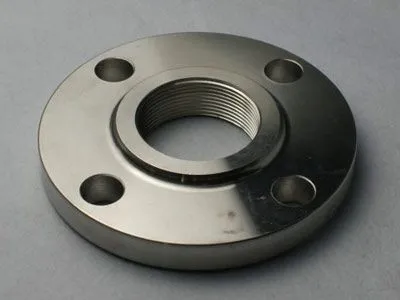
Before we discuss the torque value, let's briefly review what Slip On Flanges are. Slip On Flanges are a type of pipe flange that slide over the end of a pipe and are then welded in place. They are widely used in piping systems due to their ease of installation and relatively low cost. Slip On Flanges are commonly used in low - pressure applications, but they can also be found in high - pressure systems when designed and installed correctly. You can find more information about Slip On Flanges on our website: Slip On Flange.
Factors Influencing Torque Value
Several factors play a role in determining the appropriate torque value for bolting Slip On Flanges.
- Flange Size and Class: Larger flanges and those with a higher pressure class typically require more torque to achieve a proper seal. This is because larger flanges have a greater surface area to seal, and higher - class flanges are designed to withstand higher pressures, so a more secure connection is needed.
- Bolt Size and Material: The size and material of the bolts used also affect the torque value. Larger bolts generally require more torque to tighten, and different bolt materials have different mechanical properties. For example, stainless - steel bolts may require different torque values compared to carbon - steel bolts due to differences in their yield strength and coefficient of friction.
- Gasket Material and Type: The gasket used between the flanges is another important factor. Different gasket materials have different compression characteristics. Soft gaskets, such as rubber or PTFE, may require less torque to compress compared to harder gaskets like spiral - wound gaskets. The type of gasket, whether it's a full - face gasket or an inner - bolt - circle gasket, also impacts the required torque.
- Surface Finish: The surface finish of the flange faces and the bolts can influence the friction coefficient. A smooth surface finish may result in less friction, which means less torque is needed to achieve the same clamping force. Conversely, a rough surface finish will increase friction and may require more torque.
Determining the Correct Torque Value
To determine the correct torque value for bolting Slip On Flanges, you can follow these steps:
- Refer to Standards: There are several industry standards that provide guidelines for flange bolting torque values. For example, the American Society of Mechanical Engineers (ASME) B16.5 standard offers tables and formulas for calculating the appropriate torque based on flange size, class, bolt size, and gasket type. These standards are widely recognized and used in the industry, ensuring a consistent and reliable approach to flange bolting.
- Use Torque Calculation Formulas: If you don't have access to the standard tables, you can use torque calculation formulas. The basic formula for calculating torque is (T = K \times D \times F), where (T) is the torque, (K) is the nut factor (which accounts for friction), (D) is the bolt diameter, and (F) is the clamping force. The nut factor (K) can vary depending on the bolt material, surface finish, and lubrication.
- Consider Environmental Conditions: In some cases, environmental conditions such as temperature and humidity can affect the torque value. For example, in high - temperature applications, the bolt may expand, which can change the clamping force over time. In such situations, it may be necessary to adjust the torque value or use special bolts and gaskets designed for high - temperature service.
Importance of Correct Torque Value
Using the correct torque value when bolting Slip On Flanges is of utmost importance for several reasons:
- Leak Prevention: A properly torqued flange connection ensures a tight seal, preventing leaks. Leaks in piping systems can lead to product loss, environmental contamination, and safety hazards. For example, in a chemical processing plant, a leak of a hazardous chemical can have serious consequences for workers and the environment.
- Long - Term Performance: Correctly torqued flanges will maintain their integrity over time. If the torque is too low, the flange may loosen due to vibration or thermal cycling, leading to leaks. On the other hand, if the torque is too high, it can cause damage to the flange, bolts, or gasket, reducing the lifespan of the connection.
- Safety: In high - pressure systems, a poorly torqued flange can pose a significant safety risk. A sudden failure of a flange connection can result in a release of high - pressure fluid or gas, which can cause injuries or even fatalities.
Real - World Applications
Let's consider a few real - world applications where the correct torque value for bolting Slip On Flanges is crucial.
- Oil and Gas Industry: In oil and gas pipelines, Slip On Flanges are used to connect pipes in various parts of the system, including wellheads, refineries, and storage facilities. These pipelines often carry high - pressure and flammable substances, so a secure flange connection is essential to prevent leaks and ensure the safety of the operation. For example, in an offshore oil platform, a single leak in a pipeline can lead to a major environmental disaster.
- Water Treatment Plants: In water treatment plants, Slip On Flanges are used to connect pipes in the filtration, pumping, and distribution systems. A proper seal is necessary to prevent water leakage, which can lead to water loss and disruption of the treatment process. Additionally, in some cases, the water may contain chemicals, so a leak - free connection is important to prevent chemical spills.
- Power Generation Plants: Both fossil - fuel and nuclear power plants use Slip On Flanges in their piping systems. In a steam turbine system, for example, high - pressure steam is transported through pipes connected by flanges. A proper torque value ensures that the steam does not leak, maintaining the efficiency of the power generation process and preventing damage to the equipment.
Complementary Products
In addition to Slip On Flanges, we also offer other related products such as Large Size Spiral Welded Pipe and ERW Pipes. These products can be used in conjunction with Slip On Flanges to create a complete piping system. Our Large Size Spiral Welded Pipes are suitable for applications that require large - diameter pipes, such as in long - distance pipelines. ERW Pipes, on the other hand, are known for their high - quality welds and are commonly used in low - to medium - pressure applications.


Conclusion
In conclusion, the torque value for bolting Slip On Flanges is a critical parameter that depends on several factors, including flange size and class, bolt size and material, gasket type, and surface finish. Using the correct torque value is essential for preventing leaks, ensuring long - term performance, and maintaining safety in various applications. As a Slip On Flange supplier, we are committed to providing our customers with the necessary information and products to ensure a successful installation.
If you are in need of Slip On Flanges or have any questions about the torque value for bolting them, we invite you to contact us for a detailed discussion. Our team of experts is ready to assist you in selecting the right products and determining the appropriate torque values for your specific application.
References
- ASME B16.5 - Pipe Flanges and Flanged Fittings
- "Handbook of Piping Design" by Jack B. Carlucci
- "Flange Design and Engineering" by John A. Vetter