As a seasoned supplier of round steel pipes, I'm often asked about the production process of welded round steel pipes. It's a fascinating journey that combines precision engineering, advanced technology, and strict quality control. In this blog, I'll take you through the step-by-step process of how these essential industrial products are made.
Raw Material Selection
The first and most crucial step in the production of welded round steel pipes is the selection of raw materials. High-quality steel coils or sheets are used as the primary input. The choice of steel grade depends on the specific application of the pipes. For instance, pipes used in high-pressure applications require a higher grade of steel with excellent strength and corrosion resistance. At our company, we source our raw materials from reputable suppliers to ensure the highest quality.
Uncoiling and Straightening
Once the steel coils or sheets are received, they are loaded onto an uncoiler. The uncoiler gradually unwinds the steel, feeding it into the production line. After uncoiling, the steel passes through a straightening machine. This machine eliminates any curvature or irregularities in the steel, ensuring that it is perfectly flat and straight before further processing. This step is essential for the subsequent welding process, as a straight and flat steel surface is necessary for a strong and uniform weld.
Edge Milling
Before the steel can be formed into a pipe, its edges need to be milled. Edge milling is a process that involves removing any burrs, irregularities, or contaminants from the edges of the steel. This creates a clean, smooth surface that is ideal for welding. The milling process also ensures that the edges of the steel are at the correct angle and thickness, which is crucial for achieving a proper weld joint.


Pipe Forming
The next step is to form the flat steel into a round pipe. This is typically done using a series of rollers or a forming machine. The steel is gradually bent into a circular shape as it passes through the rollers. The forming process is carefully controlled to ensure that the pipe has the correct diameter and wall thickness. Once the pipe is formed, the edges of the steel are brought together to create a seam that will be welded.
Welding
Welding is the heart of the production process for welded round steel pipes. There are several welding methods available, including Electric Resistance Welding (ERW), Submerged Arc Welding (SAW), and Spiral Welding. At our company, we use a combination of these methods depending on the specific requirements of the pipes.
- Electric Resistance Welding (ERW): ERW is a popular welding method for producing small to medium-sized welded round steel pipes. In this process, an electric current is passed through the edges of the steel, generating heat that melts the metal and fuses the edges together. ERW pipes are known for their high quality, smooth surface finish, and precise dimensions. You can learn more about ERW Pipes on our website.
- Submerged Arc Welding (SAW): SAW is a welding method that is commonly used for producing large-diameter welded round steel pipes. In this process, an arc is created between a consumable electrode and the steel, and a layer of granular flux is used to protect the weld from oxidation and contamination. SAW pipes are known for their strong and durable welds, making them suitable for high-pressure and high-stress applications.
- Spiral Welding: Spiral welding is a method used to produce large-size welded round steel pipes. In this process, a continuous strip of steel is wound around a mandrel in a spiral pattern, and the edges of the strip are welded together. Spiral welded pipes are known for their high strength and ability to handle large volumes of fluid or gas. You can find more information about Large Size Spiral Welded Pipe on our website.
Weld Inspection
After the welding process is complete, the pipes undergo a series of inspections to ensure the quality of the weld. Non-destructive testing methods, such as ultrasonic testing, X-ray testing, and magnetic particle testing, are used to detect any internal or external defects in the weld. These tests are crucial for ensuring the integrity and safety of the pipes, especially in applications where they will be subjected to high pressures or stresses.
Heat Treatment
In some cases, the welded round steel pipes may undergo heat treatment to improve their mechanical properties. Heat treatment involves heating the pipes to a specific temperature and then cooling them at a controlled rate. This process can increase the strength, hardness, and toughness of the pipes, making them more suitable for demanding applications.
Sizing and Straightening
Once the pipes have been welded and inspected, they may need to be sized and straightened. Sizing involves adjusting the diameter and wall thickness of the pipes to ensure that they meet the specified dimensions. Straightening is done to remove any residual curvature or distortion in the pipes, ensuring that they are perfectly straight and ready for further processing or installation.
End Finishing
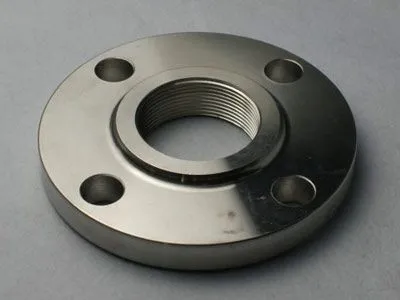
The final step in the production process is end finishing. This involves cutting the pipes to the desired length and preparing the ends for connection. The ends of the pipes may be beveled, threaded, or fitted with Slip On Flange depending on the specific requirements of the application. End finishing is an important step that ensures the pipes can be easily and securely connected to other components in a pipeline system.
Quality Control
Throughout the production process, strict quality control measures are in place to ensure that the welded round steel pipes meet the highest standards. In addition to the weld inspections mentioned earlier, the pipes are also tested for chemical composition, mechanical properties, and dimensional accuracy. Only pipes that pass all the quality control tests are approved for sale.
Conclusion
The production process of welded round steel pipes is a complex and precise operation that requires a combination of advanced technology, skilled labor, and strict quality control. From raw material selection to end finishing, every step is crucial for ensuring the quality and performance of the pipes. As a supplier of round steel pipes, we are committed to providing our customers with the highest quality products that meet their specific requirements.
If you're in the market for welded round steel pipes, I encourage you to reach out to us for a consultation. Our team of experts can help you choose the right type of pipes for your application and provide you with competitive pricing and excellent customer service. Whether you need a small quantity of pipes for a DIY project or a large order for an industrial application, we have the expertise and resources to meet your needs.
References
- ASME Boiler and Pressure Vessel Code
- API Specification 5L
- ASTM Standards for Steel Pipes