Hey there! As a supplier of Slip On Flanges, I've been in the industry for quite a while, and I often get asked about the industry standard for these flanges. So, I thought I'd share my insights in this blog post.
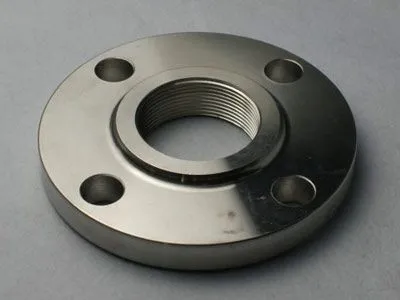
First off, let's talk about what Slip On Flanges are. Slip On Flanges are one of the most commonly used types of flanges in the piping industry. They're basically flat rings with a slightly larger inner diameter than the outer diameter of the pipe they're meant to be used with. This allows them to "slip on" the end of the pipe easily. Once they're in place, they're welded to the pipe both inside and outside to provide a strong connection.
Now, when it comes to industry standards, there are a few key ones that everyone in the business follows. The most well - known standards are set by organizations like the American Society of Mechanical Engineers (ASME) and the American National Standards Institute (ANSI). These standards ensure that Slip On Flanges are manufactured to a consistent quality and can be used safely in various applications.
ASME B16.5 is a widely recognized standard for pipe flanges and flanged fittings. It covers flanges with nominal pipe sizes from 1/2 inch to 24 inches and pressure ratings from Class 150 to Class 2500. This standard specifies the dimensions, materials, tolerances, and marking requirements for Slip On Flanges. For example, it defines the exact thickness of the flange, the diameter of the bolt holes, and the width of the sealing surface.
Another important standard is ASME B16.47, which deals with large diameter steel flanges. It covers flanges with nominal pipe sizes from 26 inches to 60 inches and pressure ratings similar to those in B16.5. If you're working on a project that requires large - sized Slip On Flanges, this is the standard you'll want to pay close attention to.
In addition to these ASME standards, there are also international standards like the International Organization for Standardization (ISO). ISO 7005 is an international standard for metallic flanges. It has different series of flange dimensions and pressure ratings, which are used in many countries outside of the United States.
When it comes to materials, Slip On Flanges can be made from a variety of metals, including carbon steel, stainless steel, and alloy steel. The choice of material depends on the application. For example, if the flange will be used in a corrosive environment, stainless steel is a good choice because it's resistant to rust and corrosion. Carbon steel is often used in general - purpose applications because it's strong and relatively inexpensive.
The manufacturing process of Slip On Flanges also follows strict industry standards. First, the raw material is inspected to ensure it meets the required chemical and mechanical properties. Then, the flange is cut to the appropriate size and shape using methods like forging or machining. After that, it goes through a heat - treatment process to improve its strength and hardness. Finally, the flange is inspected again to make sure it meets all the dimensional and quality requirements.
Now, let's talk about how Slip On Flanges are used in conjunction with other products in the piping industry. They're often paired with Large Size Spiral Welded Pipe and ERW Pipes. Slip On Flanges provide a convenient way to connect these pipes to other components in a piping system, such as valves, pumps, and tanks.
The installation of Slip On Flanges is also a critical step that needs to follow industry standards. The pipe and the flange must be properly aligned before welding. The welding process should be carried out by a qualified welder using the appropriate welding technique and filler material. After welding, the joint should be inspected for any defects, such as cracks or porosity.


As a Slip On Flange supplier, I understand the importance of meeting these industry standards. That's why we have a strict quality control system in place. We source our raw materials from reliable suppliers, and our manufacturing processes are closely monitored to ensure that every flange we produce meets or exceeds the industry standards.
If you're in the market for high - quality Slip On Flanges, I'd love to have a chat with you. Whether you need a small quantity for a DIY project or a large order for an industrial application, we can help. Our team of experts can assist you in choosing the right type of flange based on your specific requirements. You can visit our Slip On Flange page to learn more about our products.
Don't hesitate to reach out if you have any questions or if you're ready to start a procurement discussion. We're here to make the process as smooth and hassle - free as possible for you.
References:
- ASME B16.5 - Pipe Flanges and Flanged Fittings
- ASME B16.47 - Large Diameter Steel Flanges
- ISO 7005 - Metallic Flanges