Hey there! As a supplier of swage nipples, I've gotten a ton of questions about their impact resistance. So, I thought I'd break it down for you in this blog post.
First off, let's talk about what swage nipples are. Swage nipples are pipe fittings used to connect pipes of different sizes. They're usually made from materials like stainless steel, carbon steel, or alloy steel. These fittings are crucial in various industries, including oil and gas, chemical processing, and plumbing.
Now, let's get into the nitty - gritty of impact resistance. Impact resistance refers to a material's ability to withstand sudden forces or blows without breaking or deforming permanently. For swage nipples, this is super important because they often operate in environments where they can be exposed to physical impacts.
Factors Affecting Impact Resistance
Material Composition
The material a swage nipple is made from plays a huge role in its impact resistance. Stainless steel, for example, is known for its excellent corrosion resistance and good impact strength. It contains elements like chromium and nickel, which give it a tough and ductile structure. When an impact occurs, the stainless - steel swage nipple can absorb the energy and distribute it across its structure, reducing the risk of cracking.
Carbon steel is another common material. It's strong and relatively inexpensive. However, its impact resistance can vary depending on the carbon content. Higher carbon content generally means higher strength but lower ductility. So, in high - impact situations, a carbon - steel swage nipple with too much carbon might be more prone to cracking.
Alloy steel swage nipples are a great option when you need high - performance impact resistance. By adding elements like manganese, molybdenum, and vanadium, alloy steel can be tailored to have specific mechanical properties. These additional elements improve the steel's hardenability and toughness, making it ideal for applications where impacts are frequent and severe.
Manufacturing Process
The way swage nipples are manufactured also affects their impact resistance. Forged swage nipples are typically stronger and more impact - resistant than those made by other methods. During forging, the metal is heated and shaped under high pressure. This process aligns the grain structure of the metal, making it more uniform and less likely to have internal defects. As a result, forged swage nipples can better withstand impacts.
Machined swage nipples, on the other hand, are made by removing material from a solid block. While they can be very precise, the machining process can sometimes create small surface imperfections or stress concentrations. These areas can become weak points when an impact occurs, reducing the overall impact resistance of the swage nipple.
Heat Treatment
Heat treatment is an important step in enhancing the impact resistance of swage nipples. Processes like quenching and tempering can significantly improve the mechanical properties of the material. Quenching involves rapidly cooling the heated swage nipple in a liquid, which hardens the metal. However, this can also make it brittle. Tempering, which follows quenching, involves reheating the hardened swage nipple to a lower temperature to reduce its brittleness and increase its toughness.
Testing Impact Resistance
To ensure the quality and impact resistance of our swage nipples, we conduct various tests. One of the most common tests is the Charpy impact test. In this test, a notched sample of the swage - nipple material is struck by a pendulum. The energy absorbed by the sample during the impact is measured, and this value is used to evaluate the material's impact toughness.
Another test is the drop - weight test. In this test, a weight is dropped onto the swage nipple from a certain height. The nipple is then inspected for damage. This test simulates real - world impacts and helps us determine if the swage nipple can withstand the forces it might encounter in its intended application.
Impact Resistance in Different Applications
Oil and Gas Industry
In the oil and gas industry, swage nipples are used in pipelines that transport oil, gas, and other fluids. These pipelines are often located in harsh environments, where they can be exposed to impacts from rocks, tools, or equipment. A swage nipple with poor impact resistance could crack or break, leading to leaks and potentially dangerous situations. That's why we offer high - quality swage nipples made from materials like stainless steel or alloy steel, which can withstand the rough conditions of the oil and gas fields.


Chemical Processing Industry
The chemical processing industry also relies on swage nipples for connecting pipes in chemical plants. Chemicals can be corrosive, and impacts can occur during maintenance or normal operation. Our swage nipples are designed to resist both corrosion and impacts. For example, a stainless - steel swage nipple can withstand the corrosive effects of many chemicals while also handling the occasional impact from a dropped tool or a moving piece of equipment.
Plumbing
In plumbing systems, swage nipples are used to connect pipes of different sizes. While the impacts in a plumbing system are usually less severe than in industrial applications, they can still happen. For example, when a pipe is being installed or repaired, a swage nipple might be accidentally hit. A well - made swage nipple with good impact resistance will ensure that the plumbing system remains leak - free and functional.
Comparison with Other Pipe Fittings
When comparing swage nipples with other pipe fittings in terms of impact resistance, it's important to consider their design and function. For example, Forged Plugs are used to close the end of a pipe. They need to be strong and impact - resistant to prevent leaks. However, their design is different from swage nipples. Swage nipples are mainly used for size transitions, and their impact resistance requirements are related to the forces they might encounter during normal operation and installation.
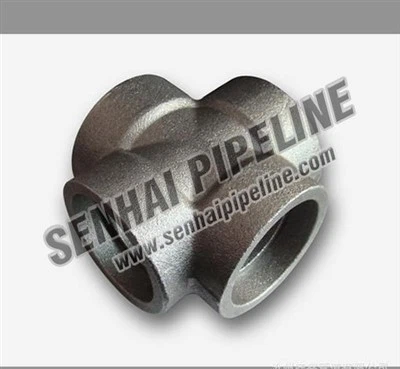
Carbon Steel Forged Cross is another type of pipe fitting. It has multiple branches, which means it has more complex stress distribution when an impact occurs. Swage nipples, being simpler in design, can often have a more predictable impact - resistance performance.
Forged Lateral Tee is used to create a branch in a pipeline. Its impact resistance depends on the material and manufacturing process, just like swage nipples. However, the tee's shape and the way it distributes stress during an impact are different from those of swage nipples.
Conclusion
The impact resistance of swage nipples is a crucial factor to consider when choosing the right fitting for your application. It depends on the material composition, manufacturing process, and heat treatment. At our company, we take pride in providing high - quality swage nipples that can withstand various impacts. Whether you're in the oil and gas industry, chemical processing, or plumbing, our swage nipples are designed to meet your needs.
If you're interested in purchasing swage nipples or have any questions about their impact resistance, feel free to reach out to us. We're here to help you make the right choice for your project.
References
- ASM Handbook Volume 1: Properties and Selection: Irons, Steels, and High - Performance Alloys
- Pipe Fittings Handbook by George A. Antaki