Hey there! As a supplier of Slip On Flanges, I often get asked about the flow resistance of these flanges in pipelines. So, I thought I'd write this blog to share some insights on this topic.
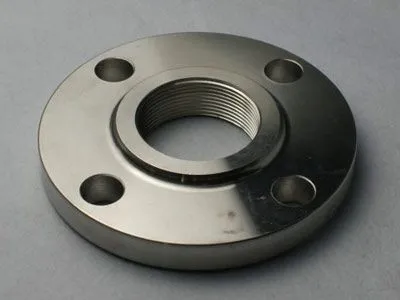
First off, let's talk a bit about Slip On Flanges. Slip On Flanges are a popular choice in pipeline systems. They're easy to install because they simply slip over the pipe and then are welded in place. You can find more details about them on this page: Slip On Flange.
Now, what exactly is flow resistance? Flow resistance in pipelines is the force that opposes the flow of fluid through the pipe. It's like the friction that a car experiences when it's moving on a road. When it comes to Slip On Flanges, the flow resistance they cause can have an impact on the overall performance of the pipeline system.


There are several factors that affect the flow resistance of Slip On Flanges in pipelines. One of the main factors is the design of the flange. The shape and size of the flange opening can either help the fluid flow smoothly or cause disruptions. For example, if the opening is too small or has sharp edges, it can create turbulence in the fluid flow, which in turn increases the flow resistance.
Another factor is the material of the flange. Different materials have different surface roughness. A flange made of a material with a rough surface will cause more friction with the fluid flowing through it, leading to higher flow resistance. On the other hand, a smooth - surfaced flange will allow the fluid to flow more easily.
The way the Slip On Flange is installed also matters. If it's not properly aligned with the pipe, it can create an uneven flow path. This unevenness can cause the fluid to change direction suddenly, generating eddies and increasing the flow resistance.
Let's compare Slip On Flanges with other types of pipes in the pipeline system. For instance, ERW Pipes are another common component in pipelines. ERW pipes generally have a more consistent internal diameter and a smoother surface compared to some Slip On Flanges. This often results in lower flow resistance in ERW pipes. However, Slip On Flanges play a crucial role in connecting these pipes and ensuring the integrity of the pipeline system.
Large Size Spiral Welded Pipe is yet another element in the pipeline network. These pipes are often used for large - scale applications. The spiral welding process gives them a unique structure. While they can handle large volumes of fluid, the spiral pattern might cause a bit of additional flow resistance compared to a straight - walled pipe. Slip On Flanges are used to connect these large - size pipes, and the flow resistance they add needs to be considered in the overall system design.
So, how can we reduce the flow resistance of Slip On Flanges in pipelines? One way is to choose a flange with a well - designed opening. A smooth, rounded opening can minimize turbulence. Also, using a flange made of a material with a low surface roughness can help. And of course, proper installation is key. Making sure the flange is perfectly aligned with the pipe will ensure a more uniform flow.
It's important to note that while reducing flow resistance is beneficial, we also need to consider other aspects such as the strength and durability of the flange. A flange that offers low flow resistance but is not strong enough to withstand the pressure in the pipeline is not a good choice.
In the real - world application of pipeline systems, the flow resistance of Slip On Flanges can have a significant impact on energy consumption. Higher flow resistance means that more energy is needed to pump the fluid through the pipeline. This can lead to increased operational costs over time. So, understanding and managing the flow resistance of Slip On Flanges is crucial for both the efficiency and cost - effectiveness of the pipeline system.
If you're involved in a pipeline project and are looking for high - quality Slip On Flanges, we're here to help. Our Slip On Flanges are designed with careful consideration of flow resistance and other important factors. We offer a range of sizes and materials to meet your specific needs. Whether you're working with ERW Pipes or Large Size Spiral Welded Pipes, our Slip On Flanges will be a great fit for your pipeline system.
If you're interested in learning more or discussing a potential purchase, feel free to reach out. We're always happy to have a chat and see how we can assist you in getting the right Slip On Flanges for your project.
References:
- General knowledge of pipeline engineering and fluid mechanics
So, don't hesitate to contact us for all your Slip On Flange needs. Let's work together to build efficient and reliable pipeline systems!