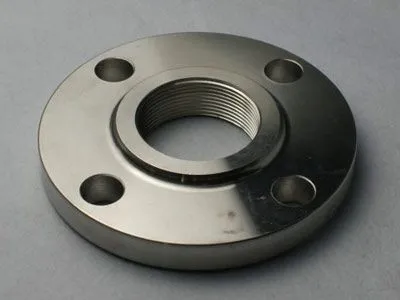
Slip On Flanges are essential components in various piping systems, known for their ease of installation and cost - effectiveness. As a supplier of Slip On Flanges, I've encountered numerous inquiries about their vibration - resistance properties. In this blog, we'll delve into the details of these properties, exploring how Slip On Flanges perform under vibrational stress and their significance in different industrial applications.
Understanding Slip On Flanges
First, let's briefly introduce Slip On Flanges. A Slip On Flange is a type of flange that slides over the pipe and is then welded in place. This design allows for quick and straightforward installation, making it a popular choice in many industries. The slip - on feature provides some flexibility during the installation process, which can be particularly beneficial in large - scale piping projects.
Factors Affecting Vibration Resistance
Material Composition
The material used in manufacturing Slip On Flanges plays a crucial role in determining their vibration - resistance properties. Commonly, these flanges are made from materials such as carbon steel, stainless steel, and alloy steel. Carbon steel flanges are widely used due to their high strength and relatively low cost. However, their vibration resistance can be affected by factors like carbon content. Higher carbon content can increase the hardness of the steel but may also make it more brittle, reducing its ability to absorb vibrations.
Stainless steel flanges, on the other hand, offer excellent corrosion resistance along with good vibration - damping characteristics. The alloying elements in stainless steel, such as chromium and nickel, enhance its mechanical properties, allowing it to withstand vibrations without significant deformation. Alloy steel flanges are designed for specific applications where high strength and vibration resistance are required. They contain various alloying elements, which can be tailored to meet the specific needs of the piping system.
Design and Geometry
The design and geometry of Slip On Flanges also impact their vibration - resistance. The thickness of the flange, the diameter of the bolt holes, and the overall shape of the flange can all influence how well it can handle vibrations. A thicker flange generally provides more stability and better vibration resistance as it has more mass to absorb and dissipate the vibrational energy.
The size and spacing of the bolt holes are also important. Properly spaced and sized bolt holes ensure that the flange is securely attached to the pipe and other components in the system. If the bolts are too loose or the holes are not properly aligned, it can lead to increased vibrations and potential failure of the flange.
Welding Quality
Since Slip On Flanges are welded to the pipe, the quality of the welding is a critical factor in their vibration resistance. A well - welded flange creates a strong bond between the flange and the pipe, allowing them to act as a single unit and better withstand vibrations. Poor welding can result in weak joints, which are more prone to cracking and failure under vibrational stress. Welding defects such as porosity, lack of fusion, and incorrect weld bead shape can significantly reduce the vibration - resistance of the flange.
Vibration - Resistance in Different Applications
Oil and Gas Industry
In the oil and gas industry, piping systems are often subjected to high - frequency vibrations due to the flow of fluids, pumps, and compressors. Slip On Flanges used in these applications need to have excellent vibration - resistance properties to ensure the integrity of the piping system. For example, in offshore oil platforms, where the equipment is exposed to harsh environmental conditions and constant vibrations, reliable flanges are essential. The vibration - resistant Slip On Flanges help prevent leaks and failures, which could lead to costly downtime and environmental hazards.
Power Generation
Power plants, whether they are fossil - fuel, nuclear, or renewable energy - based, rely on extensive piping systems. These systems are subject to vibrations from turbines, pumps, and other equipment. Slip On Flanges with good vibration - resistance properties are crucial in maintaining the safety and efficiency of the power generation process. In a steam power plant, for instance, the high - pressure steam flowing through the pipes can cause significant vibrations. The flanges need to be able to withstand these vibrations to prevent steam leaks and ensure the smooth operation of the plant.
Water Treatment Plants
Water treatment plants use a variety of piping systems to transport water, chemicals, and treated effluent. The pumps and valves in these systems can generate vibrations, which need to be controlled to prevent damage to the pipes and flanges. Slip On Flanges with appropriate vibration - resistance can help maintain the integrity of the piping network, ensuring the proper functioning of the water treatment process.
Comparison with Other Flange Types
When considering vibration - resistance, it's useful to compare Slip On Flanges with other types of flanges. For example, Weld Neck Flanges are known for their high strength and excellent vibration - resistance. They have a long tapered hub that provides a smooth transition between the flange and the pipe, which helps distribute the stress caused by vibrations more evenly. However, Weld Neck Flanges are more expensive and require more complex installation procedures compared to Slip On Flanges.
Socket Weld Flanges are another option. They are suitable for small - diameter pipes and offer good vibration - resistance due to their socket - type connection. However, they are not as commonly used in large - scale piping systems as Slip On Flanges.
Compatibility with Other Piping Components
Slip On Flanges are often used in conjunction with other piping components such as ERW Pipes and Large Size Spiral Welded Pipe. The vibration - resistance of the overall piping system depends on the compatibility of these components. For example, when using Slip On Flanges with ERW Pipes, the material and thickness of the pipes should be considered to ensure that they can work together effectively under vibrational stress. The connection between the flange and the pipe should be designed to minimize the transfer of vibrations and prevent potential damage.
Testing and Certification
To ensure the vibration - resistance of Slip On Flanges, rigorous testing and certification procedures are carried out. These tests can include vibration testing, where the flanges are subjected to simulated vibrations to evaluate their performance. The results of these tests are used to determine whether the flanges meet the required standards and specifications. Certification from recognized organizations provides assurance to customers that the flanges have been tested and meet the necessary quality and performance criteria.
Maintaining Vibration - Resistance Over Time
Proper maintenance is essential to maintain the vibration - resistance of Slip On Flanges over time. Regular inspections should be carried out to check for signs of wear, corrosion, and damage. Any loose bolts should be tightened, and any damaged welds should be repaired promptly. In addition, the operating conditions of the piping system should be monitored to ensure that they do not exceed the design limits of the flanges.
Conclusion
In conclusion, the vibration - resistance properties of Slip On Flanges are influenced by various factors, including material composition, design, welding quality, and compatibility with other piping components. These flanges play a vital role in many industrial applications, where they need to withstand vibrations to ensure the safety and efficiency of the piping systems. As a supplier of Slip On Flanges, we are committed to providing high - quality products that meet the strictest standards of vibration - resistance.


If you are in need of Slip On Flanges for your project, we invite you to contact us for a detailed discussion about your requirements. Our team of experts is ready to assist you in selecting the most suitable flanges and ensuring that they meet your specific needs.
References
- ASME B16.5: Pipe Flanges and Flanged Fittings
- API 6A: Specification for Wellhead and Christmas Tree Equipment
- ISO 7005 - 1: Metallic Flanges - Part 1: Steel Flanges