Hey there! As a supplier of forged couplings, I often get asked about the fatigue life of these components. It's a crucial topic, especially for those in industries where reliability and durability are non - negotiable. So, let's dive right in and explore what the fatigue life of a forged coupling actually is.
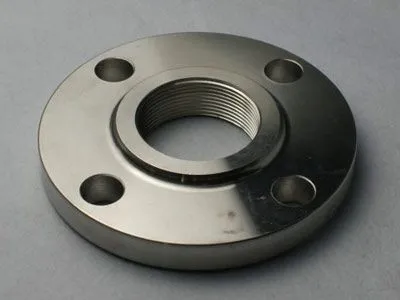
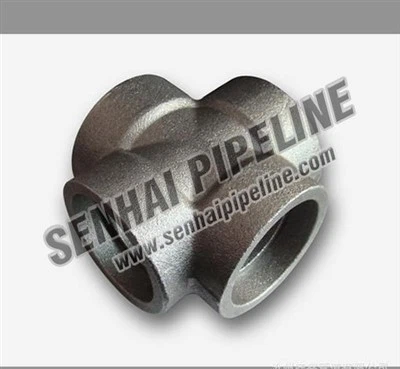
First off, what are forged couplings? Forged couplings are mechanical devices used to connect two shafts together at their ends for the purpose of transmitting power. They're made through a forging process, which involves shaping metal using localized compressive forces. This process results in a coupling that's stronger and more durable compared to those made by other methods.
Now, let's talk about fatigue. Fatigue in a forged coupling occurs when it's subjected to repeated loading and unloading cycles. Over time, these cycles can cause microscopic cracks to form on the surface of the coupling. As the number of cycles increases, these cracks grow larger and deeper. Eventually, they can lead to the failure of the coupling.
The fatigue life of a forged coupling is essentially the number of loading and unloading cycles it can withstand before it fails due to fatigue. There are several factors that can affect this fatigue life.
One of the key factors is the material of the coupling. Different metals have different fatigue properties. For example, steel is a commonly used material for forged couplings because it has good strength and fatigue resistance. However, the type of steel, its heat treatment, and its chemical composition can all influence how well it resists fatigue. High - quality steels with proper heat treatment can have a significantly longer fatigue life compared to lower - grade materials.
The design of the coupling also plays a huge role. A well - designed coupling will distribute the load evenly across its surface. This reduces the stress concentration points where cracks are more likely to form. For instance, couplings with smooth transitions and rounded edges are less likely to develop stress concentrations compared to those with sharp corners. Some advanced designs use features like fillets and ribs to enhance the load - distribution and improve fatigue resistance.
The operating conditions are another major factor. If the coupling is operating in a harsh environment, such as high temperatures, corrosive chemicals, or high - vibration settings, its fatigue life will be negatively affected. High temperatures can reduce the strength of the material, making it more susceptible to crack growth. Corrosive chemicals can eat away at the surface of the coupling, creating pits and flaws that can act as initiation points for cracks. And high - vibration environments can increase the frequency and magnitude of the loading cycles, accelerating the fatigue process.
To determine the fatigue life of a forged coupling, engineers often use a combination of theoretical calculations and experimental testing. Theoretical calculations involve using mathematical models to predict how the coupling will respond to different loading conditions. These models take into account factors like the material properties, the geometry of the coupling, and the applied loads.
Experimental testing, on the other hand, involves subjecting the coupling to actual loading cycles in a controlled laboratory environment. This can be done using specialized testing equipment that simulates the real - world operating conditions as closely as possible. By monitoring the coupling during the test, engineers can observe the formation and growth of cracks and determine at what point the coupling fails.
As a supplier of forged couplings, we understand the importance of ensuring a long fatigue life for our products. That's why we take great care in selecting the right materials, using advanced design techniques, and conducting thorough quality control checks.
When it comes to materials, we source high - grade steels from reputable suppliers. We work closely with metallurgists to ensure that the steel has the right chemical composition and is properly heat - treated. This helps to maximize the fatigue resistance of our couplings.
In terms of design, our engineering team uses the latest computer - aided design (CAD) software to create couplings with optimal load - distribution. We constantly research and develop new design concepts to improve the fatigue performance of our products.


Quality control is also a top priority. We perform a variety of tests on our couplings, including non - destructive testing methods like ultrasonic testing and magnetic particle inspection. These tests help us detect any internal flaws or cracks that could potentially reduce the fatigue life of the coupling. We also conduct performance tests to ensure that the coupling meets or exceeds the industry standards for fatigue resistance.
Now, if you're in the market for forged couplings, you might also be interested in some of our other forged fittings. We offer a wide range of products, including Forged Lateral Tee, Bw Olets, and Socket Welded Olets. These fittings are also made using the forging process and are designed to have excellent durability and performance.
If you're looking for high - quality forged couplings with a long fatigue life, we're here to help. Whether you're in the automotive, aerospace, or industrial manufacturing industry, we can provide you with the right coupling solutions for your specific needs. Our team of experts is always ready to answer your questions and work with you to find the best products for your applications. So, don't hesitate to reach out and start a conversation about your procurement needs. We're confident that our forged couplings will meet your expectations in terms of quality and fatigue performance.
References
- "Mechanical Engineering Design" by Joseph E. Shigley and Charles R. Mischke. This book provides in - depth knowledge about mechanical component design, including fatigue analysis of couplings.
- "Materials Science and Engineering: An Introduction" by William D. Callister Jr. It covers the properties of different materials and how they relate to fatigue resistance.