Hey there! As a supplier of Welding Neck Flanges, I often get asked about the differences between Welding Neck Flanges and Threaded Flanges. It's a pretty common question, especially for those new to the world of flanges. So, I thought I'd break it down for you in this blog post.
Let's start with a bit of background. Flanges are used to connect pipes, valves, pumps, and other equipment to form a piping system. They provide easy access for cleaning, inspection, or modification. There are several types of flanges available in the market, but today we're focusing on Welding Neck Flanges and Threaded Flanges.
Welding Neck Flanges
Welding Neck Flanges, as the name suggests, are designed to be welded to the pipe. They have a long tapered hub that provides reinforcement and reduces stress concentration at the weld joint. This design makes them ideal for high-pressure and high-temperature applications.
One of the key advantages of Welding Neck Flanges is their superior strength and durability. The long tapered hub distributes stress evenly along the flange and pipe, reducing the risk of fatigue and failure. This makes them suitable for critical applications where safety and reliability are paramount.
Another benefit of Welding Neck Flanges is their excellent flow characteristics. The smooth transition from the pipe to the flange minimizes turbulence and pressure drop, resulting in more efficient fluid flow. This can lead to energy savings and improved system performance.
Welding Neck Flanges are also highly resistant to corrosion and erosion. The welded joint provides a continuous, leak-free seal that prevents the ingress of corrosive fluids or gases. This makes them suitable for use in harsh environments, such as chemical plants, refineries, and offshore platforms.
However, Welding Neck Flanges do have some drawbacks. They are more expensive than other types of flanges, due to the additional material and labor required for welding. They also require skilled welders to ensure a proper weld joint, which can add to the installation cost.
Threaded Flanges
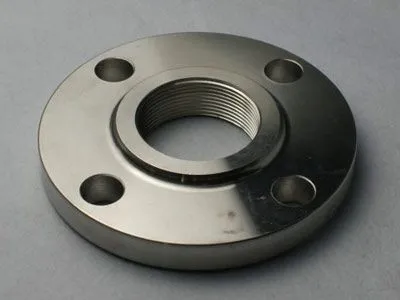
Threaded Flanges, on the other hand, are designed to be screwed onto the pipe. They have internal threads that match the external threads of the pipe, providing a simple and convenient way to connect pipes without the need for welding.
One of the main advantages of Threaded Flanges is their ease of installation. They can be quickly and easily installed without the need for special tools or equipment. This makes them ideal for applications where quick installation and disassembly are required, such as in plumbing and HVAC systems.
Another benefit of Threaded Flanges is their versatility. They can be used with a variety of pipe materials, including steel, stainless steel, and plastic. This makes them suitable for a wide range of applications, from residential plumbing to industrial piping systems.
Threaded Flanges are also relatively inexpensive compared to Welding Neck Flanges. They require less material and labor, which can result in significant cost savings. This makes them a popular choice for budget-conscious projects.
However, Threaded Flanges also have some limitations. They are not suitable for high-pressure or high-temperature applications, as the threaded connection can loosen over time due to vibration and thermal expansion. They are also more prone to leakage than Welding Neck Flanges, as the threaded joint is not as tight as a welded joint.
Key Differences
Now that we've looked at the features and benefits of Welding Neck Flanges and Threaded Flanges, let's summarize the key differences between the two:
- Connection Method: Welding Neck Flanges are welded to the pipe, while Threaded Flanges are screwed onto the pipe.
- Strength and Durability: Welding Neck Flanges are stronger and more durable than Threaded Flanges, making them suitable for high-pressure and high-temperature applications.
- Flow Characteristics: Welding Neck Flanges have better flow characteristics than Threaded Flanges, resulting in more efficient fluid flow.
- Corrosion Resistance: Welding Neck Flanges are more resistant to corrosion and erosion than Threaded Flanges, making them suitable for use in harsh environments.
- Installation and Cost: Threaded Flanges are easier to install and less expensive than Welding Neck Flanges, making them a popular choice for budget-conscious projects.
When to Choose Welding Neck Flanges
So, when should you choose Welding Neck Flanges over Threaded Flanges? Here are some situations where Welding Neck Flanges are the better choice:


- High-Pressure and High-Temperature Applications: Welding Neck Flanges are designed to withstand high pressures and temperatures, making them suitable for applications such as oil and gas pipelines, power plants, and chemical processing plants.
- Critical Applications: Welding Neck Flanges provide a strong and reliable connection, making them ideal for critical applications where safety and reliability are paramount, such as in nuclear power plants and aerospace applications.
- Harsh Environments: Welding Neck Flanges are highly resistant to corrosion and erosion, making them suitable for use in harsh environments, such as offshore platforms, chemical plants, and wastewater treatment facilities.
When to Choose Threaded Flanges
On the other hand, there are some situations where Threaded Flanges are the better choice:
- Low-Pressure and Low-Temperature Applications: Threaded Flanges are suitable for low-pressure and low-temperature applications, such as in plumbing and HVAC systems.
- Quick Installation and Disassembly: Threaded Flanges can be quickly and easily installed and disassembled, making them ideal for applications where quick access is required, such as in maintenance and repair work.
- Budget-Conscious Projects: Threaded Flanges are less expensive than Welding Neck Flanges, making them a popular choice for budget-conscious projects.
Our Welding Neck Flanges
As a supplier of Welding Neck Flanges, we offer a wide range of products to meet your specific needs. Our Welding Neck Flanges are made from high-quality materials, such as carbon steel, stainless steel, and alloy steel, and are available in a variety of sizes and pressure ratings.
We also offer custom-made Welding Neck Flanges to meet your unique requirements. Our experienced engineers and technicians can work with you to design and manufacture Welding Neck Flanges that are tailored to your specific application.
In addition to our Welding Neck Flanges, we also offer a range of other flange products, including Carbon Steel Plate Flange, Orifice Flange Facing, and Long Welding Neck Flange. Our comprehensive product range ensures that we can provide you with the right flange solution for your project.
Contact Us
If you're interested in learning more about our Welding Neck Flanges or other flange products, please don't hesitate to contact us. Our friendly and knowledgeable sales team is ready to assist you with your questions and provide you with a quote.
We look forward to hearing from you and working with you on your next project.
References
- "Flange Design Handbook" by Robert J. Roark and Warren C. Young
- "Piping Handbook" by Cameron S. Terry
- "Welding Handbook" by American Welding Society