Yo, folks! Today, I'm stoked to dig into the cool world of flanges and their applications in compressors. As a flanges supplier, I've seen firsthand how these nifty components are absolute game - changers in the compressor industry.
So, first off, what the heck are flanges? Well, they're these flat, circular discs that are used to connect pipes, valves, pumps, and other equipment to form a piping system. They've got holes in them so bolts can go through and hold everything together nice and tight.
Let's get into why flanges are so crucial in compressors. Compressors are machines that increase the pressure of a gas by reducing its volume. They're used in all sorts of industries, from manufacturing to oil and gas, and they need a reliable connection system to function properly. That's where flanges come in.
One of the primary applications of flanges in compressors is for connecting the compressor to the piping system. A compressor has to be connected to the intake and discharge pipes, and flanges provide a secure and leak - proof connection. For instance, when a compressor sucks in gas through the intake pipe, the flange ensures that there are no leaks at the connection point. This is super important because any gas leakage can lead to a loss of efficiency, increased energy consumption, and even potential safety hazards.


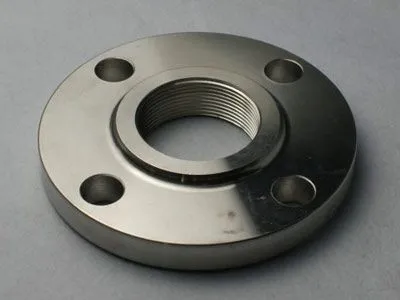
There are different types of flanges that are commonly used in compressors. One of them is the Carbon Steel Threaded Flange. These flanges are great because they can be easily installed on threaded pipes. The threads on the flange match the threads on the pipe, so you just screw them together. They're relatively inexpensive and are suitable for low - pressure applications. In a compressor, a threaded flange can be used for connections where the pressure is not too high, like in some small - scale compressors used in laboratories or small workshops.
Another important type is the Orifice Flange Facing. Orifice flanges are specifically designed to be used with orifice plates, which are used to measure the flow rate of a fluid or gas in a pipe. In a compressor, accurate measurement of the gas flow is crucial for proper operation. The orifice flange holds the orifice plate in place securely and provides a smooth surface for the gas to flow through. The facing of the orifice flange is carefully machined to ensure accurate flow measurement. Any irregularities in the flange facing can lead to inaccurate flow readings, which can then affect the overall performance of the compressor.
Carbon Steel Plate Flange is also a popular choice in compressors. These flanges are made from a flat piece of carbon steel and are used for larger - diameter pipes. They offer a high - strength connection and can withstand relatively high pressures. In big industrial compressors, plate flanges are often used for connecting the compressor to large - diameter intake and discharge pipes. They're very durable and can handle the high pressures and vibrations that are common in industrial compressor operations.
Flanges also play a big role in maintenance and repair of compressors. When a compressor needs to be serviced, flanges make it easy to disconnect and reconnect the pipes. Instead of having to cut and weld pipes every time there's a problem, you can simply loosen the bolts on the flanges, remove the connected parts, and then reassemble them after the maintenance is done. This saves a lot of time and money, and reduces the downtime of the compressor.
Now, let's talk about the material of the flanges. Carbon steel is one of the most commonly used materials for flanges in compressors. It's strong, durable, and relatively inexpensive. Carbon steel flanges can handle a wide range of temperatures and pressures, making them suitable for many different types of compressor applications. However, for some specialized applications, other materials like stainless steel or alloy steel may be used. Stainless steel flanges are corrosion - resistant, so they're great for applications where the gas or fluid being compressed is corrosive. Alloy steel flanges, on the other hand, have special properties like high - temperature resistance or high strength, and they're used in more demanding compressor environments.
The correct installation of flanges in a compressor is also super important. If the flanges are not installed properly, it can lead to all sorts of problems. For example, if the bolts on the flanges are not tightened evenly, it can cause the flange to be misaligned, which can result in leaks. It's essential to follow the manufacturer's instructions for installation, including the correct torque values for the bolts. Usually, a torque wrench is used to ensure that the bolts are tightened to the proper level.
In addition to all these applications, flanges also offer flexibility in the design of compressor systems. You can choose different types and sizes of flanges to fit your specific compressor requirements. Whether you have a small, low - pressure compressor or a large, high - pressure industrial one, there are flanges available to meet your needs. This flexibility allows engineers and designers to customize the piping system of a compressor according to the specific application and operating conditions.
If you're in the market for flanges for your compressor, you've come to the right place! As a flanges supplier, I've got a wide range of high - quality flanges that can meet all your compressor needs. Whether you need a carbon steel threaded flange for a small - scale project or an orifice flange for accurate flow measurement, I've got it covered. I can also provide you with expert advice on which type of flange is best for your particular compressor application.
Don't hesitate to reach out to me if you have any questions or if you're interested in purchasing flanges for your compressors. I'm here to help you find the perfect solution at a great price.
References
- Compressor Handbook - A comprehensive guide to compressor design, operation, and maintenance
- Piping Handbook - Details on piping systems and the use of flanges in different industries
So, that's it for today's post on the applications of flanges in compressors. I hope you found it informative and useful. If you've got any experiences or questions related to flanges in compressors, feel free to share them in the comments below!