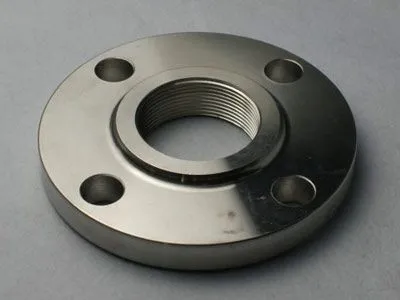
Hey there! As a supplier of Welding Neck Flanges, I often get asked about the magnetic properties of these flanges. So, I thought I'd write a blog post to share some insights on this topic.
First off, let's understand what Welding Neck Flanges are. They're a type of flange that has a long, tapered neck which is welded to the pipe. This design provides a smooth flow of the fluid inside the pipe and reduces stress concentration at the joint. Welding Neck Flanges are commonly used in high-pressure and high-temperature applications, like in the oil and gas, chemical, and power industries.
Now, let's dive into the magnetic properties. The magnetic behavior of Welding Neck Flanges mainly depends on the material they're made of. Most Welding Neck Flanges are crafted from metals such as carbon steel, stainless steel, and alloy steel.
Carbon steel is one of the most widely used materials for Welding Neck Flanges. Carbon steel is ferromagnetic, which means it's strongly attracted to magnets. This property is due to the presence of iron in the steel. When you bring a magnet close to a carbon steel Welding Neck Flange, it'll stick right to it. This magnetic property can be useful in certain applications. For example, in some inspection processes, magnetic particle testing can be used to detect surface and near - surface defects in carbon steel flanges. The magnetic field generated by the magnet can attract magnetic particles to the areas where there are cracks or other flaws, making them visible for inspection.
Stainless steel is another popular material for Welding Neck Flanges. However, not all stainless steels are magnetic. There are different types of stainless steel, such as austenitic, ferritic, and martensitic. Austenitic stainless steel, which is very common, is generally non - magnetic or only slightly magnetic. This is because of its crystal structure. Austenitic stainless steel has a face - centered cubic (FCC) structure, which doesn't allow for easy alignment of magnetic domains. On the other hand, ferritic and martensitic stainless steels are magnetic. Ferritic stainless steel has a body - centered cubic (BCC) structure, which enables it to be attracted to magnets. Martensitic stainless steel, which is heat - treatable, also shows magnetic properties due to its specific microstructure.
Alloy steel Welding Neck Flanges can have varying magnetic properties depending on the alloying elements present. Some alloying elements can enhance or reduce the magnetic behavior. For instance, if an alloy steel contains a high percentage of nickel, it might reduce the magnetic properties, similar to austenitic stainless steel.
The magnetic properties of Welding Neck Flanges can also have an impact on their performance in certain environments. In electrical applications, a non - magnetic flange might be preferred to avoid interference with magnetic fields. For example, in some electronic equipment or power generation systems where magnetic fields are carefully controlled, using non - magnetic Welding Neck Flanges can prevent unwanted magnetic interactions.
On the other hand, in environments where corrosion is a concern, stainless steel flanges are often chosen. If a magnetic property is also required for inspection or other purposes, then ferritic or martensitic stainless steel can be a good option.
When it comes to choosing the right Welding Neck Flange, it's crucial to consider the magnetic properties along with other factors like pressure rating, temperature resistance, and corrosion resistance. You need to make sure that the flange's magnetic behavior won't cause any issues in your specific application.
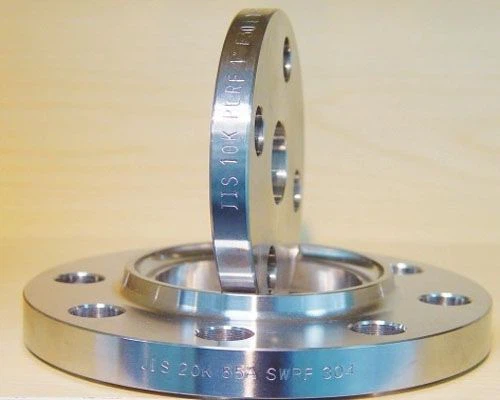
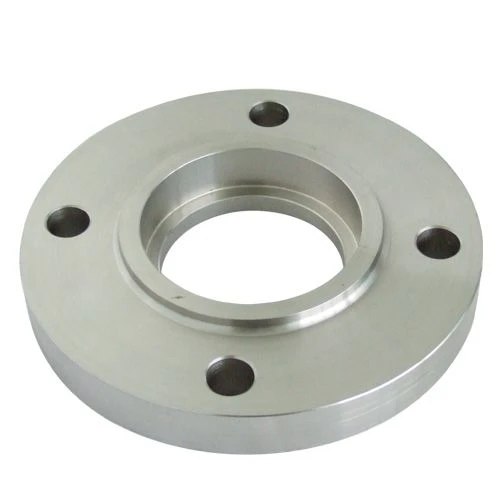
If you're in the market for other types of flanges, we also offer [Socket Welding Flange](/flanges/socket - welding - flange.html), [Carbon Steel Threaded Flange](/flanges/carbon - steel - threaded - flange.html), and [Lap Joint Flange](/flanges/lap - joint - flange.html). Each of these flanges has its own unique features and applications.
Socket Welding Flanges are ideal for small - diameter pipes and are easy to install. They're often used in applications where the flow rate is not extremely high and where a quick and simple connection is needed.
Carbon Steel Threaded Flanges are great for low - pressure applications. They can be easily connected to pipes with threaded ends, which makes the installation process a breeze.
Lap Joint Flanges are useful when frequent dismantling and reassembling of the piping system is required. They allow for easy alignment and adjustment of the pipes.
If you're interested in purchasing Welding Neck Flanges or any of our other products, don't hesitate to reach out. We're here to help you find the perfect flange for your needs. Whether you need to discuss the magnetic properties further or want to know more about the technical specifications, our team of experts is ready to assist you. Start a conversation with us to explore your options and get the best flanges for your project.
References:
- "Handbook of Flanges and Flanged Joints"
- "Materials Science and Engineering: An Introduction" by William D. Callister, Jr. and David G. Rethwisch