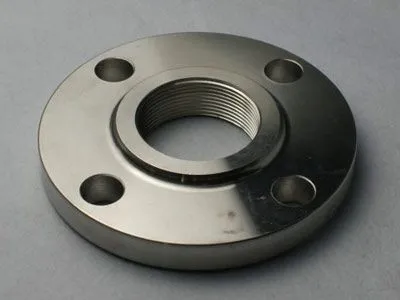
As a supplier of Lap Joint Flanges, I've had my fair share of discussions with clients about the factors that affect the flow resistance of these components. Flow resistance is a crucial aspect when it comes to the performance of Lap Joint Flanges in various piping systems. In this blog, I'll break down the key factors that can influence the flow resistance of Lap Joint Flanges.
1. Flange Design
The design of the Lap Joint Flange plays a significant role in determining its flow resistance. The shape and dimensions of the flange can either promote smooth fluid flow or create obstacles that increase resistance. For instance, a flange with sharp edges or irregular surfaces can cause turbulence in the fluid flow, leading to higher resistance. On the other hand, a well - designed flange with smooth contours allows the fluid to flow more freely, reducing resistance.


When compared to other types of flanges like the Welding Neck Flange, Lap Joint Flanges have a different design. Welding Neck Flanges are directly welded to the pipe, providing a continuous and smooth transition for the fluid. Lap Joint Flanges, however, have a loose fit over a stub end, which can potentially introduce some minor disruptions in the flow. But with proper design, these disruptions can be minimized.
2. Surface Roughness
The surface roughness of the Lap Joint Flange is another important factor. A rough surface can cause the fluid to stick to the flange walls, creating a boundary layer that slows down the flow. This is known as the no - slip condition. When the fluid has to overcome this frictional force along the rough surface, the flow resistance increases.
Manufacturing processes can greatly affect the surface roughness of the flange. For example, if the flange is cast, the casting process might leave behind some rough spots. Machining operations like grinding and polishing can be used to reduce the surface roughness. As a supplier, we make sure to use high - quality manufacturing techniques to keep the surface roughness of our Lap Joint Flanges as low as possible, thus reducing flow resistance.
3. Fluid Properties
The properties of the fluid flowing through the Lap Joint Flange also have a major impact on flow resistance. Viscosity is one of the most important fluid properties in this regard. Viscous fluids, like oil, have a higher internal resistance to flow compared to less viscous fluids like water. When a viscous fluid passes through the flange, it experiences more internal friction, which translates to higher flow resistance.
The density of the fluid also matters. Heavier fluids require more energy to move through the piping system, and this can increase the flow resistance. Temperature can also affect the fluid properties. For example, as the temperature of a fluid increases, its viscosity usually decreases, which in turn reduces the flow resistance.
4. Pipe Diameter and Flow Velocity
The diameter of the pipe connected to the Lap Joint Flange and the flow velocity of the fluid are closely related to flow resistance. According to the principles of fluid mechanics, the flow resistance is inversely proportional to the fifth power of the pipe diameter. This means that even a small increase in the pipe diameter can lead to a significant decrease in flow resistance.
Flow velocity also plays a role. Higher flow velocities can cause more turbulence in the fluid, especially if the flange design is not optimized. Turbulence increases the flow resistance as the fluid has to overcome the chaotic motion within the pipe. As a supplier, we often work with clients to recommend the appropriate pipe diameter and flow velocity based on their specific application to minimize flow resistance.
5. Flange Size and Alignment
The size of the Lap Joint Flange relative to the pipe can affect flow resistance. If the flange is too large or too small for the pipe, it can create an uneven flow path. A misaligned flange can also cause similar problems. When the flange is not properly aligned with the pipe, it can cause the fluid to flow at an angle, creating eddies and turbulence that increase flow resistance.
During the installation process, it's crucial to ensure that the flange is the correct size and is properly aligned. We provide detailed installation guidelines to our clients to help them achieve the best possible alignment and sizing, which in turn helps to reduce flow resistance.
6. Gasket Material and Installation
The gasket used in the Lap Joint Flange connection can also influence flow resistance. The gasket is used to create a seal between the flange faces, preventing leaks. However, if the gasket material is too thick or if it protrudes into the flow path, it can disrupt the fluid flow and increase resistance.
The installation of the gasket is also important. A poorly installed gasket can create gaps or uneven surfaces, which can lead to increased flow resistance. We offer a variety of gasket materials and provide guidance on proper gasket installation to our clients to ensure that the flow resistance is kept to a minimum.
7. System Pressure
The pressure within the piping system can affect the flow resistance of the Lap Joint Flange. Higher pressures can cause the fluid to compress and change its properties slightly. This can lead to an increase in the internal friction of the fluid, resulting in higher flow resistance.
Also, at high pressures, the flange and the piping system need to be more robust. Any leaks or deformations in the flange due to high pressure can disrupt the fluid flow and increase resistance. As a supplier, we ensure that our Lap Joint Flanges are designed to withstand the required system pressures to maintain efficient flow.
8. Flange Material
The material of the Lap Joint Flange can have an impact on flow resistance, although it is often an indirect effect. Different materials have different corrosion resistance properties. If a flange made of a material that is prone to corrosion is used in a corrosive environment, the corrosion can cause the surface roughness to increase over time. This, as we've discussed earlier, will lead to an increase in flow resistance.
For example, Carbon Steel Threaded Flange is a popular choice, but in a highly corrosive environment, it might need additional protection. We offer a range of flange materials, including stainless steel, which has better corrosion resistance, to ensure that the flow resistance remains stable over the lifespan of the flange.
9. Presence of Obstructions
Any obstructions within the Lap Joint Flange or the connected piping can increase flow resistance. This can include debris, scale, or even foreign objects that might have entered the system. These obstructions can cause the fluid to flow around them, creating turbulence and increasing the overall resistance.
Regular maintenance of the piping system is essential to prevent the build - up of such obstructions. We often advise our clients on proper maintenance procedures to keep their systems running smoothly and to minimize flow resistance.
10. System Configuration
The overall configuration of the piping system can also affect the flow resistance of the Lap Joint Flange. For example, if there are multiple bends, valves, or other fittings in the system near the flange, the flow can be disrupted. Each of these components can introduce additional resistance to the fluid flow.
The type of connection between the Lap Joint Flange and other components in the system also matters. A well - designed and properly installed connection can ensure a smooth transition of the fluid, reducing flow resistance.
In conclusion, there are many factors that can affect the flow resistance of a Lap Joint Flange. As a supplier, we take all these factors into account when manufacturing and supplying our products. We strive to provide high - quality Lap Joint Flanges that offer low flow resistance, ensuring efficient operation of our clients' piping systems.
If you're in the market for Lap Joint Flanges or have any questions about flow resistance and our products, feel free to reach out to us. We're always happy to have a chat and help you find the best solution for your needs.
References
- White, F. M. (2016). Fluid Mechanics. McGraw - Hill Education.
- Munson, B. R., Young, D. F., & Okiishi, T. H. (2013). Fundamentals of Fluid Mechanics. John Wiley & Sons.