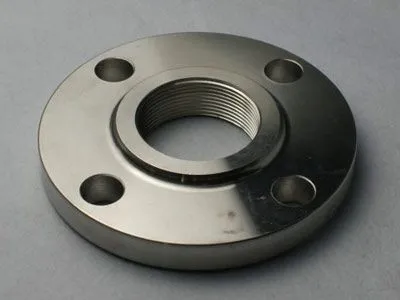
Hey there! As a supplier of blind flanges, I often get asked about the different standards for these crucial components. Blind flanges are used to seal the end of a pipe, valve, or vessel, and they come in various types and sizes. In this blog post, I'll dive into the different standards for blind flanges, such as ASME and DIN, and explain what they mean for you as a buyer.
ASME Standards for Blind Flanges
Let's start with ASME, which stands for the American Society of Mechanical Engineers. ASME standards are widely recognized in the United States and many other countries around the world. When it comes to blind flanges, ASME has a set of specifications that ensure quality and safety.
ASME B16.5 is one of the most well - known standards for pipe flanges and flanged fittings. It covers flanges from NPS 1/2 to NPS 24, with pressure ratings ranging from Class 150 to Class 2500. This standard defines the dimensions, materials, tolerances, and marking requirements for blind flanges.
For example, if you're looking for a blind flange for a low - pressure application, a Class 150 blind flange might be suitable. These flanges are typically used in systems where the pressure doesn't exceed 270 psi (1.86 MPa) at 100°F (38°C). On the other hand, if you're dealing with high - pressure systems, a Class 2500 blind flange can handle pressures up to 4600 psi (31.7 MPa) at 100°F (38°C).
The materials used in ASME - compliant blind flanges can vary. Common materials include carbon steel, stainless steel, and alloy steel. Carbon steel is a popular choice due to its affordability and good strength. You can check out our Carbon Steel Plate Flange for more details on carbon - based options.
DIN Standards for Blind Flanges
Now, let's talk about DIN standards. DIN stands for Deutsches Institut für Normung, which is the German Institute for Standardization. DIN standards are widely used in Europe and other parts of the world.
DIN 2527 is the standard for blind flanges. It has a different set of dimensions and pressure ratings compared to ASME standards. DIN blind flanges are available in various sizes, and the pressure ratings are based on PN (Pressure Nominal) values.
For instance, a PN10 blind flange is designed for a nominal pressure of 10 bar (1.45 ksi), while a PN40 blind flange can handle a nominal pressure of 40 bar (5.8 ksi). The dimensions of DIN blind flanges are also different from ASME flanges. The bolt hole patterns, flange thickness, and outside diameter can vary, so it's important to make sure you're using the right standard for your application.
DIN blind flanges are often made from materials like carbon steel, stainless steel, and cast iron. Carbon steel DIN blind flanges are commonly used in industrial applications due to their durability and cost - effectiveness. If you're interested in carbon steel options, you might also want to look at our Carbon Steel Threaded Flange.
Other Standards
Apart from ASME and DIN, there are other standards for blind flanges as well. For example, JIS (Japanese Industrial Standards) is used in Japan and some Asian countries. JIS B2220 is the standard for pipe flanges, including blind flanges. It has its own unique set of dimensions, pressure ratings, and material requirements.
ISO (International Organization for Standardization) also has standards related to flanges. ISO 7005 - 1 covers steel flanges, and it aims to provide a common set of specifications for flanges used in international trade.
Choosing the Right Standard
So, how do you choose the right standard for your blind flange? Well, it depends on several factors.
First, consider the location of your project. If your project is in the United States, ASME standards are likely the way to go. If it's in Europe, DIN standards might be more appropriate. However, in some cases, you might have a project that involves international trade or a mix of equipment from different regions. In such situations, you need to make sure that all the components are compatible.


Second, think about the pressure and temperature requirements of your system. Different standards have different pressure ratings, so you need to choose a blind flange that can handle the conditions of your application. For high - pressure and high - temperature systems, you might need a flange with a higher pressure rating.
Third, the type of fluid or gas in your system matters. Some materials are more resistant to corrosion than others. For example, if you're dealing with a corrosive fluid, stainless steel blind flanges might be a better choice.
Our Product Range
As a blind flange supplier, we offer a wide range of blind flanges that comply with different standards. Whether you need an ASME - compliant blind flange for your American project or a DIN - compliant one for your European installation, we've got you covered.
We also have different types of flanges, such as Welding Neck Flange. Welding neck flanges are known for their high strength and are often used in high - pressure and high - temperature applications.
Why Choose Us
When you choose us as your blind flange supplier, you're getting more than just a product. We have a team of experts who can help you choose the right flange for your application. We understand the different standards and can guide you through the selection process.
We also offer high - quality products at competitive prices. Our blind flanges are made from top - notch materials and are manufactured to meet the strictest standards. We ensure that every flange we sell is inspected and tested to guarantee its quality.
Contact Us for Procurement
If you're in the market for blind flanges or have any questions about the different standards, don't hesitate to contact us. We're here to help you find the perfect blind flange for your project. Whether you need a small quantity for a DIY project or a large order for an industrial installation, we can accommodate your needs.
Let's work together to ensure that your system runs smoothly and safely. Reach out to us today to start the procurement process.
References
- ASME B16.5 - Pipe Flanges and Flanged Fittings
- DIN 2527 - Blind Flanges
- JIS B2220 - Pipe Flanges
- ISO 7005 - 1 - Steel Flanges