What are the acoustic properties of carbon steel tees?
As a dedicated supplier of carbon steel tees, I've witnessed firsthand the diverse applications and the importance of understanding the acoustic properties of these essential pipe - fitting components. Carbon steel tees are widely used in various industries, including oil and gas, water supply, and HVAC systems. Their acoustic characteristics play a crucial role in ensuring the efficient and quiet operation of these systems.
Sound Transmission in Carbon Steel Tees
Sound transmission through carbon steel tees is a complex phenomenon influenced by multiple factors. Carbon steel, as a material, has a relatively high density and stiffness, which affects the way sound waves propagate through it. When sound waves enter a carbon steel tee, they interact with the internal structure of the tee, causing reflections, refractions, and absorptions.
The shape of the carbon steel tee also has a significant impact on sound transmission. A typical tee has a main pipe and a branch pipe, creating a junction where sound waves can change direction. At this junction, some of the sound energy is reflected back into the main pipe, while some is transmitted into the branch pipe. The angle between the main and branch pipes can influence the proportion of reflected and transmitted sound. For example, a 90 - degree tee may cause more significant reflections compared to a tee with a more gradual branching angle.
Acoustic Absorption
Carbon steel itself is not a highly efficient sound - absorbing material. It has a low internal damping capacity, which means that it does not dissipate sound energy effectively. However, in real - world applications, the acoustic absorption of carbon steel tees can be affected by other factors.
The presence of fluid inside the tee can have an impact on acoustic absorption. For example, in a water - filled carbon steel tee, the water can act as a medium for sound absorption. The viscosity and density of the fluid can cause some of the sound energy to be converted into heat energy as the sound waves travel through the fluid. Additionally, any coatings or linings on the inner surface of the carbon steel tee can also influence acoustic absorption. Some specialized coatings can increase the internal damping of the tee, thereby enhancing its ability to absorb sound.
Resonance and Vibration
Resonance is another important aspect of the acoustic properties of carbon steel tees. Resonance occurs when the frequency of the sound wave matches the natural frequency of the tee. When resonance happens, the amplitude of the vibration of the tee can increase significantly, leading to increased sound levels and potentially causing structural damage over time.
The natural frequency of a carbon steel tee depends on its geometry, material properties, and boundary conditions. For example, a larger - diameter tee may have a lower natural frequency compared to a smaller - diameter one. The thickness of the tee wall also affects its natural frequency; a thicker - walled tee generally has a higher natural frequency.
Vibration in carbon steel tees can be induced by various sources, such as fluid flow, mechanical equipment connected to the pipes, or external forces. Excessive vibration not only generates noise but can also lead to fatigue failure of the tee. To mitigate resonance and vibration, engineers often use techniques such as adding damping materials, changing the geometry of the tee, or adjusting the operating conditions of the system.
Applications and the Importance of Acoustic Properties
In many industrial applications, the acoustic properties of carbon steel tees are of great importance. In the oil and gas industry, for example, carbon steel tees are used in pipelines for transporting oil and gas. The noise generated by the fluid flow through the tees can be a significant issue, especially in offshore platforms where noise pollution can affect the well - being of the workers. By understanding the acoustic properties of the tees, engineers can design systems that minimize noise generation.
In HVAC systems, carbon steel tees are used to distribute air. The acoustic performance of these tees can impact the comfort level of the building occupants. Quiet operation of the HVAC system is crucial in environments such as hospitals, offices, and residential buildings. Therefore, selecting carbon steel tees with good acoustic properties is essential for achieving a quiet and comfortable indoor environment.


Related Products
In addition to carbon steel tees, there are other related pipe - fitting products that can be used in conjunction with them. For instance, if you need to change the pipe diameter, Carbon Steel Reducers are a great choice. They can smoothly transition the flow from a larger pipe to a smaller one while maintaining the integrity of the system.
Carbon Steel Caps are often used to close the end of a pipe. They can also play a role in controlling the flow and potentially affect the acoustic performance of the overall system.
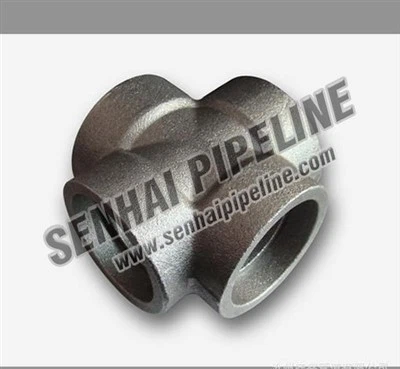
Another useful product is the Pipe Fittings Cross. It allows for the connection of four pipes at right angles, providing more flexibility in pipe system design.
Contact for Procurement
If you are in the market for high - quality carbon steel tees or any of the related pipe - fitting products mentioned above, I encourage you to reach out. Our expertise in providing top - notch carbon steel products can meet your specific requirements. Whether you need tees for a small - scale project or a large - scale industrial application, we have the solutions. Contact us to discuss your procurement needs and let us help you build a reliable and efficient pipe system.
References
- "Handbook of Pipe Fittings" by John Blackwood.
- "Acoustics in Industrial Environments" by David Thompson.
- "Materials Science for Engineers" by Robert Shackelford.