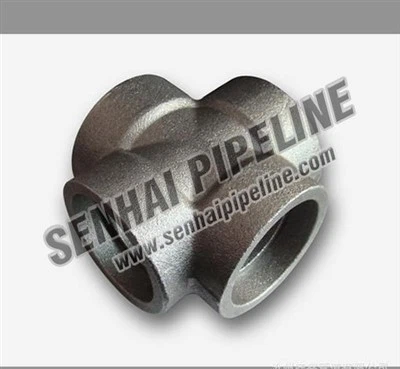
New technologies are revolutionizing industries across the globe, and the carbon steel tee manufacturing sector is no exception. As a carbon steel tee supplier, I've witnessed firsthand how advancements in technology are reshaping the future of this crucial component. In this blog post, I'll explore how new technologies will impact the future of carbon steel tees, from production processes to product performance and market demand.
Advanced Manufacturing Technologies
One of the most significant impacts of new technologies on carbon steel tees is in the realm of manufacturing. Traditional methods of producing carbon steel tees, such as forging and casting, have their limitations in terms of precision, efficiency, and cost. However, emerging technologies like 3D printing and computer numerical control (CNC) machining are changing the game.
3D printing, also known as additive manufacturing, allows for the creation of complex geometries with a high degree of precision. This technology enables the production of carbon steel tees with customized designs and internal structures that were previously impossible or extremely difficult to achieve. For example, 3D printing can be used to create tees with optimized flow paths, reducing pressure drop and improving overall system efficiency. Additionally, 3D printing can significantly reduce production time and waste compared to traditional manufacturing methods, making it a more sustainable option.
CNC machining, on the other hand, offers unparalleled accuracy and repeatability in the production of carbon steel tees. By using computer-controlled machines, manufacturers can precisely cut and shape the steel to meet exact specifications. This results in tees with consistent dimensions and high-quality finishes, ensuring a perfect fit and reliable performance. CNC machining also allows for rapid prototyping, enabling manufacturers to quickly test and refine new designs before mass production.
Materials Science and Innovation
Another area where new technologies are having a profound impact on carbon steel tees is in materials science. Researchers are constantly developing new alloys and treatments to enhance the properties of carbon steel, making it more durable, corrosion-resistant, and lightweight.
For instance, the use of nanotechnology in the development of carbon steel alloys has shown great promise. By incorporating nanoparticles into the steel matrix, it is possible to improve its strength, toughness, and resistance to wear and tear. Nanostructured carbon steel tees can withstand higher pressures and temperatures, making them suitable for more demanding applications in industries such as oil and gas, power generation, and chemical processing.
Surface treatment technologies are also evolving to protect carbon steel tees from corrosion and other forms of degradation. Advanced coatings, such as ceramic and polymer coatings, can provide a barrier between the steel and the environment, preventing rust and other forms of corrosion. These coatings can also improve the flow characteristics of the tee, reducing friction and minimizing the risk of fouling.
Internet of Things (IoT) and Smart Carbon Steel Tees
The Internet of Things (IoT) is transforming the way we interact with and manage industrial equipment, and carbon steel tees are no exception. By embedding sensors and connectivity into carbon steel tees, manufacturers can create smart products that can monitor their own performance and provide real-time data to operators.
Smart carbon steel tees can be equipped with sensors to measure parameters such as temperature, pressure, flow rate, and vibration. This data can be transmitted wirelessly to a central monitoring system, allowing operators to detect potential issues before they become major problems. For example, if a sensor detects a sudden increase in pressure or temperature, it could indicate a blockage or a leak in the system. By receiving this information in real-time, operators can take immediate action to prevent damage and ensure the safety and efficiency of the system.
In addition to monitoring performance, smart carbon steel tees can also be integrated with other smart devices and systems to enable predictive maintenance. By analyzing historical data and using machine learning algorithms, it is possible to predict when a tee is likely to fail and schedule maintenance accordingly. This proactive approach can reduce downtime, extend the lifespan of the equipment, and save costs in the long run.
Environmental Sustainability
As the world becomes more conscious of the environmental impact of industrial activities, there is a growing demand for sustainable products and manufacturing processes. New technologies are playing a crucial role in making carbon steel tees more environmentally friendly.
As mentioned earlier, 3D printing and CNC machining can significantly reduce waste compared to traditional manufacturing methods. By using only the amount of material required to create the tee, these technologies minimize the amount of scrap and reduce the energy consumption associated with production. Additionally, the development of more corrosion-resistant materials and coatings can extend the lifespan of carbon steel tees, reducing the need for frequent replacements and minimizing the environmental impact of disposal.
Furthermore, the use of renewable energy sources in the manufacturing process can further reduce the carbon footprint of carbon steel tees. Many manufacturers are now investing in solar, wind, and other renewable energy technologies to power their factories, making their production processes more sustainable.
Market Demand and Competition
The advancements in technology are not only changing the way carbon steel tees are produced and used but also influencing market demand and competition. As customers become more aware of the benefits of new technologies, they are increasingly demanding high-performance, sustainable, and smart carbon steel tees.
Companies that are able to embrace these new technologies and offer innovative products are likely to gain a competitive edge in the market. By investing in research and development, manufacturers can develop new products that meet the evolving needs of customers and differentiate themselves from their competitors. For example, a company that offers 3D-printed carbon steel tees with customized designs and advanced performance features is likely to attract more customers than a company that only offers traditional tees.
On the other hand, companies that fail to adapt to the changing technological landscape may find themselves at a disadvantage. As the demand for traditional carbon steel tees declines, these companies may struggle to compete and may eventually be forced out of the market.
Conclusion
In conclusion, new technologies are having a profound impact on the future of carbon steel tees. From advanced manufacturing technologies to materials science, IoT, and environmental sustainability, these advancements are transforming the way carbon steel tees are produced, used, and perceived in the market.
As a carbon steel tee supplier, I am excited about the opportunities that these new technologies present. By leveraging these technologies, we can offer our customers high-quality, innovative, and sustainable products that meet their specific needs. At the same time, we are committed to staying at the forefront of technological advancements and continuously improving our products and processes to remain competitive in the market.
If you are interested in learning more about our carbon steel tees or discussing your specific requirements, please feel free to contact us. We would be happy to provide you with more information and assist you in finding the right solution for your project.


References
- "Additive Manufacturing Technologies: 3D Printing, Rapid Prototyping, and Direct Digital Manufacturing" by Ian Gibson, David W. Rosen, and Brent Stucker
- "Materials Science and Engineering: An Introduction" by William D. Callister Jr. and David G. Rethwisch
- "The Internet of Things: How the Next Evolution of the Internet Is Changing Everything" by Don Tapscott and Alex Tapscott
- "Sustainable Manufacturing: Concepts, Practices, and Technologies" by Surya P. Singh and A. K. Shukla