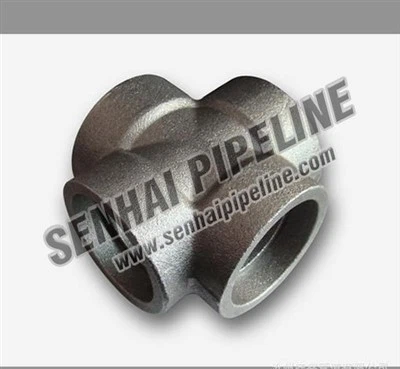
Hey there! As a supplier of Carbon Steel Tee, I've seen firsthand the challenges that come with erosion - corrosion in these crucial components. Erosion - corrosion is a big headache for many industries that rely on carbon steel tees, like oil and gas, water treatment, and chemical processing. But don't worry, I'm here to share some practical tips on how to prevent it.
Understanding Erosion - Corrosion
First things first, let's get clear on what erosion - corrosion actually is. It's a combined process where mechanical wear from fluid flow (erosion) and chemical reactions (corrosion) work together to damage the surface of carbon steel tees. The fluid flowing through the tee can carry abrasive particles, which scrape against the inner walls of the tee. At the same time, the chemical composition of the fluid can cause corrosion, eating away at the metal.
This double - whammy can lead to thinning of the tee walls, leaks, and even complete failure of the fitting. And that's not something you want, especially in high - pressure or high - flow systems.
Material Selection
One of the most important steps in preventing erosion - corrosion is choosing the right material for your carbon steel tee. Not all carbon steels are created equal. Some have better resistance to erosion - corrosion than others.
When selecting a carbon steel tee, look for materials with a higher chromium or nickel content. These elements can form a protective oxide layer on the surface of the steel, which helps to resist both erosion and corrosion. For example, stainless steels with a high chromium content are known for their excellent corrosion resistance.
Also, consider the hardness of the steel. Harder steels are generally more resistant to erosion, as they can better withstand the impact of abrasive particles. However, harder steels may be more brittle, so you need to find a balance that suits your specific application.
Coating and Lining
Another effective way to prevent erosion - corrosion is to apply a coating or lining to the carbon steel tee. There are several types of coatings and linings available, each with its own advantages.
Epoxy coatings are a popular choice. They are relatively easy to apply and can provide a good barrier against both erosion and corrosion. Epoxy coatings can also be customized to meet specific requirements, such as high - temperature resistance or chemical resistance.
Ceramic linings are another option. They are extremely hard and wear - resistant, making them ideal for applications where there are high - velocity fluids or abrasive particles. Ceramic linings can significantly extend the lifespan of carbon steel tees in harsh environments.
Flow Control
Controlling the flow of fluid through the carbon steel tee is crucial in preventing erosion - corrosion. High - velocity flows can increase the impact of abrasive particles on the tee walls, leading to faster erosion.
One way to control flow is to use flow restrictors or diffusers. These devices can help to reduce the velocity of the fluid and distribute it more evenly across the tee. By reducing the velocity, you can minimize the erosive forces acting on the tee.
Another important aspect of flow control is to avoid sudden changes in flow direction or velocity. Sharp bends or sudden expansions in the piping system can create turbulence, which can increase erosion - corrosion. Make sure to design your piping system with smooth curves and gradual transitions to minimize these effects.
Maintenance and Inspection
Regular maintenance and inspection are essential for preventing erosion - corrosion in carbon steel tees. By catching early signs of damage, you can take corrective action before it becomes a major problem.
Inspect the carbon steel tees regularly for signs of erosion, such as thinning of the walls, pitting, or surface roughness. You can use non - destructive testing methods, such as ultrasonic testing or magnetic particle testing, to detect internal damage.
If you notice any signs of erosion - corrosion, take immediate action. This may involve repairing or replacing the damaged tee, or adjusting the operating conditions to reduce the erosive forces.
Water Treatment
In applications where the fluid flowing through the carbon steel tee is water, proper water treatment can play a significant role in preventing erosion - corrosion. Water can contain dissolved oxygen, minerals, and other contaminants that can cause corrosion.
By treating the water to remove these contaminants, you can reduce the corrosive potential of the fluid. This can involve processes such as filtration, demineralization, or chemical treatment. For example, adding corrosion inhibitors to the water can help to form a protective film on the surface of the carbon steel tee, preventing corrosion.
Using Complementary Fittings
In addition to carbon steel tees, other fittings in the piping system can also affect erosion - corrosion. For example, Carbon Steel Caps can be used to protect the ends of pipes and tees from corrosion. They can also help to reduce the impact of fluid flow on the tee by providing a smooth transition.


Using high - quality Carbon Steel Fittings throughout the system can also improve the overall performance and resistance to erosion - corrosion. Make sure that all fittings are properly installed and compatible with each other to ensure a leak - free and efficient system.
Conclusion
Preventing erosion - corrosion in carbon steel tees is a multi - faceted approach that involves material selection, coating and lining, flow control, maintenance, water treatment, and the use of complementary fittings. By implementing these strategies, you can significantly extend the lifespan of your carbon steel tees and reduce the risk of costly failures.
If you're in the market for high - quality carbon steel tees or need more advice on preventing erosion - corrosion, don't hesitate to reach out. We're here to help you find the best solutions for your specific needs. Whether you're in the oil and gas industry, water treatment, or any other field that relies on carbon steel tees, we've got the expertise and products to keep your systems running smoothly.
References
- Fontana, M. G. (1986). Corrosion Engineering. McGraw - Hill.
- Uhlig, H. H., & Revie, R. W. (1985). Corrosion and Corrosion Control. Wiley - Interscience.
- ASM Handbook Committee. (1996). ASM Handbook Volume 13A: Corrosion: Fundamentals, Testing, and Protection. ASM International.