As a supplier of Carbon Steel Tees, understanding how to measure the hardness of these essential pipe fittings is crucial. Hardness is a key property that determines the suitability of carbon steel tees for various applications, from industrial piping systems to plumbing installations. In this blog post, I'll share some insights into the methods used to measure the hardness of carbon steel tees, and why it matters for our customers.
Why Hardness Matters in Carbon Steel Tees
Hardness in carbon steel tees refers to the material's resistance to deformation, indentation, or scratching. A higher hardness generally indicates better wear resistance, durability, and the ability to withstand high-pressure environments. For example, in oil and gas pipelines, carbon steel tees with appropriate hardness can resist the abrasion caused by the flow of fluids containing solid particles. In water supply systems, they can withstand the pressure changes without deforming over time.
Common Methods for Measuring Hardness
Brinell Hardness Test
The Brinell hardness test is one of the oldest and most widely used methods for measuring the hardness of metals, including carbon steel tees. In this test, a hard, spherical indenter (usually made of tungsten carbide) is pressed into the surface of the test piece under a specific load for a predetermined period. The diameter of the resulting indentation is then measured, and the Brinell hardness number (BHN) is calculated using a formula that takes into account the load and the diameter of the indentation.
The Brinell test is suitable for measuring the hardness of relatively large and thick specimens, such as carbon steel tees. It provides a reliable indication of the material's overall hardness, as the indentation is large enough to average out any local variations in the microstructure. However, the test can be time-consuming and may cause some damage to the surface of the test piece.
Rockwell Hardness Test
The Rockwell hardness test is another popular method for measuring the hardness of metals. It involves pressing a diamond cone or a hardened steel ball indenter into the surface of the test piece under a minor load, followed by a major load. The difference in the depth of penetration between the minor and major loads is measured, and the Rockwell hardness number is determined from a pre - calibrated scale.
There are different Rockwell scales, such as the HRA, HRB, and HRC scales, which are used depending on the hardness range of the material being tested. The Rockwell test is relatively quick and non - destructive compared to the Brinell test, as the indentation is much smaller. It is often used for quality control purposes in manufacturing processes, including the production of carbon steel tees.
Vickers Hardness Test
The Vickers hardness test is similar to the Brinell test in principle, but it uses a square - based pyramid indenter instead of a spherical one. The indenter is pressed into the surface of the test piece under a specific load, and the diagonal lengths of the resulting square indentation are measured. The Vickers hardness number (HV) is then calculated using a formula that takes into account the load and the area of the indentation.
The Vickers test is suitable for measuring the hardness of a wide range of materials, including very hard and thin specimens. It provides a more accurate measurement of the hardness compared to the Brinell and Rockwell tests, especially for materials with a non - uniform microstructure. However, the test requires more precise measurement equipment and is more time - consuming than the Rockwell test.
Factors Affecting the Hardness of Carbon Steel Tees
Carbon Content
The carbon content is one of the most important factors affecting the hardness of carbon steel. Generally, as the carbon content increases, the hardness of the steel also increases. This is because carbon atoms can form hard carbide particles in the steel matrix, which resist deformation. However, increasing the carbon content also reduces the ductility and weldability of the steel.
Heat Treatment
Heat treatment processes, such as quenching and tempering, can significantly affect the hardness of carbon steel tees. Quenching involves rapidly cooling the steel from a high temperature, which causes the formation of a hard and brittle martensite structure. Tempering is then carried out to reduce the brittleness and improve the toughness of the steel while maintaining a certain level of hardness.
Microstructure
The microstructure of carbon steel, including the grain size and the distribution of phases, also affects its hardness. A fine - grained microstructure generally results in higher hardness and better mechanical properties compared to a coarse - grained microstructure. Additionally, the presence of different phases, such as ferrite, pearlite, and bainite, can also influence the hardness of the steel.
Importance of Hardness Measurement for Our Customers
As a Carbon Steel Tee supplier, we understand the importance of providing our customers with products that meet their specific requirements. Measuring the hardness of our carbon steel tees allows us to ensure that they have the appropriate mechanical properties for the intended applications.


For example, if a customer needs carbon steel tees for a high - pressure pipeline system, we can use hardness testing to select the tees with the right level of hardness to withstand the pressure without deforming or cracking. By providing accurate hardness data, we can also help our customers make informed decisions about the installation and maintenance of their piping systems.
Related Products in Our Catalog
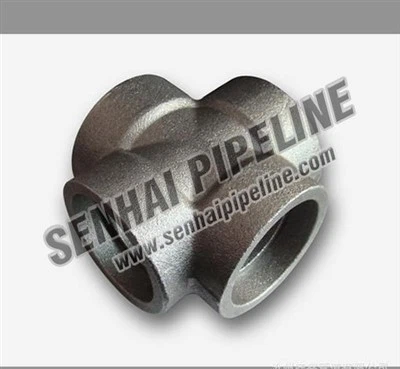
In addition to Carbon Steel Tees, we also offer a wide range of Carbon Steel Fittings to meet the diverse needs of our customers. Our product line includes Carbon Steel Reducers, which are used to connect pipes of different diameters, and Pipe Fittings Cross, which are used to create a four - way connection in a piping system.
All of our products are manufactured using high - quality carbon steel and undergo strict quality control procedures, including hardness testing, to ensure their reliability and performance.
Contact Us for Purchase and Negotiation
If you are interested in our Carbon Steel Tees or other pipe fittings, we invite you to contact us for purchase and negotiation. Our experienced sales team is ready to provide you with detailed product information, competitive pricing, and excellent customer service. Whether you have a small - scale project or a large - scale industrial application, we can offer you the right solutions to meet your needs.
References
- ASM Handbook Volume 8: Mechanical Testing and Evaluation. ASM International.
- Callister, W. D., & Rethwisch, D. G. (2010). Materials Science and Engineering: An Introduction. Wiley.
- Metals Handbook Desk Edition. ASM International.