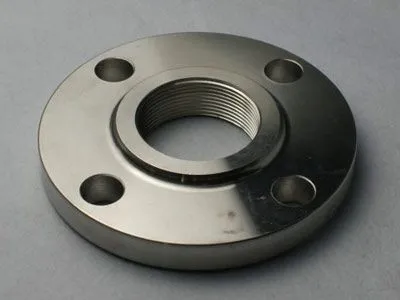
When embarking on a project that requires the use of flanges, one of the most critical decisions you'll face is choosing the right type of flange. Among the various options available, the Welding Neck Flange stands out for its unique characteristics and suitability for specific applications. As a Welding Neck Flange supplier, I've witnessed firsthand the importance of making an informed choice. In this blog post, I'll guide you through the process of selecting the perfect Welding Neck Flange for your project.


Understanding Welding Neck Flanges
Before delving into the selection process, it's essential to understand what a Welding Neck Flange is and how it differs from other types of flanges. A Welding Neck Flange features a long, tapered neck that is welded to the pipe. This design provides excellent strength and durability, making it ideal for high-pressure and high-temperature applications. The tapered neck also helps to reduce stress concentration at the weld joint, minimizing the risk of fatigue failure.
Compared to other types of flanges, such as Socket Welding Flange and Lap Joint Flange, Welding Neck Flanges offer superior performance in terms of pressure containment and structural integrity. However, they are also more expensive and require more skilled labor to install.
Factors to Consider When Choosing a Welding Neck Flange
When selecting a Welding Neck Flange for your project, several factors need to be taken into account. These include:
1. Pressure Rating
The pressure rating of a flange refers to the maximum pressure it can withstand without failing. It's crucial to choose a Welding Neck Flange with a pressure rating that is suitable for the operating conditions of your project. Consider factors such as the maximum operating pressure, temperature, and the type of fluid or gas being transported. If the pressure rating is too low, the flange may fail, leading to leaks or even catastrophic accidents. On the other hand, choosing a flange with an excessively high pressure rating can result in unnecessary costs.
2. Pipe Size and Schedule
The size and schedule of the pipe to which the flange will be connected are also important considerations. The flange must have the same nominal pipe size (NPS) as the pipe to ensure a proper fit. Additionally, the schedule of the pipe, which indicates its wall thickness, should be compatible with the flange. Using a flange that is not properly matched to the pipe size and schedule can lead to improper alignment, leaks, and reduced performance.
3. Material
The material of the Welding Neck Flange is another critical factor. Different materials offer varying levels of corrosion resistance, strength, and durability. Common materials used for Welding Neck Flanges include carbon steel, stainless steel, alloy steel, and nickel-based alloys. The choice of material depends on the nature of the fluid or gas being transported, the operating temperature, and the environmental conditions. For example, in corrosive environments, stainless steel or nickel-based alloys may be preferred, while carbon steel is often used for general-purpose applications.
4. End Connection
Welding Neck Flanges can have different end connections, such as raised face (RF), flat face (FF), or ring joint face (RTJ). The choice of end connection depends on the type of gasket and the mating flange. Raised face flanges are the most commonly used and are suitable for a wide range of applications. Flat face flanges are typically used in low-pressure applications or when connecting to non-metallic pipes. Ring joint face flanges are used in high-pressure and high-temperature applications where a metal-to-metal seal is required.
5. Industry Standards
Compliance with industry standards is essential when choosing a Welding Neck Flange. Standards such as ASME B16.5, ASME B16.47, and API 6A ensure that the flange meets specific quality and performance requirements. Make sure the flange you choose is manufactured in accordance with the relevant standards for your industry. This will help to ensure the safety and reliability of your project.
Application-Specific Considerations
In addition to the general factors mentioned above, certain applications may have specific requirements that need to be considered when choosing a Welding Neck Flange. Here are some examples:
1. Oil and Gas Industry
In the oil and gas industry, Welding Neck Flanges are commonly used in pipelines, refineries, and offshore platforms. These applications often involve high pressures, high temperatures, and corrosive environments. Therefore, flanges made from high-strength and corrosion-resistant materials, such as stainless steel or nickel-based alloys, are typically preferred. Additionally, flanges used in the oil and gas industry must comply with strict industry standards, such as API 6A.
2. Chemical Industry
The chemical industry deals with a wide range of corrosive and hazardous chemicals. When selecting a Welding Neck Flange for chemical applications, it's crucial to choose a material that is resistant to the specific chemicals being transported. For example, in applications involving acids, stainless steel or specialty alloys may be required. The flange should also be designed to prevent leaks and minimize the risk of chemical spills.
3. Power Generation
In power generation plants, Welding Neck Flanges are used in steam lines, water pipes, and other critical systems. These applications often involve high pressures and temperatures, as well as cyclic loading. Therefore, flanges with high strength and fatigue resistance are necessary. Materials such as alloy steel are commonly used in power generation applications to ensure the long-term reliability of the system.
Installation and Maintenance
Proper installation and maintenance are essential for the optimal performance of Welding Neck Flanges. Here are some tips to keep in mind:
Installation
- Ensure that the pipe and flange are clean and free of debris before welding.
- Use the correct welding procedure and techniques to ensure a strong and reliable weld.
- Follow the manufacturer's instructions for torqueing the bolts to the proper specifications.
- Check for proper alignment and clearance between the flange and the mating components.
Maintenance
- Regularly inspect the flanges for signs of corrosion, leaks, or damage.
- Replace any damaged or worn gaskets and bolts as needed.
- Monitor the operating conditions of the system to detect any changes that may affect the performance of the flanges.
Conclusion
Choosing the right Welding Neck Flange for your project is a crucial decision that can have a significant impact on the safety, reliability, and performance of your system. By considering factors such as pressure rating, pipe size and schedule, material, end connection, and industry standards, you can ensure that you select a flange that is suitable for your specific application. As a Welding Neck Flange supplier, I'm here to assist you in making the right choice. If you have any questions or need further information, please don't hesitate to contact us for a consultation. We look forward to helping you with your flange requirements.
References
- ASME B16.5 - Pipe Flanges and Flanged Fittings
- ASME B16.47 - Large Diameter Steel Flanges
- API 6A - Specification for Wellhead and Christmas Tree Equipment