

Hey there! As a supplier of Welding Neck Flanges, I've seen firsthand how the pressure class can have a huge impact on the selection of these flanges. In this blog, I'm gonna break down how pressure class affects the choice of Welding Neck Flanges and why it's so important to get it right.
First off, let's talk about what pressure class actually means. Pressure class is a rating system that indicates the maximum pressure a flange can handle at a given temperature. It's like a safety limit for the flange. Different pressure classes are designed to work in different environments and with different types of fluids or gases. For example, in a high - pressure pipeline carrying natural gas, you'll need a flange with a higher pressure class compared to a low - pressure water system.
When it comes to Welding Neck Flanges, the pressure class determines a few key things. One of the most important factors is the thickness of the flange. Higher pressure classes require thicker flanges. This is because the flange needs to be strong enough to withstand the forces exerted by the high - pressure fluid or gas inside the pipeline. A thin flange might buckle or rupture under high pressure, which can lead to leaks and potentially dangerous situations.
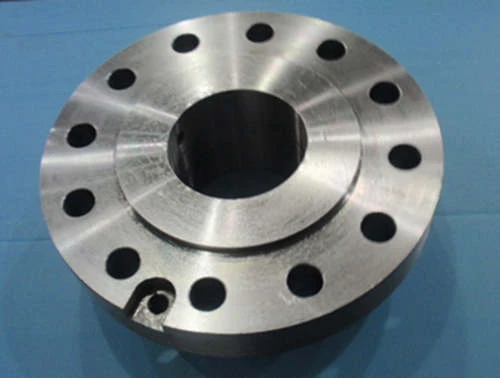
Another aspect affected by the pressure class is the size of the bolts and the number of bolt holes. Higher pressure classes usually need larger and more bolts. The bolts are used to hold the flange in place and keep the connection tight. With higher pressure, more force is trying to push the flanges apart, so stronger and more numerous bolts are required to keep everything secure.
Now, let's get into how you should choose the right pressure class for your Welding Neck Flanges. The first step is to understand the operating conditions of your system. You need to know the maximum pressure and temperature that the pipeline will experience. This information can usually be obtained from the engineering design of the system or from the specifications of the equipment it's connected to.
If you're dealing with a system that has fluctuating pressures, it's a good idea to choose a pressure class that can handle the peak pressure. For example, if your system normally operates at a pressure of 100 psi but can occasionally reach 200 psi, you should consider a flange with a pressure class that can handle at least 200 psi. This gives you a safety margin and helps prevent failures.
It's also important to consider the type of fluid or gas flowing through the pipeline. Some substances are more corrosive or abrasive than others. If you're dealing with a corrosive fluid, you might need to choose a flange made from a more corrosion - resistant material and also consider a higher pressure class to account for any potential weakening of the flange over time due to corrosion.
Let's compare different pressure classes to give you a better idea. A 150 - pound pressure class Welding Neck Flange is suitable for low - pressure applications. It's commonly used in water supply systems, some HVAC systems, and other relatively low - stress environments. These flanges are usually thinner and have fewer and smaller bolt holes compared to higher pressure classes.
On the other hand, a 300 - pound pressure class flange can handle more pressure. It's often used in industrial applications where the pressure is a bit higher, like in some chemical processing plants or medium - pressure steam systems. The 300 - pound flanges are thicker and have larger and more bolt holes to handle the increased pressure.
If you're dealing with really high - pressure systems, like those in oil and gas refineries or high - pressure steam turbines, you might need a 600 - pound or even higher pressure class Welding Neck Flange. These flanges are built to withstand extreme pressures and are much more robust in terms of their construction.
Now, I want to mention a couple of related types of flanges. The Lap Joint Flange is another option in the flange world. It's different from the Welding Neck Flange in that it has a loose backing flange and a stub end. Lap Joint Flanges are often used in applications where frequent dismantling is required.
Also, the Orifice Flange Facing is an important consideration. The facing of the flange affects the seal between the flanges. A proper orifice flange facing ensures a tight seal, which is crucial, especially in high - pressure applications.
As a Welding Neck Flange supplier, I know that getting the right pressure class is essential for the success of your project. Choosing the wrong pressure class can lead to costly repairs, downtime, and even safety hazards. That's why I'm here to help. Whether you're a small business owner looking for flanges for a simple water system or an engineer in charge of a large industrial project, I can assist you in selecting the right Welding Neck Flange based on the pressure class and other factors.
If you're in the market for Welding Neck Flanges, don't hesitate to reach out. We can have a detailed discussion about your specific requirements, and I'll make sure you get the best - suited flanges for your needs. You can explore more about our Welding Neck Flange products on our website. And if you have any questions or need more information, feel free to contact us. Let's work together to ensure your pipeline system runs smoothly and safely.
References

- "Flange Design Handbook" - A comprehensive guide on flange design and pressure ratings.
- Industry standards and codes related to piping and flanges, such as ASME B16.5.


