As a seasoned supplier of forged couplings, I understand the critical importance of ensuring the integrity and functionality of these components. Forged couplings are widely used in various industries, including oil and gas, petrochemical, power generation, and manufacturing, to connect pipes, valves, and other equipment. However, like any mechanical part, forged couplings can be subject to damage, which can compromise their performance and safety. In this blog post, I will share some insights on how to determine if a forged coupling is damaged.
Visual Inspection
The first step in assessing the condition of a forged coupling is to conduct a visual inspection. This involves carefully examining the coupling for any signs of physical damage, such as cracks, dents, scratches, or corrosion. Cracks are particularly concerning as they can propagate over time, leading to catastrophic failure. Look for cracks on the surface of the coupling, especially around the welds or areas of high stress. Dents and scratches can also weaken the coupling and increase the risk of failure, so it's important to note their location and severity.
Corrosion is another common issue that can affect forged couplings. It occurs when the metal is exposed to moisture, chemicals, or other corrosive substances. Signs of corrosion include rust, pitting, or discoloration on the surface of the coupling. If you notice any of these signs, it's essential to take action immediately to prevent further damage.
Dimensional Inspection
In addition to visual inspection, it's also important to perform a dimensional inspection of the forged coupling. This involves measuring the key dimensions of the coupling, such as the diameter, length, and wall thickness, and comparing them to the specifications provided by the manufacturer. Any significant deviations from the specifications could indicate damage or wear.
For example, if the diameter of the coupling is larger or smaller than the specified value, it could affect the fit and alignment of the coupling with the connected components. This can lead to leaks, vibration, and premature failure. Similarly, if the wall thickness of the coupling is thinner than the specified value, it could reduce the strength and durability of the coupling, increasing the risk of failure under pressure.


Non-Destructive Testing
Non-destructive testing (NDT) techniques can be used to detect internal defects or damage in forged couplings that may not be visible during a visual inspection. Some common NDT methods include ultrasonic testing (UT), magnetic particle testing (MT), and liquid penetrant testing (PT).
Ultrasonic testing uses high-frequency sound waves to detect internal flaws in the coupling. A transducer is placed on the surface of the coupling, and the sound waves are transmitted into the material. If there is a defect, such as a crack or void, the sound waves will be reflected back to the transducer, and the technician can analyze the signals to determine the location and size of the defect.
Magnetic particle testing is used to detect surface and near-surface defects in ferromagnetic materials, such as carbon steel. A magnetic field is applied to the coupling, and magnetic particles are sprayed onto the surface. If there is a defect, the magnetic field will be disrupted, and the particles will accumulate at the defect site, making it visible to the inspector.
Liquid penetrant testing is used to detect surface cracks in non-porous materials, such as stainless steel. A liquid penetrant is applied to the surface of the coupling, and it seeps into any cracks or defects. After a specified time, the excess penetrant is removed, and a developer is applied. The developer draws the penetrant out of the cracks, making them visible as bright indications.
Performance Testing
In some cases, it may be necessary to perform performance testing on the forged coupling to determine its functionality and integrity. This can involve subjecting the coupling to various tests, such as pressure testing, torque testing, or fatigue testing.
Pressure testing is used to verify the ability of the coupling to withstand the specified operating pressure without leaking or failing. The coupling is filled with a test fluid, such as water or oil, and the pressure is gradually increased to the test level. The coupling is then monitored for any signs of leakage or deformation.
Torque testing is used to ensure that the coupling is tightened to the correct torque specification. This is important to prevent leaks and ensure the proper functioning of the coupling. The coupling is tightened using a torque wrench, and the torque is measured to ensure that it is within the specified range.
Fatigue testing is used to simulate the long-term performance of the coupling under cyclic loading. The coupling is subjected to repeated loading and unloading cycles, and the number of cycles it can withstand before failure is recorded. This test can help to determine the fatigue life of the coupling and identify any potential weaknesses or design flaws.
Conclusion
In conclusion, determining if a forged coupling is damaged requires a comprehensive approach that includes visual inspection, dimensional inspection, non-destructive testing, and performance testing. By following these steps, you can identify any potential issues with the coupling and take appropriate action to prevent failure and ensure the safety and reliability of your equipment.
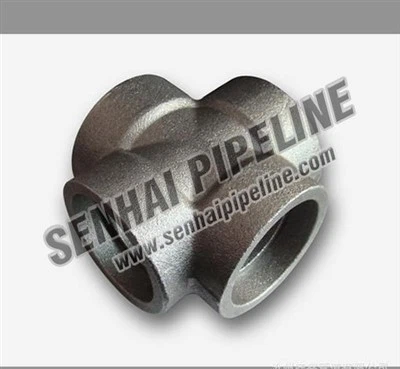
If you are in the market for high-quality forged couplings, we are a leading Carbon Steel Forged Cross, Swage Nipples, and Hexagonal Caps supplier. Our products are manufactured to the highest standards using the latest technology and materials, and we offer a wide range of sizes and specifications to meet your specific needs. Contact us today to learn more about our products and services and to discuss your procurement requirements.
References
- ASME B16.11 - Forged Fittings, Socket-Welding and Threaded
- ASTM A105 - Standard Specification for Carbon Steel Forgings for Piping Applications
- API 6A - Specification for Wellhead and Christmas Tree Equipment