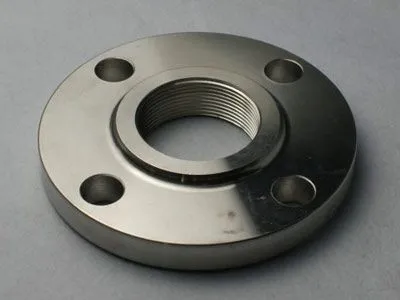
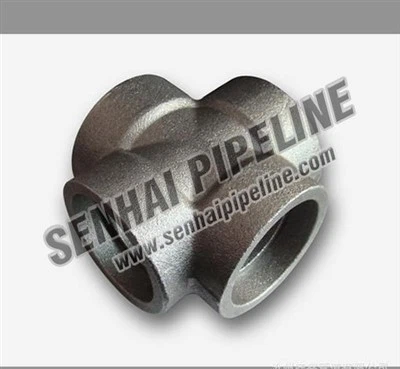
Hey there! I'm a supplier of forged plugs, and today I'm gonna take you through the whole process of how these nifty little things are made.
Starting with the Basics: Raw Materials
First off, we need to pick the right raw materials. The most common ones for forged plugs are stainless steel, carbon steel, and alloy steel. Each type has its own unique properties. Stainless steel is corrosion - resistant, which makes it great for applications where the plug will be exposed to moisture or chemicals. Carbon steel is strong and relatively inexpensive, and it's often used in general - purpose applications. Alloy steel combines the best of both worlds, offering high strength and good corrosion resistance.
We source our raw materials from reliable suppliers. Quality control at this stage is super important. We check for things like the chemical composition, hardness, and any surface defects. If the raw material doesn't meet our standards, it's a no - go. This ensures that the final forged plugs will be of the highest quality.
The Forging Process
Heating
Once we have the right raw material, the next step is heating. We heat the steel to a specific temperature. For most types of steel used in forged plugs, the temperature can range from about 1,000°C to 1,300°C. Heating makes the steel malleable, so it can be shaped more easily.
We use induction furnaces to heat the steel. These furnaces are really efficient because they heat the steel directly by inducing an electric current in it. This means we can heat the steel quickly and evenly, which is crucial for a good forging process.
Shaping
After the steel is heated, it's time to shape it. There are two main methods of forging: open - die forging and closed - die forging.
In open - die forging, the heated steel is placed between two flat or shaped dies, and a hammer or a press applies force to the steel to shape it. This method is more flexible and can be used to create a variety of shapes, but it requires more skill from the operator.
Closed - die forging, on the other hand, uses a set of dies that have the exact shape of the final forged plug. The heated steel is placed in the die cavity, and a press applies high pressure to force the steel to fill the cavity. This method is more precise and can produce forged plugs with very accurate dimensions.
For our forged plugs, we often use closed - die forging because it allows us to produce large quantities of plugs with consistent quality. The dies are made from high - strength tool steel and are designed to withstand the high pressures and temperatures involved in the forging process.
Cooling
Once the forging is done, the forged plug needs to be cooled. The cooling process is carefully controlled because it can affect the mechanical properties of the plug. If the plug is cooled too quickly, it can become brittle. If it's cooled too slowly, it may not have the desired strength.
We usually use air - cooling for most of our forged plugs. This involves letting the forged plug cool in the air at room temperature. For some special applications, we may use a more controlled cooling process, such as quenching in oil or water, followed by tempering. Tempering is a heat - treatment process that relieves the internal stresses in the plug and improves its toughness.
Machining and Finishing
Machining
After cooling, the forged plug may need some machining to achieve the final dimensions and surface finish. Machining processes include turning, milling, drilling, and threading.
Turning is used to remove any excess material from the outer surface of the plug and to create a smooth and cylindrical shape. Milling is used to create flat surfaces, grooves, or other complex shapes on the plug. Drilling is used to create holes in the plug, and threading is used to create the threads on the plug so that it can be screwed into a pipe or fitting.
We use advanced CNC (Computer Numerical Control) machines for machining our forged plugs. These machines are programmed to perform the machining operations with high precision and repeatability. This ensures that each forged plug meets the strict quality standards.
Finishing
The finishing process is important for both the appearance and the performance of the forged plug. Finishing operations include deburring, polishing, and coating.


Deburring is the process of removing any sharp edges or burrs from the machined plug. This makes the plug safer to handle and also prevents any damage to the pipes or fittings it will be used with.
Polishing is used to give the plug a smooth and shiny surface. This not only looks good but also helps to reduce friction and wear.
Coating is used to protect the plug from corrosion and to improve its chemical resistance. We offer a variety of coating options, such as zinc plating, chrome plating, and epoxy coating.
Quality Control
Quality control is an integral part of the manufacturing process. We have a comprehensive quality - control system in place to ensure that every forged plug we produce meets or exceeds the industry standards.
We use a variety of inspection methods, including visual inspection, dimensional inspection, and non - destructive testing. Visual inspection is used to check for any surface defects, such as cracks, pores, or scratches. Dimensional inspection is used to ensure that the plug has the correct dimensions. We use precision measuring tools, such as calipers, micrometers, and gauges, to measure the dimensions of the plug.
Non - destructive testing methods, such as ultrasonic testing and magnetic - particle testing, are used to detect any internal defects in the plug. These methods allow us to find defects that are not visible to the naked eye, ensuring the safety and reliability of the forged plug.
Related Products
We also offer a range of related products, such as Hexagonal Caps, Forged Lateral Tee, and Union. These products are also made with the same high - quality standards and manufacturing processes as our forged plugs.
Why Choose Our Forged Plugs
There are several reasons why you should choose our forged plugs. First of all, we have a team of experienced engineers and technicians who are dedicated to producing the best - quality forged plugs. We use the latest manufacturing technologies and equipment to ensure the efficiency and precision of our production process.
Secondly, we offer a wide range of forged plugs in different sizes, materials, and specifications to meet the diverse needs of our customers. Whether you need a small - sized plug for a household plumbing application or a large - sized plug for an industrial pipeline, we can provide it.
Finally, we provide excellent customer service. We work closely with our customers to understand their requirements and provide them with the best solutions. If you have any questions or need any technical support, our team is always ready to help.
Contact Us for Procurement
If you're interested in our forged plugs or any of our related products, we'd love to hear from you. Whether you're a contractor, a distributor, or an end - user, we can provide you with high - quality products at competitive prices. Don't hesitate to contact us for procurement and let's start a great business relationship.
References
- "Metallurgy and Materials Science Handbook"
- "Forging Technology and Applications"
- Industry standards and guidelines for forged pipe fittings