Hey there! I'm a supplier of Carbon Steel Caps, and today I wanna chat about something that's super important in our industry: the formability of carbon steel caps.


First off, let's break down what formability actually means. In simple terms, formability is all about how easily a material can be shaped into different forms without cracking, breaking, or losing its structural integrity. When it comes to carbon steel caps, good formability is a game - changer.
Carbon steel is an alloy made primarily of iron and carbon, with small amounts of other elements. The carbon content in carbon steel plays a huge role in its formability. Generally, lower carbon content means better formability. Why? Well, carbon atoms can make the steel harder and more brittle. So, when you have less carbon, the steel is more ductile, which means it can be stretched and bent more easily.
Now, let's talk about the different forming processes for carbon steel caps. One common method is hot forming. In hot forming, the carbon steel is heated to a high temperature, usually above its recrystallization temperature. At this high temperature, the steel becomes more malleable. You can think of it like soft wax - it's easier to mold when it's warm. This process is great for making complex shapes of carbon steel caps. You can create deep - drawn caps or caps with unique contours without worrying too much about cracking.
Cold forming is another option. Cold forming is done at room temperature. It's a bit more challenging because the steel is stiffer at this temperature. But it has its advantages. Cold - formed carbon steel caps often have better surface finish and dimensional accuracy. Since there's no heating involved, you don't have to deal with issues like oxidation or scale formation on the surface of the caps. However, for cold forming to work well, the carbon steel needs to have excellent formability in the first place. If the steel isn't ductile enough, it might crack during the cold - forming process.
So, do carbon steel caps have good formability? The answer is yes, but it depends on a few factors. As I mentioned earlier, the carbon content is crucial. If you're using low - carbon steel, you're more likely to have good formability. The manufacturing process also matters. High - quality steel that's been properly processed will have better formability. For example, steel that has been annealed (a heat - treatment process that softens the steel) will be more ductile and easier to form.
Let's take a look at some real - world applications where the formability of carbon steel caps is important. In the plumbing industry, carbon steel caps are used to seal the ends of pipes. These caps need to fit perfectly and be able to withstand the pressure inside the pipes. Thanks to their good formability, carbon steel caps can be made to precise dimensions to ensure a tight seal. You can find more information about different types of pipe fittings, like Carbon Steel Fittings, on our website.
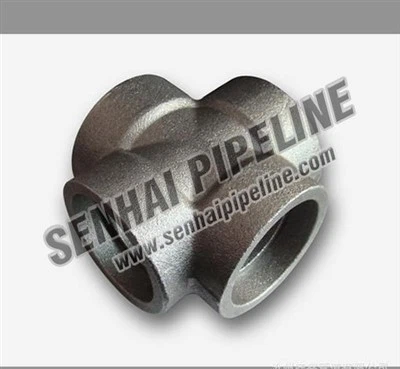
In the oil and gas industry, carbon steel caps are used in pipelines. These pipelines often operate under high pressure and in harsh environments. The formability of the caps allows them to be shaped to fit the pipeline system accurately. They can be welded or threaded onto the pipes easily, which is essential for maintaining the integrity of the pipeline. And if you're interested in other pipe - fitting components, check out our Pipe Fittings Cross.
Another industry where carbon steel caps shine is the construction industry. Carbon steel caps are used in structural applications, like on the ends of steel columns or beams. Good formability means that these caps can be customized to fit the specific requirements of the construction project. Whether it's a simple flat - top cap or a more elaborate design, the formability of carbon steel allows for flexibility in design.
When it comes to comparing carbon steel caps with other materials, carbon steel has some distinct advantages in terms of formability. For example, compared to stainless steel, carbon steel is generally more formable. Stainless steel has a higher alloy content, which can make it more difficult to shape. And compared to cast iron, carbon steel is much more ductile. Cast iron is brittle and doesn't have the same ability to be formed into different shapes as carbon steel.
If you're in the market for carbon steel reducers, you might also want to check out our Carbon Steel Reducers. They are made with the same high - quality carbon steel and benefit from the good formability of the material.
In conclusion, carbon steel caps can have excellent formability, especially when the right type of carbon steel is used and the manufacturing process is well - controlled. Whether you're looking for caps for plumbing, oil and gas, construction, or other industries, carbon steel is a great choice. Its formability allows for a wide range of shapes and designs, which means you can get the caps that exactly meet your needs.
If you're interested in purchasing carbon steel caps or want to learn more about our products, don't hesitate to reach out. We're here to help you find the perfect carbon steel caps for your project. Let's start a conversation and see how we can work together to get you the best - quality carbon steel caps at the right price.
References:
- ASM Handbook Volume 14A: Metalworking: Bulk Forming
- Steel Construction Manual by the American Institute of Steel Construction
- Pipe Fittings Handbook by McGraw - Hill