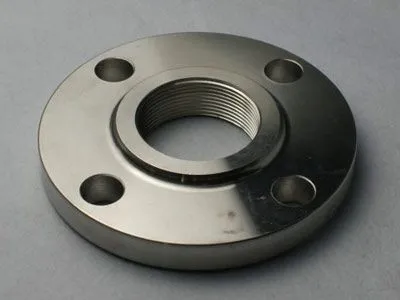
Hey there! As a supplier of forged fittings, I often get asked this question: Are forged fittings more expensive than cast fittings? Well, let's dive right into it and break down the costs and factors involved.
First off, let's understand what forged and cast fittings are. Forged fittings are made by shaping metal through compressive forces, usually using a hammer or a press. This process aligns the grain structure of the metal, resulting in a stronger and more durable product. On the other hand, cast fittings are created by pouring molten metal into a mold and letting it cool and solidify.
Now, when it comes to the cost, forged fittings generally tend to be more expensive than cast fittings. There are several reasons for this. One of the main factors is the manufacturing process. Forging requires specialized equipment and skilled labor. The process is more complex and time - consuming compared to casting. You need to heat the metal to the right temperature, and then precisely shape it using heavy machinery. All these steps add to the production cost.
Another aspect is the quality and performance of forged fittings. Because of the way they are made, forged fittings have better mechanical properties. They are more resistant to fatigue, corrosion, and high - pressure situations. In industries where safety and reliability are crucial, like oil and gas, power generation, and chemical processing, the extra cost of forged fittings is often justified. For example, a Bw Olets made through forging can withstand the harsh conditions in a pipeline system much better than its cast counterpart.
Let's talk about raw materials. Forging usually uses higher - quality metals. The metal used in forging is often of a purer grade, which also contributes to the higher cost. Casting, however, can sometimes use lower - grade metals or recycled materials, which can bring down the cost.
But it's not always a straightforward comparison. There are situations where the price difference might not be as significant or where cast fittings could even be more expensive. For instance, if the design of the fitting is very complex, casting might be more cost - effective. Casting can create intricate shapes more easily than forging, which might require multiple steps and additional machining to achieve the same design.
Also, the quantity of the order matters. If you're ordering a large quantity of fittings, the economies of scale can come into play. For large orders, the unit cost of both forged and cast fittings can decrease. Sometimes, the price gap between forged and cast fittings might narrow down when ordering in bulk.
In some cases, the market demand and supply also affect the prices. If there is a high demand for forged fittings and a limited supply, the prices can go up. Conversely, if there is an oversupply of cast fittings, their prices might drop.
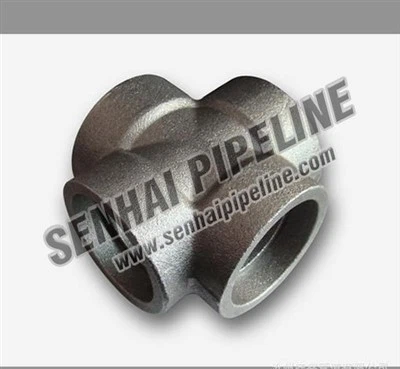
Now, let's take a look at some specific types of forged fittings. Hexagonal Caps are commonly used to close the end of a pipe. The forging process ensures that these caps are strong and can provide a tight seal. They are often used in applications where there is a need to prevent leakage. Similarly, a Carbon Steel Forged Cross is a critical component in pipeline systems. It allows for the connection of multiple pipes at right angles. The strength and durability of a forged cross make it a preferred choice in many industrial settings.
When deciding between forged and cast fittings, it's essential to consider the long - term costs. While forged fittings might have a higher upfront cost, they can save you money in the long run. You'll likely experience fewer failures and replacements, which means less downtime and maintenance costs.


So, if you're in the market for high - quality, reliable fittings, forged fittings are definitely worth considering. As a forged fittings supplier, I can offer you a wide range of products that meet your specific requirements. Whether you need a small quantity for a repair job or a large order for a new project, I've got you covered.
If you're interested in learning more about our forged fittings or want to get a quote, don't hesitate to reach out. We can have a detailed discussion about your needs and find the best solutions for you. Let's work together to ensure your projects are a success with top - notch forged fittings.
References
- Metallurgy textbooks on metal forming processes
- Industry reports on the cost analysis of forged and cast fittings