Hey there! As a supplier of BW (Butt Weld) fittings, I often get asked whether BW fittings are compatible with other pipe materials. It's a great question, and in this blog, I'll break it down for you.
First off, let's understand what BW fittings are. BW fittings are used to connect pipes together by welding. They're known for providing a strong, leak - proof joint, which is crucial in many industrial applications. The most common types of BW fittings include elbows, tees, reducers, and caps. For example, you can check out our Carbon Steel Caps, which are a popular choice in many projects.
Now, when it comes to compatibility with other pipe materials, it depends on several factors.
Compatibility with Carbon Steel Pipes
Carbon steel is one of the most widely used pipe materials, and BW fittings made of carbon steel are a perfect match for carbon steel pipes. This is because they have similar chemical and mechanical properties. When you weld carbon steel BW fittings to carbon steel pipes, you get a homogeneous joint. The expansion and contraction rates of both the fitting and the pipe are similar, which means there's less stress on the joint during temperature changes.
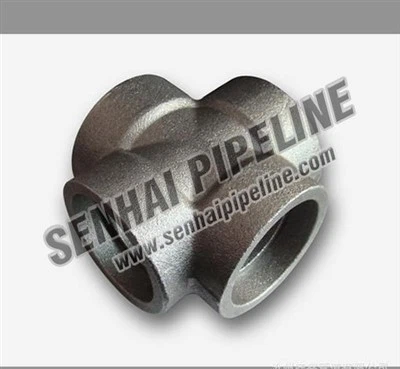
For instance, in a pipeline that transports oil or gas, carbon steel BW fittings and pipes work together seamlessly. The high - strength nature of carbon steel ensures that the pipeline can withstand the pressure of the fluid flowing through it. Our Pipe Fittings Cross made of carbon steel can be used to create complex pipeline systems where multiple pipes need to be connected at a single point.
Compatibility with Stainless Steel Pipes
Stainless steel pipes are known for their corrosion resistance, and they're commonly used in industries such as food processing, pharmaceuticals, and marine applications. BW fittings made of stainless steel are highly compatible with stainless steel pipes. The key here is to ensure that the grade of stainless steel in the fitting matches the grade of the pipe.
For example, if you're using 304 stainless steel pipes, you should use 304 stainless steel BW fittings. This ensures that the corrosion resistance properties are consistent throughout the pipeline. Welding stainless steel requires a bit more care compared to carbon steel because of its higher thermal conductivity. But when done correctly, the joint between the fitting and the pipe is strong and durable. Our stainless steel BW fittings are designed to meet the high - quality standards required for these industries.
Compatibility with Alloy Steel Pipes
Alloy steel pipes are used in applications where high strength and resistance to high temperatures are required, such as in power plants and refineries. BW fittings made of alloy steel are compatible with alloy steel pipes, but it's essential to consider the specific alloy composition. Different alloys have different properties, and the welding process may need to be adjusted accordingly.
For example, some alloy steels contain elements like chromium, molybdenum, or vanadium, which can affect the welding characteristics. Our Hot Induction Bends made of alloy steel are carefully manufactured to ensure that they can be welded to alloy steel pipes without compromising the integrity of the joint. These bends are used to change the direction of the pipeline while maintaining the strength of the overall system.
Compatibility with Non - Metallic Pipes
When it comes to non - metallic pipes like PVC (Polyvinyl Chloride), CPVC (Chlorinated Polyvinyl Chloride), or PEX (Cross - linked Polyethylene), BW fittings are generally not directly compatible. Non - metallic pipes are joined using different methods such as solvent welding, mechanical couplings, or heat fusion.
However, in some cases, you can use transition fittings to connect non - metallic pipes to metallic pipes or fittings. For example, a brass or stainless steel transition fitting can be used to connect a PVC pipe to a carbon steel BW fitting. This allows you to integrate non - metallic pipes into a system that mainly consists of metallic components.
Factors Affecting Compatibility
Apart from the material type, there are other factors that can affect the compatibility of BW fittings with other pipe materials.
Welding Process
The welding process plays a crucial role in ensuring a good joint between the fitting and the pipe. Different materials require different welding techniques. For example, carbon steel can be welded using shielded metal arc welding (SMAW), gas metal arc welding (GMAW), or flux - cored arc welding (FCAW). Stainless steel often requires gas tungsten arc welding (GTAW) for a high - quality weld.
Surface Preparation
Proper surface preparation is essential before welding. The surfaces of the fitting and the pipe need to be clean and free of contaminants such as rust, oil, or paint. If the surfaces are not properly prepared, it can lead to poor weld quality and potential joint failure.
Thermal Expansion
As mentioned earlier, the thermal expansion rates of the fitting and the pipe need to be considered. If there's a significant difference in the thermal expansion rates, it can cause stress on the joint, especially during temperature changes. This can lead to cracks or leaks in the pipeline.
In conclusion, BW fittings can be compatible with a wide range of pipe materials, but it's important to choose the right fitting material based on the pipe material and the specific application. Whether you're working on a small - scale plumbing project or a large - scale industrial pipeline, we have the right BW fittings for you.
If you're in the market for high - quality BW fittings and want to discuss your project requirements, feel free to reach out. We're here to help you find the best solutions for your piping needs.
References:


- "Piping Handbook" by Cameron W. John
- "Welding Metallurgy" by John C. Lippold and David J. Kotecki