Forged lateral tees are crucial components in various piping systems, designed to provide a reliable connection where a branch line is required to be connected to a main pipeline. As a trusted supplier of forged lateral tees, understanding the pressure ratings these fittings can withstand is fundamental for ensuring the safety and efficiency of piping systems. In this blog, we'll delve into the factors influencing the pressure ratings of forged lateral tees and provide insights into their capabilities.
Understanding Pressure Ratings
Pressure rating refers to the maximum pressure a fitting can safely handle under specific conditions, including temperature and material properties. For forged lateral tees, these ratings are determined by several key factors, each playing a significant role in defining the fitting's performance limits.
Material Composition
The material used in manufacturing forged lateral tees is a primary determinant of their pressure - withstanding capacity. Common materials include carbon steel, stainless steel, and alloy steel.
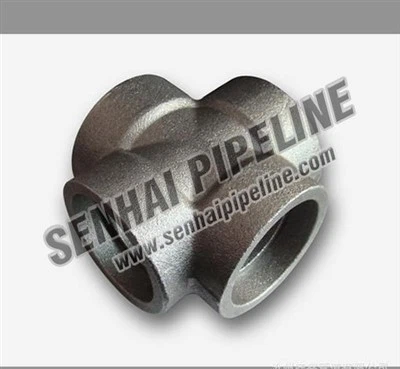
Carbon steel is a popular choice due to its high strength and relatively low cost. It offers good pressure resistance and is suitable for a wide range of industrial applications. For instance, in oil and gas pipelines, carbon steel forged lateral tees can handle substantial pressures, often up to several thousand pounds per square inch (psi). You can learn more about carbon steel - related products like Carbon Steel Forged Cross on our website.
Stainless steel, on the other hand, is known for its corrosion resistance in addition to its strength. In environments where corrosion is a concern, such as in chemical processing plants or marine applications, stainless steel forged lateral tees are preferred. Their pressure ratings are comparable to carbon steel in many cases but can vary depending on the specific grade of stainless steel used.
Alloy steel is used when higher strength and better performance at elevated temperatures are required. These tees can withstand extreme pressures and are commonly found in power generation plants and high - pressure steam systems.
Manufacturing Process
The forging process is a critical factor in determining the pressure ratings of lateral tees. Forging involves shaping metal by applying compressive forces, which results in a more uniform and dense grain structure compared to other manufacturing methods like casting.
During forging, the metal is heated to a specific temperature and then hammered or pressed into the desired shape. This process aligns the grain flow of the metal along the contours of the fitting, enhancing its strength and integrity. As a result, forged lateral tees can withstand higher pressures than their cast counterparts. Our Forged Lateral Tee products are manufactured using advanced forging techniques to ensure superior quality and pressure - handling capabilities.
Dimensions and Wall Thickness
The dimensions of a forged lateral tee, particularly the wall thickness, have a direct impact on its pressure rating. A thicker wall provides more material to resist internal pressure, allowing the fitting to handle higher pressures.


For example, a forged lateral tee with a larger nominal pipe size (NPS) and a thicker wall will generally have a higher pressure rating than a smaller - sized tee with a thinner wall. Engineers carefully select the appropriate tee dimensions based on the specific requirements of the piping system, including the expected operating pressure, flow rate, and fluid type.
Temperature Considerations
Temperature can significantly affect the pressure - withstanding capacity of forged lateral tees. As the temperature increases, the strength of the metal decreases, which means the fitting can handle less pressure.
In high - temperature applications, the pressure rating of a forged lateral tee must be derated to account for the reduced strength of the material. Conversely, at lower temperatures, the metal retains more of its strength, and the fitting may be able to handle slightly higher pressures. It's essential to consider the temperature range of the piping system when selecting the appropriate pressure rating for a forged lateral tee.
Industry Standards and Codes
The pressure ratings of forged lateral tees are also influenced by industry standards and codes. Organizations such as the American Society of Mechanical Engineers (ASME) and the American Petroleum Institute (API) have established standards that define the design, manufacturing, and testing requirements for piping components, including forged lateral tees.
These standards ensure that fittings meet minimum safety and performance criteria. For example, ASME B16.11 is a widely recognized standard for forged fittings, including lateral tees. It specifies the pressure - temperature ratings, dimensions, and material requirements for these components. By adhering to these standards, we ensure that our forged lateral tees are of the highest quality and can safely operate within the specified pressure limits.
Typical Pressure Ratings
The pressure ratings of forged lateral tees can vary widely depending on the factors mentioned above. In general, for low - pressure applications, such as in residential plumbing systems, forged lateral tees may have pressure ratings in the range of 150 to 300 psi.
In industrial applications, where higher pressures are common, ratings can range from 1,500 to 6,000 psi or even higher. For example, in high - pressure hydraulic systems or high - pressure gas pipelines, forged lateral tees with pressure ratings of 6,000 psi or more may be required.
Compatibility with Other Fittings
When designing a piping system, it's important to ensure that the forged lateral tee is compatible with other fittings in terms of pressure ratings. All components in the system, including elbows, couplings, and valves, should have similar pressure ratings to avoid overloading any single fitting.
For example, if you are using Carbon Steel Threaded Elbow in your system, make sure that the pressure rating of the elbow matches that of the forged lateral tee. Mismatched pressure ratings can lead to leaks, failures, and potential safety hazards.
Quality Assurance and Testing
As a supplier of forged lateral tees, we implement rigorous quality assurance measures to ensure that our products meet or exceed the specified pressure ratings. This includes material testing, dimensional inspections, and non - destructive testing methods such as ultrasonic testing and magnetic particle inspection.
Each forged lateral tee undergoes a series of tests to verify its integrity and performance. For example, hydrostatic testing is commonly used to check the pressure - holding ability of the fitting. During hydrostatic testing, the tee is filled with water and pressurized to a specified level for a set period. If the fitting can withstand the pressure without leaking or deforming, it passes the test.
Conclusion
In conclusion, the pressure ratings of forged lateral tees are determined by a combination of factors, including material composition, manufacturing process, dimensions, temperature, and industry standards. As a supplier, we are committed to providing high - quality forged lateral tees that can safely handle the pressures required by various applications.
Whether you are working on a small - scale plumbing project or a large - scale industrial installation, understanding the pressure ratings of forged lateral tees is essential for ensuring the reliability and safety of your piping system. If you have any questions about our Forged Lateral Tee products or need assistance in selecting the right pressure rating for your application, please don't hesitate to contact us. We are here to help you make the best choice for your piping needs.
References
- American Society of Mechanical Engineers (ASME). B16.11 - Forged Fittings, Socket - Welding and Threaded.
- American Petroleum Institute (API). Various standards related to piping components in the oil and gas industry.
- Manufacturer's technical documentation for forged lateral tees.