In the world of industrial manufacturing and pipe fitting solutions, hexagonal caps play a crucial role. As a dedicated supplier of hexagonal caps, I've spent years understanding the intricacies of these components, including their dimension tolerance ranges. This blog post aims to shed light on what the tolerance range for the dimensions of hexagonal caps is and why it matters.
Understanding Hexagonal Caps
Hexagonal caps are commonly used in piping systems to close the ends of pipes, tubes, or fittings. They are designed with a hexagonal shape, which allows for easy installation and removal using standard wrenches. These caps are made from a variety of materials, including carbon steel, stainless steel, brass, and other alloys, each chosen based on the specific application requirements such as corrosion resistance, pressure rating, and temperature tolerance.
Importance of Dimension Tolerance
Dimension tolerance refers to the acceptable variation in the size of a component from its specified nominal value. In the case of hexagonal caps, maintaining the correct dimension tolerance is critical for several reasons. Firstly, proper fit is essential for ensuring a tight seal between the cap and the pipe or fitting it is intended to close. A cap that is too large may not provide a secure fit, leading to leaks and potential safety hazards. Conversely, a cap that is too small may not be able to be installed at all or may cause damage to the pipe or fitting.
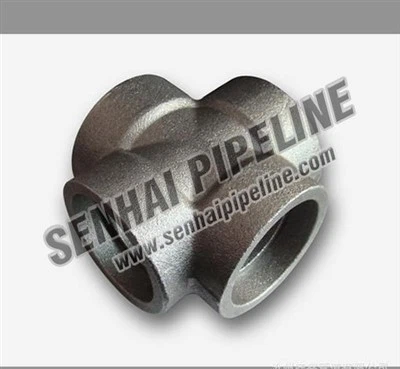
Secondly, accurate dimensions are necessary for compatibility with other components in the piping system. Hexagonal caps are often used in conjunction with other fittings such as Carbon Steel Forged Cross, Carbon Steel Nipples, and Socket Welded Olets. If the dimensions of the hexagonal cap are not within the specified tolerance range, it may not align properly with these other components, leading to installation difficulties and potential system failures.
Factors Affecting Dimension Tolerance
Several factors can influence the dimension tolerance of hexagonal caps. One of the primary factors is the manufacturing process. Different manufacturing methods, such as forging, machining, or casting, can result in varying levels of dimensional accuracy. Forging, for example, is a process that involves shaping metal by applying compressive forces. This method typically produces components with high strength and good dimensional accuracy. Machining, on the other hand, involves removing material from a workpiece using cutting tools. While machining can achieve very precise dimensions, it is often more time-consuming and expensive than other manufacturing methods.
Another factor that can affect dimension tolerance is the material used to make the hexagonal cap. Different materials have different physical properties, such as thermal expansion coefficients and hardness, which can cause dimensional changes during the manufacturing process and in service. For example, metals with high thermal expansion coefficients may expand or contract more significantly when exposed to temperature changes, which can affect the fit of the cap.
The design of the hexagonal cap also plays a role in determining its dimension tolerance. Caps with complex shapes or features may be more difficult to manufacture to precise dimensions compared to simpler designs. Additionally, the intended application of the cap can influence the required tolerance range. For example, caps used in high-pressure or high-temperature applications may require tighter tolerances to ensure a reliable seal.
Typical Tolerance Ranges for Hexagonal Caps
The tolerance range for the dimensions of hexagonal caps can vary depending on the industry standards and the specific requirements of the application. In general, the most critical dimensions of a hexagonal cap include the nominal size (the size of the pipe or fitting it is intended to fit), the hexagon across flats (the distance between the opposite flat sides of the hexagon), and the height of the cap.
For the nominal size, the tolerance range is typically specified by the relevant industry standards, such as ASME B16.11 for forged fittings. These standards define the acceptable variation in the size of the cap to ensure compatibility with the corresponding pipe or fitting. For example, for a 1-inch nominal size cap, the tolerance range may be specified as ±0.03 inches.
The hexagon across flats dimension is also subject to specific tolerance requirements. This dimension is important for ensuring that the cap can be properly tightened or loosened using a wrench. The tolerance range for the hexagon across flats is typically relatively tight, often within ±0.01 inches for standard applications.
The height of the cap is another dimension that needs to be controlled within a specific tolerance range. The height of the cap affects the overall length of the assembly and can impact the clearance between the cap and other components in the system. The tolerance range for the height of the cap is usually specified based on the design requirements of the application and can vary from ±0.01 inches to ±0.05 inches.
Quality Control and Inspection
To ensure that the hexagonal caps meet the specified dimension tolerance ranges, a comprehensive quality control and inspection process is essential. This process typically includes several stages, starting from the raw material inspection to the final product inspection.
During the raw material inspection, the material is checked for its chemical composition, mechanical properties, and dimensional accuracy. This helps to ensure that the material used to make the caps meets the required standards and is suitable for the intended application.
Once the caps are manufactured, they undergo a series of inspections to verify their dimensions. This can include using precision measuring tools such as calipers, micrometers, and coordinate measuring machines (CMMs). These tools allow for accurate measurement of the critical dimensions of the caps and ensure that they are within the specified tolerance range.
In addition to dimensional inspections, the caps are also inspected for other quality characteristics, such as surface finish, hardness, and integrity. Non-destructive testing methods, such as ultrasonic testing and magnetic particle testing, may be used to detect any internal defects or cracks in the caps.


Meeting Customer Requirements
As a supplier of hexagonal caps, our goal is to meet the specific requirements of our customers. We understand that different applications may have different tolerance requirements, and we work closely with our customers to ensure that the caps we supply meet their exact specifications.
We have a team of experienced engineers and quality control professionals who are dedicated to ensuring the highest level of quality in our products. We use state-of-the-art manufacturing equipment and inspection tools to produce hexagonal caps with precise dimensions and excellent quality.
If you have any specific requirements regarding the dimension tolerance of hexagonal caps or need assistance in selecting the right caps for your application, please feel free to contact us. We are here to provide you with the best solutions and support to meet your needs.
Conclusion
The dimension tolerance range for hexagonal caps is a critical factor that affects their performance and compatibility in piping systems. By understanding the importance of dimension tolerance, the factors that influence it, and the typical tolerance ranges, you can make informed decisions when selecting hexagonal caps for your applications.
As a reliable supplier of hexagonal caps, we are committed to providing high-quality products that meet the strictest dimension tolerance requirements. Our expertise in manufacturing and quality control ensures that our caps are accurate, reliable, and suitable for a wide range of applications.
If you are in need of hexagonal caps or other pipe fittings, such as Carbon Steel Forged Cross, Carbon Steel Nipples, or Socket Welded Olets, please don't hesitate to contact us. We look forward to discussing your requirements and providing you with the best products and services.
References
- ASME B16.11 - Forged Fittings, Socket-Welding and Threaded
- Manufacturer's specifications and guidelines for hexagonal caps