In the industrial field, especially in pipeline systems, blind flanges play a crucial role. As a professional blind flange supplier, I often encounter inquiries about the sealing performance of blind flanges. In this blog, I will delve into what the sealing performance of a blind flange is, the factors influencing it, and how to ensure excellent sealing.
Understanding the Sealing Performance of Blind Flanges
The sealing performance of a blind flange refers to its ability to prevent the leakage of fluids (liquids or gases) in a pipeline system. When a pipeline needs to be blocked or a certain section of the pipeline is not in use, a blind flange is installed at the end of the pipe to create a tight seal. A well - sealed blind flange ensures the safety and efficiency of the entire pipeline operation.
A blind flange works by mating with a corresponding flange on the pipeline. The two flanges are bolted together, and a gasket is placed between them. The gasket deforms under the pressure of the bolts, filling the microscopic irregularities on the flange surfaces and creating a barrier against fluid leakage.
Factors Affecting the Sealing Performance
1. Material of the Blind Flange
The material of the blind flange is a fundamental factor affecting its sealing performance. Common materials include carbon steel, stainless steel, and alloy steel. Each material has its own characteristics.
Carbon steel blind flanges are widely used due to their relatively low cost and good strength. However, they are more prone to corrosion in certain environments, which may affect the sealing performance over time. For more corrosive environments, stainless steel blind flanges are a better choice. They have excellent corrosion resistance, which helps maintain the integrity of the flange surface and thus the sealing performance.
For applications requiring high - temperature and high - pressure resistance, alloy steel blind flanges are often selected. Their special alloy composition gives them enhanced mechanical properties and stability under extreme conditions, ensuring reliable sealing.
2. Gasket Quality
The gasket is a key component in the sealing system of a blind flange. There are various types of gaskets, such as rubber gaskets, asbestos - free gaskets, and metal gaskets.
Rubber gaskets are suitable for low - pressure and low - temperature applications. They are flexible and can easily fill the gaps between the flange surfaces. However, they may not be suitable for high - temperature or highly corrosive environments. Asbestos - free gaskets are a more environmentally friendly alternative. They offer good sealing performance in a wide range of temperatures and pressures.
Metal gaskets, such as spiral - wound gaskets and ring - joint gaskets, are designed for high - pressure and high - temperature applications. They have high strength and can withstand extreme conditions. The quality of the gasket, including its material purity, manufacturing precision, and proper selection according to the application, directly affects the sealing performance of the blind flange.
3. Flange Surface Finish
The surface finish of the blind flange is also critical for sealing. A smooth and flat flange surface allows the gasket to make better contact and form a more effective seal. Any scratches, dents, or irregularities on the flange surface can cause leakage paths.
During the manufacturing process, strict quality control measures are taken to ensure the surface finish of the blind flange meets the required standards. Precision machining techniques are used to achieve a smooth surface, and surface inspection is carried out to detect and correct any defects.
4. Bolt Tightening Torque
Proper bolt tightening is essential for achieving good sealing performance. If the bolts are not tightened enough, the gasket may not be compressed sufficiently, resulting in leakage. On the other hand, over - tightening the bolts can damage the gasket or even deform the flange, also leading to sealing problems.
The bolt tightening torque should be determined according to the flange size, material, and the type of gasket used. A torque wrench is usually used to ensure accurate tightening. In addition, the bolts should be tightened in a uniform and sequential manner to ensure even distribution of pressure on the gasket.
Ensuring Excellent Sealing Performance
As a blind flange supplier, we take several measures to ensure that our products have excellent sealing performance.
First, we carefully select high - quality materials. We source our raw materials from reliable suppliers and conduct strict quality inspections. For example, when producing carbon steel blind flanges, we ensure that the carbon content and other alloying elements are within the specified range to guarantee the strength and corrosion resistance of the product.
Second, we pay great attention to the manufacturing process. Our production facilities are equipped with advanced machining equipment, which can produce blind flanges with high precision. We also have a professional quality control team that inspects every product at different stages of production, from raw material inspection to the final product inspection.
Third, we provide comprehensive technical support to our customers. We help them select the appropriate type of blind flange, gasket, and bolts according to their specific application requirements. We also offer guidance on installation and maintenance to ensure that the sealing performance of the blind flange is maintained over a long period.
Related Flange Products
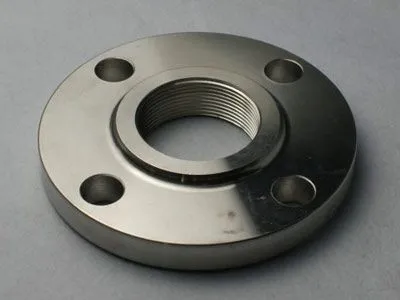
In addition to blind flanges, we also supply other types of flanges, such as Carbon Steel Threaded Flange, Welding Neck Flange, and Long Welding Neck Flange. These flanges have different characteristics and applications and can be used in combination with blind flanges in various pipeline systems.
Conclusion
The sealing performance of a blind flange is a complex concept that is affected by multiple factors, including material, gasket quality, flange surface finish, and bolt tightening torque. As a professional blind flange supplier, we are committed to providing high - quality products and comprehensive technical support to ensure excellent sealing performance in our customers' pipeline systems.
If you are in need of blind flanges or other related flange products, and want to discuss your specific requirements, please feel free to contact us. We look forward to the opportunity to cooperate with you and help you solve your pipeline sealing problems.


References
- Miller, R. W. (2018). Pipeline Flange Design and Installation Handbook. Elsevier.
- Smith, J. D. (2019). Industrial Gaskets: Selection and Application. McGraw - Hill.