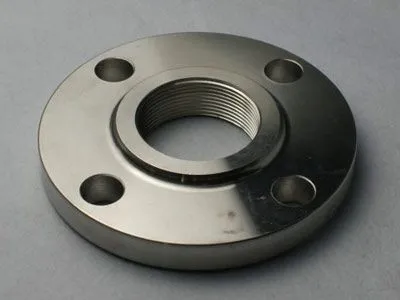
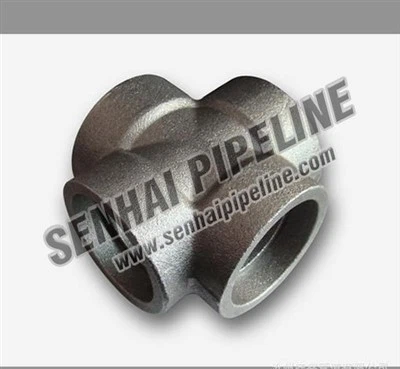
As a supplier of Lap Joint Flanges, I often get asked about the non - destructive testing methods for these crucial components. Lap Joint Flanges are widely used in piping systems because they offer flexibility and ease of alignment. They consist of a loose flange that can rotate freely around a stub end, which is welded to the pipe. This design makes them a popular choice in various industries, including oil and gas, chemical, and water treatment.
Let's first understand why non - destructive testing (NDT) is so important for Lap Joint Flanges. These flanges are subjected to different types of stress, such as pressure, temperature changes, and mechanical vibrations. Any hidden defect in the flange can lead to leaks, system failures, and even pose safety risks. By using NDT methods, we can detect flaws without damaging the flange, ensuring its integrity and reliability.
One of the most common NDT methods for Lap Joint Flanges is ultrasonic testing (UT). Ultrasonic testing uses high - frequency sound waves to detect internal flaws in the material. A transducer sends ultrasonic waves into the flange, and when these waves encounter a flaw, they are reflected back. The reflected waves are then analyzed to determine the size, location, and nature of the defect.
UT is great because it can detect a wide range of flaws, including cracks, porosity, and inclusions. It's also very sensitive and can detect flaws that are not visible to the naked eye. However, it does require a skilled operator to interpret the results accurately. The surface of the flange needs to be clean and smooth for accurate testing, and the operator needs to have a good understanding of the material properties and the expected types of flaws.
Another useful NDT method is magnetic particle testing (MT). This method is mainly used to detect surface and near - surface flaws in ferromagnetic materials, which most Lap Joint Flanges are made of. In MT, a magnetic field is applied to the flange, and then iron particles are sprinkled on the surface. If there is a flaw, the magnetic field is disrupted, and the iron particles will accumulate at the site of the defect, making it visible.
MT is relatively quick and easy to perform. It can provide immediate results, and it's cost - effective for detecting surface flaws. But it has limitations. It can only be used on ferromagnetic materials, and it can only detect flaws that are close to the surface.
Liquid penetrant testing (PT) is also commonly used for Lap Joint Flanges. In PT, a liquid penetrant is applied to the surface of the flange and allowed to seep into any surface - opening flaws. After a certain period, the excess penetrant is removed, and a developer is applied. The penetrant that has seeped into the flaw is then drawn out by the developer, creating a visible indication of the defect.
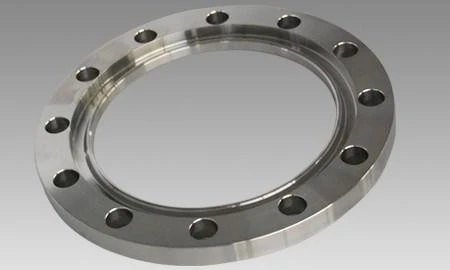

PT is simple and can detect very small surface flaws. It can be used on a variety of materials, including non - ferromagnetic ones. However, it can only detect surface - opening flaws, and the surface of the flange needs to be thoroughly cleaned before testing to ensure accurate results.
Radiographic testing (RT) is a more advanced NDT method. It uses X - rays or gamma rays to create an image of the internal structure of the flange. The rays pass through the flange, and a film or digital detector records the pattern of the rays that have passed through. Any flaws in the flange will appear as dark or light areas on the image, depending on the type of flaw and the material.
RT can provide detailed information about the internal structure of the flange. It can detect flaws deep inside the material, and it can give a clear picture of the size and shape of the defect. But it's expensive and requires special safety precautions because of the use of radiation. It also takes longer to get the results compared to some of the other methods.
When it comes to choosing the right NDT method for a Lap Joint Flange, several factors need to be considered. The type of material the flange is made of is crucial. For example, if it's a ferromagnetic material, magnetic particle testing might be a good choice. The expected type and location of the flaws also play a role. If you suspect surface - opening flaws, liquid penetrant testing could be sufficient, but if you think there might be internal flaws, ultrasonic or radiographic testing would be more appropriate.
Cost is also an important factor. Some methods, like liquid penetrant testing, are relatively inexpensive, while radiographic testing can be quite costly. Time is another consideration. If you need quick results, magnetic particle testing or liquid penetrant testing might be better options compared to radiographic testing, which takes more time for processing.
At our company, we take the quality of our Lap Joint Flanges very seriously. We use a combination of these NDT methods to ensure that every flange we supply meets the highest standards. We understand that our customers rely on these flanges for the safe and efficient operation of their piping systems.
If you're in the market for high - quality Lap Joint Flanges, we're here to help. Our flanges are not only tested thoroughly but are also designed to meet various industry standards. You can learn more about Lap Joint Flange on our website. We also offer other types of flanges, like Socket Welding Flange and Orifice Flange Facing.
If you have any questions or are interested in purchasing our Lap Joint Flanges, don't hesitate to reach out. We're always happy to have a chat about your specific requirements and how our products can fit into your projects.
References
- ASNT (American Society for Nondestructive Testing) Handbook
- API (American Petroleum Institute) Standards for Flanges
- ASTM (American Society for Testing and Materials) Specifications for Flange Materials