Hey there! As a supplier of forged couplings, I often get asked about the difference between forged couplings and cast couplings. It's a question that's not only important for those in the industry but also for anyone looking to make an informed decision when it comes to choosing the right couplings for their projects. So, let's dive right in and explore the ins and outs of these two types of couplings.
What Are Forged Couplings?
Forged couplings are made through a process called forging. In simple terms, forging is like shaping metal by hammering or pressing it while it's in a heated state. This process involves taking a solid piece of metal, heating it up to a specific temperature, and then using a press or a hammer to shape it into the desired form. The high pressure applied during forging aligns the grain structure of the metal, making it stronger and more durable.
One of the key advantages of forged couplings is their superior strength. The forging process creates a dense and uniform grain structure, which gives the couplings excellent resistance to fatigue, impact, and stress. This makes them ideal for applications where reliability and performance are crucial, such as in high-pressure pipelines, heavy machinery, and automotive systems.
Another benefit of forged couplings is their precision. The forging process allows for tight tolerances and accurate dimensions, ensuring a perfect fit and smooth operation. This reduces the risk of leaks and failures, which can save time and money in the long run.
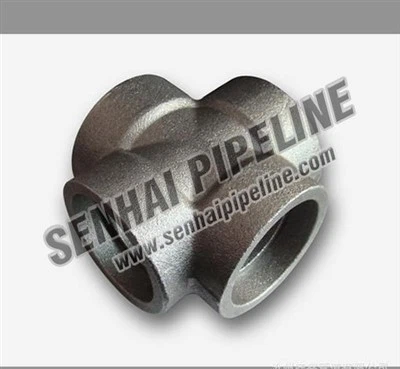
As a forged couplings supplier, I've seen firsthand the difference that high-quality forged couplings can make. Our Union and Socket Welded Equal Tee are some of our most popular products, known for their strength, durability, and precision.
What Are Cast Couplings?
Cast couplings, on the other hand, are made through a casting process. Casting involves pouring molten metal into a mold and letting it cool and solidify. The mold is typically made of sand or a ceramic material, and it gives the coupling its shape.
One of the main advantages of cast couplings is their cost-effectiveness. Casting is a relatively simple and inexpensive process, which makes cast couplings more affordable than forged couplings. This makes them a popular choice for applications where cost is a major factor, such as in low-pressure pipelines and general-purpose machinery.
Another benefit of cast couplings is their versatility. Casting allows for complex shapes and designs, which can be difficult or impossible to achieve with forging. This makes cast couplings suitable for a wide range of applications, including custom and specialty designs.
However, cast couplings also have some limitations. The casting process can result in a less uniform grain structure, which can make the couplings more prone to defects and weaknesses. This can reduce their strength and durability, especially in high-stress applications.
Key Differences Between Forged and Cast Couplings
Now that we've covered the basics of forged and cast couplings, let's take a closer look at the key differences between the two.
Strength and Durability
As mentioned earlier, forged couplings are generally stronger and more durable than cast couplings. The forging process aligns the grain structure of the metal, making it more resistant to fatigue, impact, and stress. Cast couplings, on the other hand, may have a less uniform grain structure, which can make them more prone to defects and weaknesses.


Precision and Tolerance
Forged couplings offer greater precision and tighter tolerances than cast couplings. The forging process allows for accurate dimensions and a perfect fit, which is essential for applications where performance and reliability are crucial. Cast couplings may have slightly looser tolerances, which can result in a less precise fit and a higher risk of leaks and failures.
Cost
Cast couplings are generally more affordable than forged couplings. The casting process is simpler and less expensive than forging, which makes cast couplings a cost-effective option for applications where cost is a major factor. However, it's important to note that the lower cost of cast couplings may come at the expense of strength and durability.
Complexity of Design
Casting allows for more complex shapes and designs than forging. This makes cast couplings suitable for applications where custom or specialty designs are required. Forged couplings, on the other hand, are typically limited to more standard shapes and sizes.
Which Type of Coupling Should You Choose?
The choice between forged and cast couplings depends on several factors, including the specific application, the required strength and durability, the budget, and the design requirements.
If you're working on a high-pressure pipeline, heavy machinery, or automotive system, forged couplings are likely the best choice. Their superior strength and durability make them ideal for applications where reliability and performance are crucial.
On the other hand, if you're working on a low-pressure pipeline or a general-purpose machinery application, cast couplings may be a more cost-effective option. Their affordability and versatility make them a popular choice for applications where cost is a major factor.
Ultimately, the decision comes down to your specific needs and requirements. As a forged couplings supplier, I'm here to help you make an informed decision. If you have any questions or need more information, please don't hesitate to reach out. We can work together to find the right couplings for your project.
Conclusion
In conclusion, forged and cast couplings have their own unique advantages and disadvantages. Forged couplings offer superior strength, durability, and precision, while cast couplings are more cost-effective and versatile. The choice between the two depends on the specific application, the required strength and durability, the budget, and the design requirements.
As a forged couplings supplier, I'm committed to providing high-quality products and excellent customer service. Our Forged Lateral Tee and other forged couplings are designed to meet the highest standards of quality and performance. If you're in the market for couplings, I encourage you to contact us to discuss your needs. We can help you find the right solution for your project and ensure that you get the best value for your money.
References
- ASME B16.11 - Forged Fittings, Socket-Welding and Threaded
- ASTM A105 - Standard Specification for Carbon Steel Forgings for Piping Applications
- ASTM A350 - Standard Specification for Carbon and Low-Alloy Steel Forgings, Requiring Notch Toughness Testing for Piping Components