Hey there! As a supplier of Lap Joint Flanges, I often get asked about the materials used for the stub end of a Lap Joint Flange. So, I thought I'd take a few minutes to break it down for you.
First off, let's talk about what a Lap Joint Flange is. It's a type of flange that consists of two parts: a loose flange and a stub end. The loose flange slides over the pipe and is free to rotate, while the stub end is welded to the pipe. This design allows for easy alignment during installation and is commonly used in applications where frequent disassembly is required.
Now, onto the materials. The choice of material for the stub end depends on several factors, including the application, the operating conditions, and the budget. Here are some of the most common materials used:
Carbon Steel
Carbon steel is one of the most widely used materials for stub ends. It's strong, durable, and relatively inexpensive. Carbon steel stub ends are suitable for a wide range of applications, including water, oil, and gas pipelines. They can handle moderate to high pressures and temperatures, making them a popular choice in many industries.
One of the advantages of carbon steel is its weldability. It can be easily welded to the pipe, ensuring a strong and reliable connection. However, carbon steel is prone to corrosion, especially in harsh environments. To prevent corrosion, carbon steel stub ends are often coated or painted.
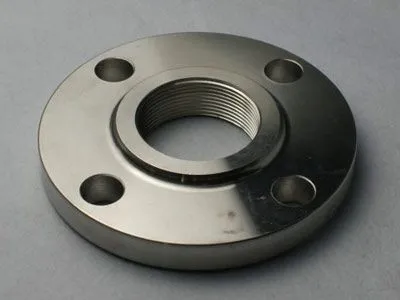
If you're interested in carbon steel stub ends, you might also want to check out our Carbon Steel Threaded Flange. It's another great option for your piping needs.
Stainless Steel
Stainless steel is a corrosion-resistant material that's commonly used in applications where hygiene and durability are important. It's made up of iron, chromium, and other elements, which give it its unique properties. Stainless steel stub ends are ideal for use in food processing, pharmaceutical, and chemical industries, where the pipes need to be clean and resistant to corrosion.
One of the benefits of stainless steel is its aesthetic appeal. It has a smooth, shiny surface that looks great in any application. Additionally, stainless steel is easy to clean and maintain, making it a popular choice for applications where cleanliness is a top priority.
However, stainless steel is more expensive than carbon steel. If you're on a tight budget, carbon steel might be a better option. But if you need a material that can withstand harsh environments and provide long-lasting performance, stainless steel is definitely worth the investment.
Alloy Steel
Alloy steel is a type of steel that contains other elements, such as nickel, chromium, and molybdenum, in addition to carbon. These elements are added to improve the strength, hardness, and corrosion resistance of the steel. Alloy steel stub ends are commonly used in high-pressure and high-temperature applications, such as power plants and refineries.
One of the advantages of alloy steel is its high strength. It can withstand extreme conditions without deforming or breaking. Additionally, alloy steel has good corrosion resistance, making it suitable for use in harsh environments.
However, alloy steel is more expensive than carbon steel and stainless steel. It also requires special welding techniques and equipment, which can add to the cost of installation. If you're considering using alloy steel stub ends, make sure you have the necessary expertise and resources to handle them.


Duplex Stainless Steel
Duplex stainless steel is a type of stainless steel that has a two-phase microstructure, consisting of both austenite and ferrite. This unique microstructure gives duplex stainless steel excellent strength and corrosion resistance. Duplex stainless steel stub ends are commonly used in applications where high strength and corrosion resistance are required, such as offshore oil and gas platforms.
One of the benefits of duplex stainless steel is its high resistance to stress corrosion cracking. This makes it a popular choice in applications where the pipes are exposed to corrosive environments and high pressures. Additionally, duplex stainless steel has good weldability and formability, making it easy to work with.
However, duplex stainless steel is more expensive than standard stainless steel. It also requires special handling and storage to prevent contamination. If you're considering using duplex stainless steel stub ends, make sure you have the necessary knowledge and experience to handle them properly.
Other Materials
In addition to the materials mentioned above, there are other materials that can be used for the stub end of a Lap Joint Flange. These include titanium, aluminum, and brass. Each of these materials has its own unique properties and advantages, and the choice of material depends on the specific application and requirements.
Titanium is a lightweight and corrosion-resistant material that's commonly used in aerospace and marine applications. It has excellent strength-to-weight ratio and can withstand high temperatures and pressures. However, titanium is very expensive and difficult to work with.
Aluminum is a lightweight and inexpensive material that's commonly used in low-pressure applications. It has good corrosion resistance and is easy to work with. However, aluminum is not as strong as steel and is not suitable for high-pressure applications.
Brass is a corrosion-resistant material that's commonly used in plumbing and electrical applications. It has good conductivity and is easy to machine. However, brass is not as strong as steel and is not suitable for high-pressure applications.
Conclusion
So, there you have it! These are some of the most common materials used for the stub end of a Lap Joint Flange. The choice of material depends on several factors, including the application, the operating conditions, and the budget. As a supplier of Lap Joint Flanges, we can help you choose the right material for your needs.
If you have any questions or need more information, please don't hesitate to contact us. We'd be happy to help you with your procurement and answer any questions you might have. Whether you're looking for a Welding Neck Flange, a Carbon Steel Threaded Flange, or an Orifice Flange Facing, we've got you covered.
Let's start a conversation and find the best solution for your piping needs. Looking forward to working with you!
References
- ASME B16.5 - Pipe Flanges and Flanged Fittings
- ASTM A105 - Standard Specification for Carbon Steel Forgings for Piping Applications
- ASTM A350 - Standard Specification for Carbon and Low-Alloy Steel Forgings, Requiring Notch Toughness Testing for Piping Components
- ASTM A312 - Standard Specification for Seamless, Welded, and Heavily Cold Worked Austenitic Stainless Steel Pipes
- ASTM A240 - Standard Specification for Chromium and Chromium-Nickel Stainless Steel Plate, Sheet, and Strip for Pressure Vessels and for General Applications