Hey there! As a supplier of Welding Neck Flanges, I've been in the game for quite some time, and I often get asked about the international standards for these flanges. So, I thought I'd take a moment to break it down for you.
First off, let's talk about what a Welding Neck Flange actually is. A Welding Neck Flange is a type of flange that has a long tapered hub, which is welded to the pipe. This design provides a smooth flow of stress from the flange to the pipe, making it ideal for high-pressure and high-temperature applications.
Now, onto the international standards. There are several key standards that govern the design, manufacture, and testing of Welding Neck Flanges. The most widely recognized ones include ASTM, ASME, and API.
ASTM Standards
ASTM (American Society for Testing and Materials) standards are used in a variety of industries, including the oil and gas, chemical, and power generation sectors. ASTM A105 is a common standard for carbon steel Welding Neck Flanges. It specifies the chemical composition, mechanical properties, and heat treatment requirements for these flanges.
Another important ASTM standard is A350, which covers carbon and low-alloy steel forgings for low-temperature service. This standard is crucial when you're dealing with applications where the temperature drops below freezing, as it ensures that the flanges can withstand the cold without becoming brittle.
ASME Standards
ASME (American Society of Mechanical Engineers) standards are closely related to ASTM standards but are more focused on the design and construction of pressure vessels and piping systems. ASME B16.5 is the primary standard for pipe flanges and flanged fittings. It covers flanges from NPS 1/2 to NPS 24, with pressure ratings ranging from Class 150 to Class 2500.
This standard defines the dimensions, tolerances, and facing types for Welding Neck Flanges. For example, it specifies the bolt circle diameter, the number and size of bolts, and the surface finish of the flange face. Adhering to these standards is essential to ensure proper fit and function when installing the flanges in a piping system.
API Standards
API (American Petroleum Institute) standards are specifically designed for the oil and gas industry. API 6A is a well-known standard for wellhead and Christmas tree equipment, which often includes Welding Neck Flanges. This standard sets the requirements for the design, material, and testing of flanges used in high-pressure oil and gas applications.


API 6D, on the other hand, covers pipeline valves and fittings, including flanges. It ensures that the flanges used in pipelines can withstand the harsh conditions of oil and gas transportation, such as high pressures, corrosive environments, and extreme temperatures.
ISO Standards
ISO (International Organization for Standardization) standards are recognized globally and are used in many industries around the world. ISO 7005 is an important standard for metallic flanges. It provides a comprehensive set of requirements for the design, dimensions, and materials of flanges, including Welding Neck Flanges.
ISO standards are often used in international trade, as they provide a common language and set of rules for manufacturers and buyers. By following ISO standards, you can ensure that your Welding Neck Flanges are compatible with piping systems in different countries.
Other Considerations
In addition to these major standards, there are also other factors to consider when it comes to Welding Neck Flanges. For example, the material selection is crucial. Besides carbon steel, you might also encounter stainless steel, alloy steel, and even exotic materials like titanium or nickel alloys. Each material has its own unique properties and is suitable for different applications.
The welding process is another important aspect. Proper welding techniques are essential to ensure the integrity of the joint between the flange and the pipe. Welders need to be certified and follow specific procedures to meet the relevant standards.
Surface finish is also a consideration. A smooth and clean surface finish can prevent leaks and improve the overall performance of the flange. Different applications may require different surface finishes, so it's important to specify the requirements clearly.
Related Flanges
While we're on the topic of flanges, it's worth mentioning some related types. Blind Flange is used to close the end of a pipe or a vessel. It doesn't have a bore, so it effectively seals off the opening. This type of flange is commonly used for maintenance or testing purposes.
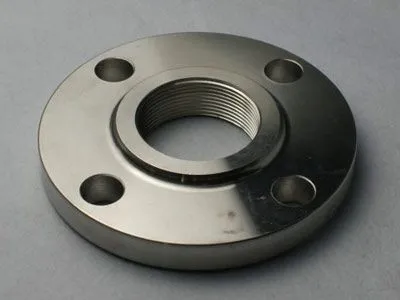
Carbon Steel Threaded Flange is another option. It has internal threads that allow it to be screwed onto the pipe. This type of flange is relatively easy to install and is often used in low-pressure applications.
Why Choose Our Welding Neck Flanges
As a supplier, we take pride in offering high-quality Welding Neck Flanges that meet all the international standards. We have a strict quality control process in place, from material sourcing to final inspection. Our team of experts ensures that every flange we produce is of the highest quality and meets your specific requirements.
We also offer a wide range of sizes, materials, and pressure ratings to suit different applications. Whether you're working on a small-scale project or a large industrial installation, we've got you covered.
If you're in the market for Welding Neck Flanges or any other types of flanges, I encourage you to reach out to us. We'd be more than happy to discuss your needs and provide you with a competitive quote. Just let us know what you're looking for, and we'll do our best to find the perfect solution for you.
In conclusion, understanding the international standards for Welding Neck Flanges is crucial for ensuring the safety and performance of your piping systems. By choosing a reliable supplier who adheres to these standards, you can have peace of mind knowing that you're getting a high-quality product. So, don't hesitate to contact us if you have any questions or if you're ready to start your next project.
References
- ASTM International. ASTM A105/A105M - 20 Standard Specification for Carbon Steel Forgings for Piping Applications.
- ASTM International. ASTM A350/A350M - 20 Standard Specification for Carbon and Low-Alloy Steel Forgings, Requiring Notch Toughness Testing for Piping Components.
- ASME. ASME B16.5 - 19 Pipe Flanges and Flanged Fittings.
- API. API 6A - 20 Specification for Wellhead and Christmas Tree Equipment.
- API. API 6D - 20 Specification for Pipeline Valves.
- ISO. ISO 7005 - 19 Metallic Flanges.