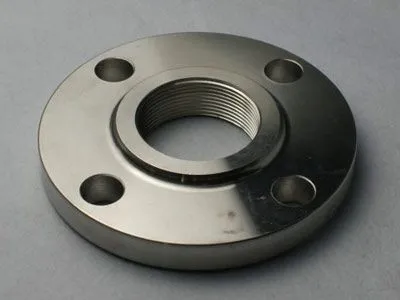
Yo, folks! As a supplier of Lap Joint Flanges, I've been getting a bunch of questions about how these bad boys help with pipeline expansion and contraction. So, I thought I'd put together this blog to spill the beans on the compensation methods using Lap Joint Flanges.
First off, let's talk about why pipeline expansion and contraction are even a thing. Pipelines are exposed to all sorts of temperature changes. When it gets hot, the pipes expand; when it gets cold, they contract. If you don't handle this expansion and contraction properly, it can lead to some serious issues like leaks, pipe damage, and even system failures. That's where Lap Joint Flanges come in handy.
1. Flexibility of Lap Joint Flanges
One of the key ways Lap Joint Flanges help with pipeline expansion and contraction is through their inherent flexibility. Unlike some other types of flanges, Lap Joint Flanges consist of two parts: a loose ring and a stub end. The loose ring can rotate freely around the stub end. This rotational freedom allows the flange to adjust to the movement of the pipeline caused by expansion and contraction.
For example, when a pipeline expands due to an increase in temperature, the Lap Joint Flange can rotate slightly to accommodate the change in length. This reduces the stress on the pipe and the flange itself. It's like giving the pipeline a little wiggle room to move without causing any damage.
2. Use in Expansion Loops
Another common compensation method is using Lap Joint Flanges in expansion loops. Expansion loops are basically U-shaped sections of pipe that are designed to absorb the expansion and contraction of the pipeline. Lap Joint Flanges are often used at the connections of these expansion loops.
The flexibility of the Lap Joint Flanges allows the expansion loop to move and flex as needed. When the pipeline expands, the expansion loop can stretch out, and the Lap Joint Flanges at the connections can rotate to keep the system intact. This helps to prevent excessive stress on the pipeline and reduces the risk of leaks.
3. Compatibility with Other Flange Types
Lap Joint Flanges are also great because they can be used in combination with other types of flanges. For instance, you might use a Blind Flange at the end of a pipeline section to close it off, and then use Lap Joint Flanges at the other connections to handle expansion and contraction.
This combination allows for a more customized approach to pipeline design. You can choose the right flange for each specific part of the pipeline based on its function and the expected amount of movement. It's like building a puzzle where each piece fits perfectly to create a strong and reliable pipeline system.
4. Absorbing Misalignment
In addition to handling expansion and contraction, Lap Joint Flanges can also absorb some degree of misalignment between pipes. During the installation process or due to external factors, pipes may not be perfectly aligned. Lap Joint Flanges can help to compensate for this misalignment by rotating and adjusting their position.
This is especially important in pipelines that are subject to movement or vibration. By absorbing misalignment, Lap Joint Flanges help to prevent stress concentration at the connections, which can lead to premature failure. It's like having a little shock absorber at each connection point.
5. Orifice Flange Facing Considerations
When using Lap Joint Flanges in pipelines, it's also important to consider the Orifice Flange Facing. The facing of the flange plays a crucial role in ensuring a proper seal and preventing leaks.
There are different types of flange facings available, such as flat face, raised face, and ring joint face. The choice of facing depends on the specific application and the requirements of the pipeline. For example, in high-pressure applications, a ring joint face may be more suitable as it provides a better seal.
6. Long Welding Neck Flange Combinations
Sometimes, you might want to combine Lap Joint Flanges with Long Welding Neck Flanges. Long Welding Neck Flanges are known for their strength and stability, especially in high-pressure and high-temperature applications.


By using a combination of Lap Joint Flanges and Long Welding Neck Flanges, you can take advantage of the flexibility of the Lap Joint Flanges and the strength of the Long Welding Neck Flanges. This combination can provide a more robust and reliable pipeline system that can handle both expansion and contraction as well as high-pressure conditions.
Why Choose Our Lap Joint Flanges?
As a supplier of Lap Joint Flanges, I can tell you that our products are top-notch. We use high-quality materials and state-of-the-art manufacturing processes to ensure that our flanges meet the highest standards of quality and performance.
Our Lap Joint Flanges are designed to be easy to install and maintain. They are also available in a wide range of sizes and specifications to meet the needs of different applications. Whether you're working on a small-scale project or a large industrial pipeline, we've got you covered.
Let's Talk Business
If you're in the market for Lap Joint Flanges or have any questions about how they can help with pipeline expansion and contraction, I'd love to hear from you. Just reach out, and we can start a conversation about your specific needs. We're here to provide you with the best products and solutions for your pipeline projects.
References
- Some relevant industry standards and guidelines on pipeline design and flange usage.
- Technical literature on the properties and applications of Lap Joint Flanges.