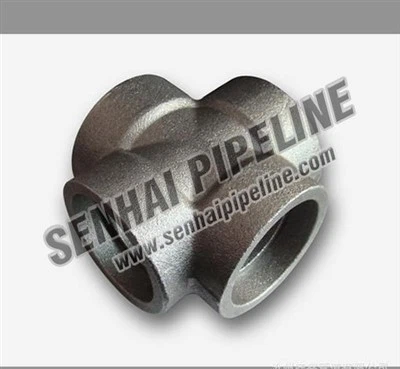
Pipe fittings crosses are essential components in various piping systems, playing a crucial role in directing the flow of fluids or gases. As a supplier of pipe fittings crosses, I've witnessed firsthand the common damages these components can face over time. Understanding these damages is vital for ensuring the longevity and efficiency of piping systems. In this blog, I'll delve into the typical issues that can affect pipe fittings crosses and discuss ways to prevent them.
Corrosion
One of the most prevalent damages to pipe fittings crosses is corrosion. Corrosion occurs when the metal of the fitting reacts with its environment, leading to the deterioration of the material. This can happen due to exposure to moisture, chemicals, or even the natural elements. For instance, in industrial settings where pipes carry corrosive substances like acids or alkalis, the risk of corrosion is significantly higher.
There are different types of corrosion that can affect pipe fittings crosses. Uniform corrosion is the most common type, where the entire surface of the fitting gradually wears away. Pitting corrosion, on the other hand, causes small holes or pits to form on the surface, which can eventually lead to leaks. Galvanic corrosion occurs when two different metals are in contact in the presence of an electrolyte, causing one metal to corrode at an accelerated rate.
To prevent corrosion, it's essential to choose the right material for the pipe fittings cross. For example, stainless steel is a popular choice due to its high resistance to corrosion. Additionally, applying protective coatings or linings can provide an extra layer of defense against corrosive elements. Regular inspections and maintenance can also help detect early signs of corrosion and allow for timely repairs or replacements.
Erosion
Erosion is another common damage that can affect pipe fittings crosses. It occurs when the flowing fluid or gas contains solid particles that wear away the surface of the fitting. This is particularly common in industries such as mining, oil and gas, and power generation, where pipes carry abrasive materials.


The rate of erosion depends on several factors, including the velocity of the fluid, the size and shape of the particles, and the hardness of the fitting material. High-velocity flows and large, sharp particles can cause more severe erosion. Erosion can lead to thinning of the fitting walls, which can compromise the structural integrity of the pipe and increase the risk of leaks or failures.
To mitigate erosion, it's important to control the flow velocity and reduce the presence of solid particles in the fluid. Installing filters or separators upstream of the pipe fittings cross can help remove abrasive particles. Using materials with high resistance to erosion, such as ceramic or tungsten carbide, can also be beneficial.
Fatigue
Fatigue is a form of damage that occurs due to repeated cyclic loading. In piping systems, this can be caused by factors such as vibration, thermal expansion and contraction, or pressure fluctuations. Over time, these cyclic loads can cause cracks to form in the pipe fittings cross, which can eventually lead to failure.
The location and severity of fatigue cracks depend on the type and magnitude of the cyclic loads. Cracks often initiate at stress concentration points, such as welds, sharp corners, or areas with surface defects. Fatigue failure can be sudden and catastrophic, making it crucial to detect and address early signs of fatigue.
To prevent fatigue, it's important to design the piping system to minimize cyclic loading. This can involve using flexible connectors to absorb vibrations, providing proper support for the pipes to reduce stress concentrations, and ensuring that the system operates within the recommended pressure and temperature ranges. Regular inspections using non-destructive testing methods, such as ultrasonic testing or magnetic particle testing, can help detect fatigue cracks before they cause failure.
Mechanical Damage
Mechanical damage can occur during installation, operation, or maintenance of the piping system. This can include impacts, scratches, or dents caused by tools, equipment, or other objects. Mechanical damage can weaken the structure of the pipe fittings cross and increase the risk of leaks or failures.
During installation, it's important to handle the pipe fittings cross with care to avoid damage. Using proper lifting and handling equipment and following the manufacturer's installation instructions can help prevent mechanical damage. In operation, protecting the pipes from external impacts and ensuring that they are not subjected to excessive stress can also reduce the risk of mechanical damage.
If mechanical damage is detected, it's important to assess the severity of the damage and determine whether the fitting can be repaired or needs to be replaced. Minor scratches or dents may be repaired by grinding or filling, while more severe damage may require replacement of the fitting.
Thermal Stress
Thermal stress occurs when the temperature of the pipe fittings cross changes, causing it to expand or contract. If the expansion or contraction is restricted, it can lead to the development of high stresses within the fitting, which can cause cracks or deformation.
Thermal stress is particularly common in piping systems that operate at high temperatures or experience significant temperature fluctuations. For example, in power plants or industrial processes, pipes may be subjected to rapid heating and cooling cycles. To prevent thermal stress, it's important to design the piping system to accommodate thermal expansion and contraction. This can involve using expansion joints or flexible connectors to allow for movement, and providing proper insulation to reduce temperature differentials.
Improper Installation
Improper installation is a common cause of damage to pipe fittings crosses. This can include incorrect alignment, over-tightening or under-tightening of bolts, and improper welding. Incorrect alignment can cause uneven stress distribution in the fitting, leading to premature failure. Over-tightening of bolts can cause the fitting to crack, while under-tightening can result in leaks.
To ensure proper installation, it's important to follow the manufacturer's installation instructions and use the correct tools and techniques. Proper alignment of the pipes and fittings is crucial, and all connections should be tightened to the recommended torque specifications. Welding should be performed by qualified welders using the appropriate welding procedures and materials.
Conclusion
In conclusion, pipe fittings crosses are subject to various damages that can affect their performance and longevity. Corrosion, erosion, fatigue, mechanical damage, thermal stress, and improper installation are some of the most common issues. As a supplier of pipe fittings crosses, I understand the importance of providing high-quality products and offering solutions to prevent these damages.
When choosing a pipe fittings cross, it's essential to consider the specific requirements of the application, including the type of fluid or gas being transported, the operating conditions, and the potential for damage. By selecting the right material, implementing proper installation and maintenance procedures, and taking preventive measures, it's possible to minimize the risk of damage and ensure the reliable operation of the piping system.
If you're in need of high-quality pipe fittings crosses or have any questions about preventing damage to your piping system, I encourage you to [Contact us for procurement and negotiation]. We offer a wide range of Carbon Steel Tee, Hot Induction Bends, and Carbon Steel Fittings to meet your needs. Our team of experts is always ready to assist you in finding the best solutions for your piping system.
References
- ASME B31.3 Process Piping Code
- API 5L Specification for Line Pipe
- ASTM Standards for Pipe Fittings Materials