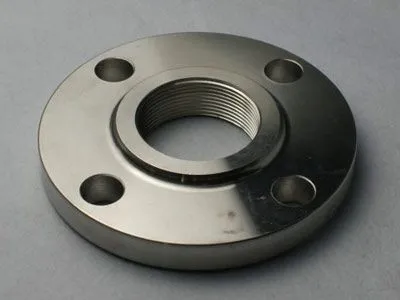
As a supplier of Slip On Flanges, I've seen firsthand the importance of keeping bolts secure. Loose bolts on Slip On Flanges can lead to all sorts of problems, from leaks to structural failures. So, I'm here to share some anti - loosening measures that can help you keep those bolts in place.
1. Locking Washers
Locking washers are one of the most common anti - loosening solutions. There are different types of locking washers, such as split washers and toothed washers.
Split washers work by creating tension when tightened. As the nut is turned, the split in the washer causes it to deform slightly, creating a spring - like force that resists loosening. This force acts against the rotation of the nut, keeping it in place. Toothed washers, on the other hand, have teeth that bite into the surface of the flange and the nut. This grip prevents the nut from turning and helps maintain the bolt's pre - load.


2. Thread Locking Adhesives
Thread locking adhesives are another great option. These adhesives are applied to the threads of the bolt before assembly. Once the nut is tightened, the adhesive cures and forms a strong bond between the threads.
There are two main types: permanent and removable. Permanent thread locking adhesives are designed to hold the bolt in place for the long term. They're great for applications where you don't expect to disassemble the joint often. Removable thread locking adhesives, as the name suggests, can be removed when needed. They're ideal for situations where you might need to make adjustments or perform maintenance. You can find more information about related products like ERW Pipes, which are often used in conjunction with Slip On Flanges.
3. Nylon - Insert Lock Nuts
Nylon - insert lock nuts are a simple yet effective solution. These nuts have a nylon insert near the top of the nut. When the nut is tightened onto the bolt, the nylon insert creates friction against the threads.
This friction resists the loosening forces caused by vibration or movement. The nylon insert also helps to seal the threads, preventing dirt and moisture from entering the joint. This can be especially important in outdoor or harsh environments.
4. Double Nuts
The double - nut method is an old - school but reliable way to prevent bolt loosening. It involves using two nuts on a single bolt. The first nut is tightened to the desired torque, and then the second nut is tightened against the first one.
The two nuts create a locking effect by sandwiching the flange between them. The friction between the two nuts and the flange helps to keep the bolt from turning. However, it's important to note that the double - nut method requires careful installation to ensure that both nuts are tightened correctly.
5. Bolt Pre - loading
Proper bolt pre - loading is crucial for preventing loosening. When a bolt is tightened, it creates a pre - load force that holds the joint together. If the pre - load is too low, the joint can loosen over time due to vibration or movement.
To ensure proper pre - loading, you need to use a torque wrench to tighten the bolts to the recommended torque value. The torque value depends on the size and grade of the bolt, as well as the application. It's also important to tighten the bolts in a specific sequence, especially for flanges with multiple bolts. This helps to distribute the load evenly across the flange.
6. Spring Washers
Spring washers are similar to split washers but have a more pronounced spring action. They're designed to absorb shock and vibration, which can cause bolts to loosen.
When the joint is subjected to movement, the spring washer compresses and expands, maintaining the pre - load on the bolt. This helps to prevent the nut from backing off. However, spring washers may not be as effective as some other methods in high - vibration applications.
7. Wedge - Lock Washers
Wedge - lock washers are a relatively new type of anti - loosening device. They consist of two washers with a unique wedge - shaped design.
When the washers are installed, the wedges bite into each other and the mating surfaces. This creates a locking effect that resists both rotation and vibration. Wedge - lock washers are often used in applications where high - strength and reliable anti - loosening are required, such as in heavy machinery and automotive applications.
8. Inspection and Maintenance
Regular inspection and maintenance are essential for ensuring the long - term effectiveness of anti - loosening measures. You should periodically check the bolts on your Slip On Flanges to make sure they're still tight.
Look for signs of loosening, such as visible gaps between the nut and the flange or signs of movement in the joint. If you find any loose bolts, you should tighten them immediately using the appropriate method. It's also a good idea to inspect the anti - loosening devices, such as washers and adhesives, for signs of wear or damage.
9. Consider the Application
When choosing anti - loosening measures, it's important to consider the specific application of your Slip On Flanges. For example, if the flanges are used in a high - vibration environment, such as in a machine or a vehicle, you may need to use more robust anti - loosening methods, like thread locking adhesives or wedge - lock washers.
On the other hand, if the flanges are used in a relatively static environment, a simple locking washer or double - nut method may be sufficient. You also need to consider the temperature, humidity, and chemical exposure of the application. Some anti - loosening devices may not work well in extreme temperatures or corrosive environments.
10. Compatibility with Other Components
It's also important to consider the compatibility of the anti - loosening measures with other components in the system. For example, if you're using a thread locking adhesive, make sure it's compatible with the materials of the bolt, nut, and flange.
Some adhesives may react with certain metals or coatings, causing damage or reducing the effectiveness of the adhesive. Similarly, when using washers, make sure they're the right size and shape for the bolts and flanges. Using the wrong size or type of washer can lead to improper installation and reduced anti - loosening performance.
Conclusion
Keeping bolts on Slip On Flanges from loosening is essential for the safety and reliability of your systems. By using a combination of these anti - loosening measures, you can significantly reduce the risk of bolt loosening and ensure the long - term performance of your Slip On Flanges.
If you're in the market for Slip On Flanges or need more information about anti - loosening measures, feel free to reach out. We're here to help you find the best solutions for your specific needs. Whether you're working on a small project or a large - scale industrial application, we can provide you with high - quality Slip On Flanges and expert advice. And don't forget to check out our related products like Helical Welded Pipe and Large Size Welded Pipe which can complement your Slip On Flange installations.
References
- "Mechanical Design Handbook" by Robert C. Juvinall and Kurt M. Marshek
- "Fasteners and Fixings Handbook" by John H. Bickford
- Various industry standards and technical documents related to bolted joints and flange connections.