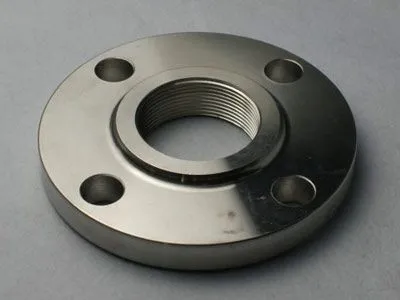
Hey there! As a forged fittings supplier, I've seen firsthand how important it is to improve the fatigue resistance of these products. Fatigue failure can be a real headache, leading to costly repairs, downtime, and even safety hazards. So, in this blog post, I'm gonna share some tips on how to enhance the fatigue resistance of forged fittings.
Understanding Fatigue in Forged Fittings
Before we dive into the solutions, let's quickly understand what fatigue is. Fatigue occurs when a material is subjected to repeated loading and unloading cycles. Over time, these cycles can cause small cracks to form in the material, which can eventually grow and lead to failure. In the case of forged fittings, fatigue can be caused by things like vibration, pressure fluctuations, and thermal cycling.


Material Selection
One of the most important factors in improving the fatigue resistance of forged fittings is choosing the right material. Different materials have different fatigue properties, so it's crucial to select a material that can withstand the specific loading conditions the fitting will be exposed to.
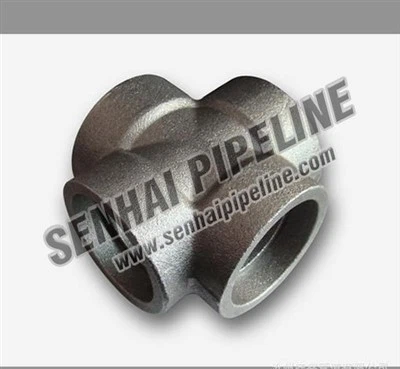
For example, Carbon Steel Forged Cross is a popular choice for many applications due to its good strength and toughness. Carbon steel has relatively good fatigue resistance, especially when properly heat-treated. However, in more demanding environments, you might want to consider using alloy steels or stainless steels. These materials offer enhanced corrosion resistance and better fatigue performance under certain conditions.
Heat Treatment
Heat treatment is another key aspect of improving fatigue resistance. By subjecting the forged fittings to specific heat treatment processes, we can modify the microstructure of the material, which in turn can improve its mechanical properties.
For instance, quenching and tempering can increase the hardness and strength of the fitting, making it more resistant to fatigue. The quenching process rapidly cools the material, forming a hard martensitic structure. Then, tempering is done to relieve the internal stresses and improve the toughness of the material. This combination of hardness and toughness helps the fitting better withstand the repeated loading cycles.
Design Optimization
The design of the forged fitting also plays a significant role in its fatigue resistance. A well-designed fitting will distribute the stress more evenly, reducing the likelihood of stress concentrations that can lead to fatigue cracks.
For example, smooth transitions between different sections of the fitting are essential. Sharp corners and edges can act as stress raisers, so we try to use rounded corners and fillets wherever possible. Additionally, the wall thickness of the fitting should be carefully considered. A uniform wall thickness helps to ensure that the stress is distributed evenly throughout the fitting.
Surface Finish
The surface finish of the forged fitting can have a big impact on its fatigue resistance. A rough surface can contain micro - cracks and notches, which can act as initiation points for fatigue cracks. On the other hand, a smooth surface finish reduces the stress concentrations and makes it more difficult for cracks to form.
We usually use processes like machining, grinding, and polishing to achieve a smooth surface finish on our forged fittings. This not only improves the fatigue resistance but also enhances the overall appearance and corrosion resistance of the product.
Quality Control
Quality control is crucial at every stage of the manufacturing process to ensure the high fatigue resistance of forged fittings. We conduct a series of tests to check the quality of the materials, the heat treatment, and the final product.
Non - destructive testing methods such as ultrasonic testing, magnetic particle testing, and dye penetrant testing are used to detect any surface or subsurface defects in the fittings. These defects, if left undetected, can significantly reduce the fatigue life of the fitting. We also perform mechanical testing, such as tensile testing and hardness testing, to ensure that the fittings meet the required mechanical properties.
Maintenance and Inspection
Even with high - quality forged fittings, proper maintenance and inspection are essential to ensure their long - term fatigue resistance. Regular inspections can help detect any early signs of fatigue, such as cracks or deformation.
During inspections, we look for signs of corrosion, wear, and stress concentrations. If any issues are detected, appropriate measures can be taken, such as repairing or replacing the fitting. Additionally, proper maintenance, such as lubrication and cleaning, can help reduce the wear and tear on the fitting and extend its fatigue life.
Real - World Applications
Let's take a look at some real - world applications where improving the fatigue resistance of forged fittings is crucial. In the oil and gas industry, Socket Welded Equal Tee and Socket Welded Olets are used in pipelines that are subjected to high - pressure and high - flow conditions. These fittings need to have excellent fatigue resistance to withstand the constant pressure fluctuations and vibrations.
In the power generation industry, forged fittings are used in steam and water systems. The thermal cycling and pressure changes in these systems can cause fatigue in the fittings. By following the tips I've mentioned above, we can ensure that the fittings used in these applications have a long and reliable service life.
Conclusion
Improving the fatigue resistance of forged fittings is a multi - faceted process that involves material selection, heat treatment, design optimization, surface finish, quality control, and maintenance. As a forged fittings supplier, we're committed to providing our customers with high - quality products that can withstand the toughest operating conditions.
If you're in the market for forged fittings and want to ensure that they have excellent fatigue resistance, don't hesitate to get in touch with us. We can help you select the right fittings for your application and provide you with all the information you need to make an informed decision. Let's work together to find the best solutions for your forged fitting needs.
References
- "Metallurgy for Engineers" by George E. Dieter
- "Mechanical Behavior of Materials" by Norman E. Dowling
- "Handbook of Forging" by J. R. Davis